

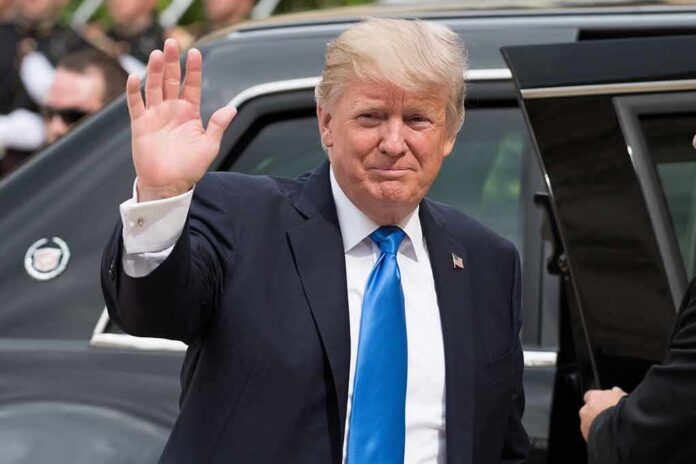
President Trump reportedly rejected Iran’s seven-day plan to reopen the Strait of Hormuz because it required major U.S. concessions first.
Story Highlights
- Reports say Trump rejected Iran’s conditional ceasefire tied to sanctions relief and a blockade lift.
- Iran said maritime traffic could restart within seven days once the United States accepted terms.
- The Wall Street Journal said Trump expected strikes to resume after midterm elections.
- Both sides used Qatari mediation, but the gap between demands remains wide.
What Trump Rejected And Why It Matters
News outlets reported that President Trump declined an Iranian proposal that linked a seven-day countdown to reopening the Strait of Hormuz with United States steps like easing sanctions and lifting a naval blockade. The plan was not a signed deal. It moved through Qatari mediators during shuttle talks. That made a fast yes unlikely for Washington. The choice signals a leverage-first approach that resists trading core economic pressure for a short pause in fighting.
Iranian officials said the plan could start as soon as the United States agreed. They claimed shipping could return to normal within a week if conditions were met. Iranian Foreign Minister Abbas Araghchi described a phased process that tied maritime access to broader talks, including nuclear issues, after day seven. That framing cast Tehran’s offer as a concrete step, not only a talking point, while still hinging on major United States concessions up front.
Reported Timing And Political Risk
The Wall Street Journal, echoed by other outlets, reported that Trump told aides he expected bombing to resume after the midterm elections. That claim rested on unnamed officials. It raised hard questions about political timing and strategy. Without a full White House statement, critics can argue the move invites escalation. Supporters can argue it avoids rewarding coercion. The lack of on-record detail leaves room for both frames to grow.
Iran’s public message highlights that both countries remain far apart but still in contact. Reuters reported a two-hour exchange of messages through Qatari channels, and an Iranian spokesperson listed conditions such as ending the war on all fronts and releasing frozen funds. That list shows how wide the gap is. It also explains why Washington saw the proposal as conditional and costly, not a clean ceasefire to accept and verify quickly.
Energy, Security, And The Strait’s Stakes
The Strait of Hormuz is a vital oil and gas chokepoint. Any closure or threat to shipping raises global prices and strains family budgets at home. A one-week path to reopening would help markets. But tying that to sanctions relief and a blockade lift shifts the balance of power. The administration appears to prefer keeping pressure until Tehran moves first on security steps, rather than paying early and hoping compliance follows.
BREAKING: 🇺🇸🇮🇷 President Trump expects U.S. negotiators to engage in further indirect talks with Iran despite Washington's recent rejection of a ceasefire deal.
— Conflict Monitor (@CM_Geopolitics) September 27, 2026
For many Americans, this feels familiar: leaders trading statements while the costs land on workers and retirees who face higher fuel prices and market shocks. Conservatives see a trap that trades away leverage. Liberals see a missed chance to reduce risk and spare civilians. Both sides share a core worry: distant decision-makers and opaque deals can put everyday people last. That is why clear terms, public proof, and on-record plans matter before any next step.
What To Watch Next
Watch for an on-record United States explanation that lays out the red lines and what Iran must do first. Look for Qatar to surface more detail from the messaging channel. Track shipping insurers and energy markets for signs of rising risk premiums. If strikes resume, watch whether targets aim to blunt threats near the strait or to force faster talks. Each move will show whether this is pause-and-bargain or march-to-escalate diplomacy.