
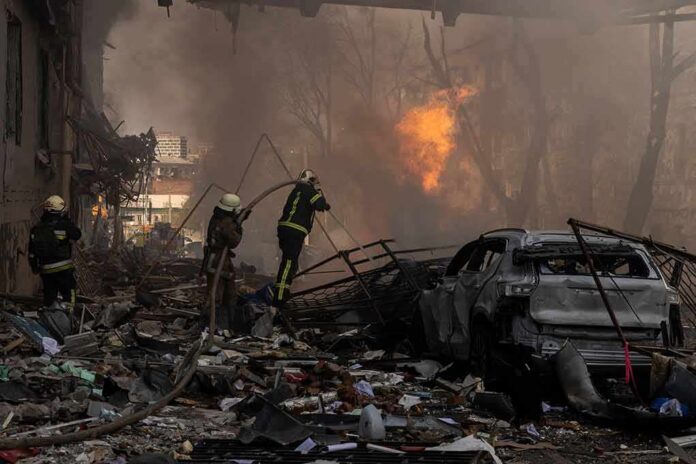
Russian missiles and drones set buildings ablaze across Ukraine overnight, killing and injuring civilians as firefighters battled sweeping urban fires.
Story Highlights
- Russian strikes ignited large fires in Kyiv and other regions, damaging homes and workplaces.
- Emergency crews contained a mall inferno that spread across thousands of square meters in Zaporizhzhia, officials said.
- Casualty counts rose through the day as rescues continued and debris was cleared.
- Attacks fit a wider pattern of mass drone‑missile salvos that strain air defenses and emergency services.
What Happened Overnight
Ukrainian officials reported that Russian drones and missiles struck Kyiv and multiple regions overnight, starting fires and damaging civilian buildings. Kyiv authorities said emergency services pulled people from rubble and battled flames at several sites. Local updates described smoke plumes, shattered windows, and burned vehicles across affected districts. First responders moved residents to shelters while searching damaged structures. Officials warned that casualty numbers could change as rescue work continued and firefighters reached hot spots made unstable by debris.
In the capital, blasts tore through residential blocks and storage areas, spreading fires that took hours to control. Photos from the scene showed scorched facades and charred interiors. City crews cleared glass and debris from streets to reopen traffic lanes for ambulances. Power outages hit pockets of the city near impact zones. Local leaders asked residents to conserve water so hydrants had strong pressure. Air raid alerts cycled on and off as follow‑on waves forced crews to pause, take cover, then return to the lines.
Zaporizhzhia Blaze and Regional Damage
In Zaporizhzhia, a strike triggered a mall fire that emergency officials said spread across a large area before crews brought it under control. Two men suffered wounds during the chaos, and nearby shops sustained heat damage as flames jumped between structures. Responders used ladder trucks to attack roof fires while teams inside fought smaller blazes in storage rooms. Officials said the fire’s spread was fueled by goods and packaging materials that burned fast and produced heavy smoke.
Across suburban Kyiv, emergency services reported collapsed walls and partial roof failures after direct hits and shock waves. Crews rescued people from under concrete slabs and cleared stairwells to reach trapped residents. Warehouses and small factories also took damage, interrupting local supply chains. Officials said several sites stored consumer goods and food, raising concerns about short‑term shortages. Inspections began at dawn to assess structural risks. Authorities warned small businesses to document losses for later aid and insurance claims.
Why These Fires Keep Spreading
Military analysts and aid groups have tracked a Russian tactic that mixes drones and missiles in large waves, often timed to exhaust air defenses and responders. Staggered attacks force repeated sheltering and stretch firefighting shifts. Power and water systems can also suffer, cutting the tools crews need most. When strikes hit warehouses, shopping centers, or residential blocks, packed goods and fuel lines can turn initial blasts into fast‑moving fires that leap between units and floors.
Conflict data groups caution that casualty numbers often shift after large strikes because access is limited and records vary across agencies. In active war zones, first reports focus on visible effects like flames and smoke, while later counts refine injuries and damage totals. That pattern held again in these attacks as officials updated numbers through the day. The uncertainty adds stress for families waiting on news and for planners trying to stage equipment and medical teams where needs are greatest.
What This Means for Ordinary People
Ukrainian families are paying the price for a long air war that hits cities at night and work sites by day. Fires destroy homes, small shops, and warehouses that keep local economies moving. Parents scramble for safe rooms, while older residents face longer blackouts and hard climbs when elevators fail. Firefighters and medics carry heavy loads as they move from strike to strike. Each wave deepens the sense that basic safety depends on systems that are stretched thin.
For Americans watching from afar, the images echo a wider worry: when large, distant systems fail, ordinary people carry the burden. The same lesson shows up at home after storms, grid failures, or budget fights. Big promises meet thin delivery, and citizens are left to fill the gaps. In Ukraine, that gap is measured in minutes to shelter and minutes to fire control. The stakes are human and immediate, and they grow with every new salvo.
Sources:
youtube.com, apnews.com, re-russia.net, cnn.com