
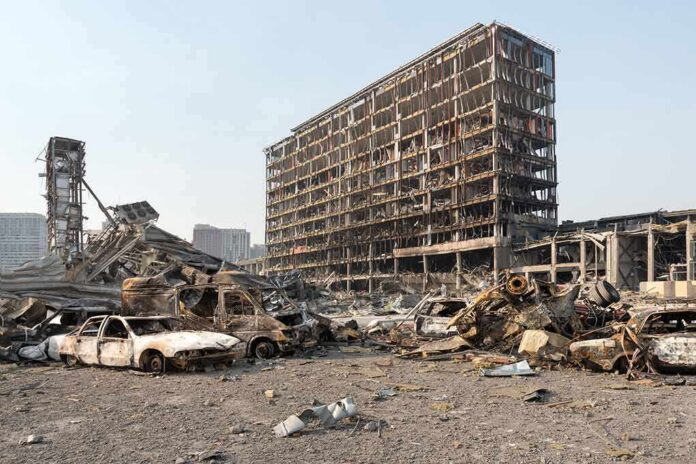
Deadly drone strikes and a plunging currency are crushing Sudan’s civilians as the war grinds on.
Story Highlights
- Paramilitary drones hit a courthouse and a college, killing and injuring civilians.
- Sudan’s pound lost nearly half its value in army-held areas since summer.
- Import bans and cash shortages deepen a split economy and raise prices.
- Residents report daily fear, broken services, and vanishing buying power.
Drone Strikes Hit Civilian Sites in Central Sudan
Reuters reported that a drone slammed into a crowded courthouse in Um Ruwaba, North Kordofan, on September 8, killing about ten people and injuring dozens, according to Emergency Lawyers. Photos showed the courthouse facade blown out. A day later, another reported strike hit a college in al-Obeid, killing a security guard and damaging eight classrooms, the college dean said. Residents blamed the paramilitary Rapid Support Forces for the escalating attacks on government-held towns.
The pattern of strikes has spread fear and disrupted daily life. Courts, markets, and schools are not safe when drones can hit without warning. Families avoid busy areas and send children out less. Aid groups struggle to move supplies along key roads when attacks target hubs and city centers. Violence monitors also tracked heavy waves of drone activity in al-Obeid earlier in the war, adding to the sense that air threats now define the frontline for civilians as much as for fighters.
Currency Freefall Drains Household Budgets
Reuters reported that the Sudanese pound has shed nearly half its value in army-held areas since the start of summer. People returning to damaged neighborhoods face food and transport prices that jump week to week. Sellers demand hard currency or quote shifting rates. The weak pound blocks families from buying basics and wrecks savings. Local authorities try to show control, but residents say costs rise faster than wages and cash is scarce across many towns.
Government measures have not stabilized the slide. Earlier this year, authorities banned dozens of imports to curb pressure on the pound. The list reached everyday goods like food items and plastic products. Traders said the curbs hit supply and pushed prices higher anyway. Parallel market rates kept rising, while liquidity thinned in banks and shops. These steps underline a split economy where rules differ by area, and people pay the price at the counter.
A War Economy Splits Territory and Money
Reporters and analysts describe a de facto economic partition. Different authorities control checkpoints, tax lanes, fuel, and cash flows. People in one city pay a different rate than a neighbor a few hours away. This split makes planning impossible for families and small shops. When one side pulls in funds or restricts trade, the other side responds, and costs ripple out. The end result is the same for civilians: higher prices, fewer goods, and constant risk on the road.
This twin crisis—drones from the sky and dollars lost on the street—forces hard choices. Parents skip meals so kids can eat. Farmers sell tools to buy medicine. Teachers and nurses leave posts when salaries lose value overnight. When strikes hit courts and colleges, the blow is not only physical. It erodes basic order and learning. That breakdown invites more lawlessness, which fuels more smuggling and price spikes. Civilians are trapped in that loop until the guns stop.
Why It Matters to Americans
America cares when terror tactics and broken money systems crush the innocent. Rogue militias using cheap drones to bomb courts and schools should alarm anyone who values the rule of law. A currency collapse that wipes out savings shows what happens when leaders lose control and corruption spreads. Stable borders, honest trade, and secure skies matter. If we tolerate chaos abroad, it can spill into energy markets, migration flows, and terror risks that touch our shores.
Policy leaders should back efforts that shield civilians and restore a working economy. That means targeted pressure on groups that strike civilians, tighter control of money channels that fund weapons, and support for aid corridors that stay open. Clear conditions on assistance can push parties toward talks. The mission is simple: stop attacks on civic life and help people buy food and medicine. Peace and price stability go together. Without both, families will keep suffering.
Sources:
youtube.com, reuters.com, us.headtopics.com