

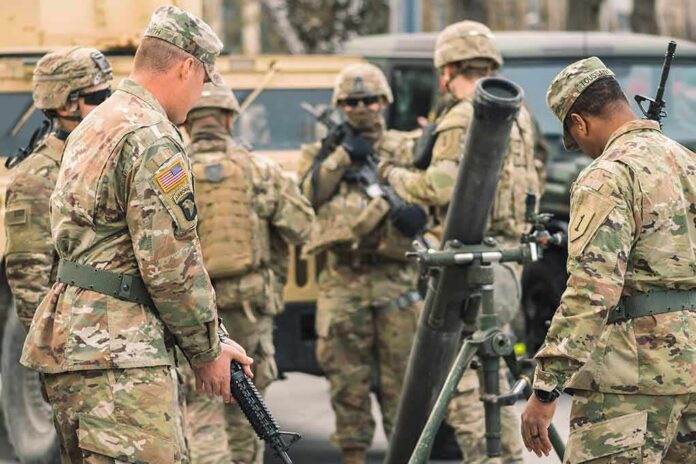
A fresh rotation of 1st Infantry Division soldiers is heading to Lithuania to deter Russia and backstop a key NATO ally on the Baltic front.
Story Highlights
- 2nd Brigade, 1st Infantry Division is deploying to Lithuania as a planned rotation under Operation Atlantic Resolve.
- The unit replaces a previous armored brigade, keeping a continuous U.S. presence on NATO’s eastern flank.
- About 1,000 U.S. troops typically operate in Lithuania during these rotations, training with NATO partners.
- Lithuania confirmed the new U.S. rotation is en route, ending uncertainty over follow-on forces.
What Is Happening With The 1st Infantry Division
U.S. Army officials said soldiers from the 2nd Brigade Combat Team, 1st Infantry Division, will deploy to Lithuania as part of the ongoing mission to deter Russia on NATO’s eastern flank. The rotation is described as routine under Operation Atlantic Resolve. It replaces a prior armored brigade that completed its tour, keeping the U.S. footprint steady without creating a new permanent base. This approach signals resolve while staying within the planned NATO posture.
Lithuania’s leadership said the incoming U.S. rotation is already on its way, resolving recent questions about whether American forces would backfill units that rotated home this summer. U.S. Army officials in Europe framed the move as part of an established cycle of deployments that aims to reassure allies and deter aggression. The message is simple: the United States is not stepping back from the Baltic front, and the next team is already inbound.
Why This Rotation Matters For Deterrence
Operation Atlantic Resolve uses planned, continuous rotations to keep American combat power close to the front line without permanent basing. This steadiness helps Lithuania, which sits next to Russian territory and the vulnerable Suwalki Gap. A visible American brigade team, even on rotation, complicates any hostile plan and raises the cost of miscalculation. That is the core of deterrence: show up, train hard, and be ready to fight if needed.
These deployments also knit allied forces together. U.S. troops train with Lithuanian units and other NATO partners to share tactics, grow trust, and work out logistics. The Army reports that more than 1,000 U.S. troops commonly operate and train in Lithuania during a rotation, building real skill for a real fight. That time on the ground matters more than speeches. It makes sure radios link, fuel moves, and commanders know each other before a crisis hits.
How This Fits The Bigger NATO Pattern
Since Russia seized Crimea in 2014, NATO shifted forces east and built a reliable rotation model for the Baltics. The United States has sent battalion and brigade teams through Lithuania for years, and kept that rhythm after Russia’s wider invasion of Ukraine. The 1st Infantry Division’s deployment is part of that same playbook. It is not sudden or ad hoc. It is the system working as designed to hold the line and prevent a quick land grab.
1st Infantry Division soldiers deploy to Lithuania in ongoing effort to deter Russia
Soldiers with the 2nd Brigade Combat Team, 1st Infantry Division, will deploy to Lithuania as the U.S. continues its military presence on NATO’s eastern flank, Maj. Montrell Russell, an Army… pic.twitter.com/OqckXDyxtt
— Armed Forces Press (@AFP_press) September 24, 2026
Analysts have debated if rotations are enough by themselves or if more permanent units are needed. What is clear today is that these rotations give the alliance a live, trained, and ready force in place now. President Trump’s administration has kept the Baltic presence predictable, while allies add their own forces. That combined weight sends a firm signal: the free world will defend its ground, and any move by Moscow will meet U.S. steel on day one.
What To Watch Next
Watch for joint exercises on Lithuanian training areas as the 2nd Brigade settles in. Expect armor movements, live-fire drills, and rapid road marches to test bridges and rail lines. Those events sharpen warfighting skills and stress the supply chain that would feed a fight. Also watch for clear handoffs between incoming and outgoing units, which keep the presence continuous and remove gaps that an adversary could exploit.
Families at home can take some confidence in the mission’s design. The Army has repeated this cycle many times, and the logistics are well-practiced. Lithuanian leaders have invested to host U.S. forces more easily, from barracks to ranges. That support helps shorten setup time and lets troops focus on training, not tents. The result is a faster, stronger deterrent the moment boots hit the ground and vehicles roll off the ramps.
Bottom Line For Readers
The United States is keeping faith with a front-line ally while putting teeth behind NATO’s promise. This is not nation-building or open-ended war. It is a clear, limited mission: deter Russia, stand with friends, and keep trouble from crossing the border. The 1st Infantry Division knows this work. The rotation keeps pressure where it belongs—on Moscow’s planners—not on American families or small businesses here at home.
Americans want strong borders, safe towns, and peace through strength abroad. This deployment supports that vision. It shows discipline, not drift; readiness, not wishful thinking. Our troops will train, deter, and come home proud. Until then, the Big Red One carries our flag on the Baltic line so that no fight reaches our shores, and no bully doubts our will.
Sources:
taskandpurpose.com, stripes.com, army.mil, kaiserslauternamerican.com