

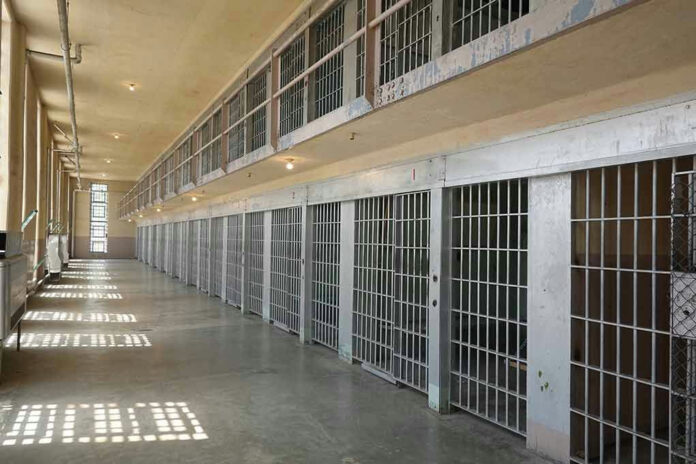
At least 25 people are dead and more than 100 are injured after inmates at Sri Lanka’s Negombo Prison grabbed guns during two days of clashes between rival drug gangs, exposing a system stretched past its limits and slow to explain what went wrong.
Story Highlights
- Authorities report 25 dead and over 100 injured after clashes at Negombo Prison.
- Reports say inmates seized firearms, which escalated the violence.
- Special units were sent to retake control as unrest carried into a second day.
- Officials have not issued a clear account of the cause amid long-running overcrowding.
Confirmed Casualties And Escalation Inside Negombo Prison
Authorities and hospital sources said the death toll reached 25, with more than 100 people treated for injuries after violent clashes at Negombo Prison. Reports describe fighting between two drug gangs that spread across prison blocks. During the chaos, inmates seized guns, which made the situation far deadlier. Five prison staff are among the dead, according to a widely shared media report that cited local coverage, though official lists of names have not been released.
Violence did not end quickly. Anadolu Agency reported that clashes continued into a second day, showing how hard it was for officers to regain control. News outlets said a special task force was deployed to secure the compound and aid medical teams. Early counts of deaths were lower, then rose as hospitals received more victims and responders reached more areas of the facility. That shift is common in mass-casualty events but fuels confusion when official updates are slow.
What We Do Not Know And Why It Matters
Officials have not issued a detailed, on-the-record account of the precise trigger. Reports cite gang rivalry, but the exact spark, timeline, and decisions that led to gun seizures remain unclear. Confusion deepened as some outlets used different prison names, suggesting reporting errors or mix-ups in the first hours. The lack of a formal public statement leaves a vacuum. That invites rumor and raises doubts about oversight, evidence handling, and whether proper protocols failed inside the prison walls.
Names of most inmates who died have not been released. That delay keeps families in the dark and stalls public trust. A clear, verified list and a single, daily briefing can steady the narrative and cut down on false claims. Social media posts and secondary reports can move faster than ministries. When that happens, unverified numbers may shape the story before facts settle, and that harms both victims and honest officers working the case.
Overcrowding As A Known Risk Multiplier
Sri Lanka’s prisons have struggled with severe overcrowding for years. A government document shows the system reached about 248 percent of capacity in 2020, the worst level in a decade. International trackers and rights reports also describe crowded dorms, long remand times, and strained staff. When a prison holds two or three times its design, any fight can turn into a riot faster, and officers face higher risk with fewer safe options to separate gangs.
Global guidance from the United Nations Office on Drugs and Crime links overcrowding to higher violence and weaker health care. It calls for steps like bail reform, faster trials, and better classification to separate high-risk inmates from others. Sri Lanka has studied fixes and formed task forces, but progress has been uneven. The Negombo disaster will likely renew calls to cut pretrial backlogs, improve searches for weapons, and boost training for rapid response teams that can move without making conditions worse.
What Accountability Should Look Like Now
The government can order a transparent investigation with a public timeline. That should include release of a verified casualty list, a summary of autopsy findings, and a review of when, where, and how guns were taken by inmates. Camera footage, radio logs, and weapon inventories can help map the sequence of events. A single, named official should brief daily until facts are set. That pace can check misinformation and show respect to victims and the public.
At least 25 dead, over 100 injured in prison clashes in Sri Lanka https://t.co/tv2iv9atNn #News
— The Right News, Right Now. (@BradPorcellato) July 6, 2026
Both right and left share a core demand here: prove the state can keep people safe, even in custody. When prisons are packed and quiet fixes are delayed, the cost lands on officers, inmates, and nearby communities. Clear answers and real reforms are not soft on crime. They are how a government defends order, protects rights, and earns trust. The Negombo deaths are a warning that systems break first where oversight is weakest—and that silence is not a plan.
Sources:
youtube.com, indiatoday.in, aa.com.tr, auditorgeneral.gov.lk, facebook.com, icrc.org, gov.uk, prisonstudies.org