

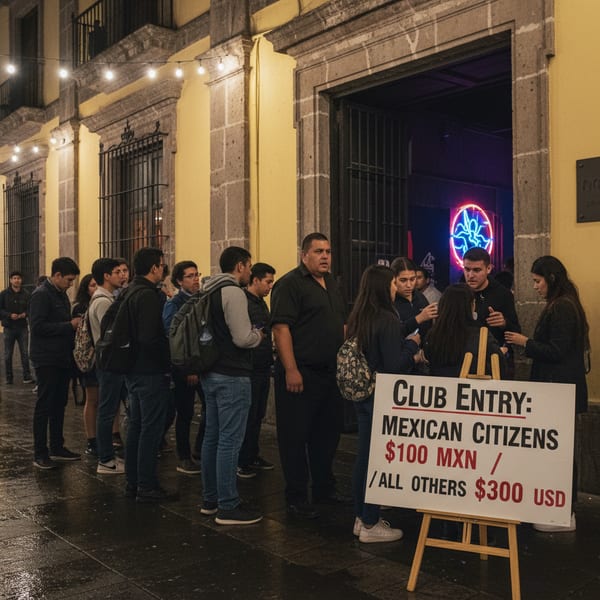
A nightclub in Mexico City now charges American citizens $300 to enter while Mexicans pay just $15, sparking viral outrage as the club owner cites President Trump’s rhetoric and gentrification concerns as justification for the discriminatory pricing policy.
Massive Price Gap Based on Nationality
Club Japan, located in Mexico City’s Roma Norte neighborhood, announced on Instagram that American citizens must pay 5,000 pesos, roughly $300, for entry. Citizens of other countries receive a 93 percent discount. Mexican nationals and other Latin Americans get 95 percent off, paying approximately $15. Students and teachers pay just 150 pesos after a 97 percent discount. The announcement received more than 26,000 likes and hundreds of comments before going viral across social media platforms.


Club owner Federico Crespo defended the pricing structure as a direct response to political tensions with the United States. He stated the policy answers a year of insults directed at Mexico by the United States and specifically targets what he calls attacks against Mexico from President Trump. Crespo framed the discriminatory pricing not as charging Americans more, but as offering discounts to people who need it, according to the club’s social media post.
Gentrification Fuels Local Resentment
The pricing policy also addresses growing frustration over gentrification in Mexico City neighborhoods like Roma and Condesa. During the coronavirus pandemic, remote work policies enabled thousands of American workers to relocate temporarily or permanently to the Mexican capital. The influx drove up rental prices, increased short-term rental activity, and changed neighborhood demographics. Last year, anti-gentrification protests erupted in the city, with some demonstrations turning destructive through vandalism and anti-tourism graffiti targeting foreign residents.
Revenue Redistribution to Affected Workers
Crespo claims the higher cover charges collected from American patrons are redistributed directly to club employees. He argues the policy helps workers facing rising rents, soaring living costs, and longer commutes caused by neighborhood changes. The club positions the discriminatory pricing as economic justice rather than anti-American sentiment, though critics note the policy explicitly targets citizens based on nationality. The viral announcement highlights escalating economic tensions between locals and foreign residents in popular expatriate destinations throughout Latin America as remote work continues reshaping urban demographics.