
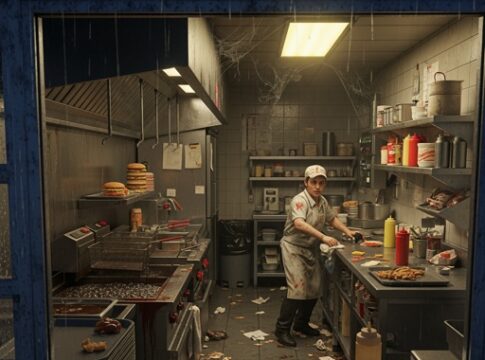
A fast-food chain with 390 locations just declared war on the microwave, betting its entire future on the radical idea that restaurants should actually cook food from scratch.
Story Snapshot
- Steak ‘n Shake will eliminate all microwaves from 390 US restaurants by April 15, 2026, making it the only major fast-food chain to ban the appliance entirely
- The Indianapolis-based burger joint has already switched to beef tallow instead of seed oils and adopted a2 milk as part of an “Eat Real Food” quality campaign
- This move aligns with Trump administration nutrition policies championed by HHS Secretary Robert F. Kennedy Jr. and USDA Secretary Brooke Rollins
- Industry experts remain divided on whether microwaves belong in professional kitchens, with some viewing them as practical tools and others as quality compromises
The No-Microwave Revolution Hits Fast Food
Steak ‘n Shake announced on X in mid-February 2026 that every single location would purge microwaves within two months. The declaration was blunt: “Quality restaurants don’t need microwaves.” For a chain founded in 1934 on steakburger tradition, the message represents more than operational change. It signals a complete rejection of convenience-first fast food in favor of traditional cooking methods that defined American diners before reheating became standard practice. The company expects full compliance across its footprint by the April deadline.
YES!!!!
Steak ’n Shake to Remove All Microwaves From Its US Restaurants by April 15https://t.co/t7C42HVy7l
— Sheri Guns (@GunsSheri) February 13, 2026
The timing coincides with broader cultural momentum against ultra-processed foods. President Trump signed the Whole Milk for Healthy Kids Act in January 2026, just weeks before Steak ‘n Shake’s announcement. HHS Secretary Robert F. Kennedy Jr. has been vocal about ending what he calls “the war on protein,” championing beef ranchers and whole ingredients over industrial food production. USDA Secretary Brooke Rollins has pushed similar themes around farm-fresh sourcing and minimal processing. Steak ‘n Shake’s move fits neatly into this ideological shift toward food purity at the federal level.
From Seed Oils to a2 Milk: A Pattern Emerges
The microwave ban represents the third major ingredient overhaul in less than eighteen months. In 2025, Steak ‘n Shake switched all frying operations to 100 percent all-natural beef tallow, eliminating seed oils that have become targets of health-conscious consumers. Then in December 2025, the chain adopted a2 milk from cows that produce only the A2 beta-casein protein, marketed as easier on digestion than conventional milk. Each change built on the previous one, creating a cumulative narrative about returning to “real” ingredients and traditional preparation methods that dominated American cooking before industrial shortcuts took over.
These aren’t cosmetic adjustments. Removing microwaves forces operational rethinking across 390 kitchens. Staff must adapt to griddles, ovens, and stovetops for every item previously nuked back to temperature. Menu engineering may shift away from dishes dependent on microwave reheating. The logistical complexity and potential for longer wait times could test customer patience, especially during peak hours when speed defines fast-food value. Yet Steak ‘n Shake appears willing to risk efficiency for the perception of quality, gambling that today’s consumer will tolerate slower service in exchange for food prepared the old-fashioned way.
What the Experts Say About Kitchen Microwaves
California chef and restaurateur Andrew Gruel raised an eyebrow at the announcement, asking aloud whether Steak ‘n Shake had been cooking food in microwaves to begin with. Gruel keeps microwaves in his own establishments for staff meals and certain desserts, viewing them as practical tools rather than quality threats. His skepticism highlights a divide in the industry: chefs who see microwaves as legitimate equipment for specific tasks versus those who view them as symbols of corner-cutting. Gruel’s commentary suggests the ban might be more about branding perception than addressing a genuine cooking problem at Steak ‘n Shake locations.
Scientific literature adds another layer. A 2022 review published by the National Library of Medicine examined microwave radiation effects on the brain, noting potential concerns like neurotransmitter disruption and delayed neural signaling. However, the same review acknowledged microwaves’ medical utility, including tumor detection technology, and concluded the appliance generates “positive, neutral and negative” impacts overall. The mixed assessment leaves room for legitimate caution without definitive condemnation. For consumers worried about radiation exposure or nutrient degradation, Steak ‘n Shake’s decision offers reassurance. For those who trust regulatory safety standards, it may seem like theater designed to capitalize on trending health fears.
Will Competitors Follow or Scoff?
No other major fast-food chain has attempted a system-wide microwave ban, making Steak ‘n Shake a test case. If customers reward the decision with loyalty and sales growth, competitors may face pressure to reconsider their own reheating practices. If wait times spike and complaints mount, the experiment could serve as a cautionary tale about prioritizing ideology over operational realities. The chain operates under Biglari Holdings, led by CEO Sardar Biglari, whose strategic vision has driven these recent pivots. His willingness to diverge from industry norms positions Steak ‘n Shake as either a forward-thinking pioneer or an outlier chasing nostalgia at the expense of practicality.
The economic bet hinges on whether quality perception translates to revenue. Customers increasingly scrutinize ingredient lists and preparation methods, fueling demand for transparency and simplicity. Steak ‘n Shake’s “Eat Real Food” slogan taps directly into that sentiment, framing the chain as an antidote to assembly-line fast food. Suppliers of beef tallow and a2 milk stand to benefit if the model scales or inspires imitators. Staff face new training demands and workflow adjustments that could strain operations during the transition. The April 15 deadline leaves little room for delays, putting pressure on management to execute flawlessly across hundreds of locations simultaneously.
The Bigger Picture on Food and Politics
Steak ‘n Shake’s transformation reflects more than corporate strategy. It mirrors a political and cultural moment where food choices have become proxies for broader values around health autonomy, government overreach, and skepticism of industrial systems. The Trump administration’s nutrition agenda, amplified by Kennedy and Rollins, champions individual responsibility and traditional food systems over bureaucratic dietary guidelines. Steak ‘n Shake’s alignment with these themes positions the brand as ideologically compatible with conservative principles: skepticism of unnecessary technology, respect for heritage methods, and faith in market-driven quality improvements rather than regulatory mandates.
Whether microwaves belong in professional kitchens may never be settled definitively. What Steak ‘n Shake demonstrates is that taking a stand on the question can differentiate a brand in a crowded market. The chain’s bet assumes that enough Americans care about how their burgers and shakes get made to reward restaurants willing to do things the hard way. By April 15, we’ll see if that assumption holds up under the heat of griddles, not microwaves.
Sources:
Popular Fast-Food Chain Removing Microwaves From All Its Restaurants
Fast-food chain to ban all microwaves from restaurants to improve food quality