
An Ebola evacuation from a violent Congo hotspot shows how quickly a distant crisis can collide with America’s border-and-public-safety reality.
Evacuation to Omaha highlights America’s containment capability
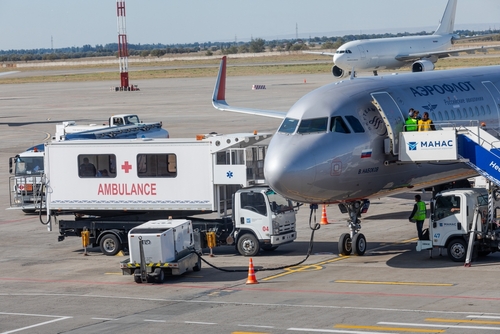
U.S. officials and hospital leaders moved an American health worker from the outbreak zone in eastern DRC to Nebraska Medical Center in Omaha on Dec. 29, 2018, after a possible Ebola exposure while caring for patients. The patient was reported to be without symptoms at the time of transport, which is critical because Ebola spreads through contact with body fluids after symptoms begin. Nebraska’s biocontainment unit was used to monitor the individual through the standard 21-day window.
The Nebraska approach reflects a hard-earned lesson: taking infectious-disease threats seriously does not require panic, but it does require capacity. The U.S. built designated high-level isolation units after the 2014 West Africa epidemic led to imported cases and a small number of secondary infections among healthcare workers. In this case, the emphasis from responders was that the public was not at risk from an asymptomatic patient under strict monitoring—an example of containment without broad, economy-disrupting measures.
Violence in the DRC undermined outbreak control and prompted pullbacks
The wider context was a major Ebola outbreak in North Kivu and Ituri—an area burdened by armed groups, displacement, and persistent distrust of authorities. By late December 2018, reporting described nearly 600 confirmed and probable cases with roughly 360 deaths, making it the second-largest Ebola outbreak on record at that time. Public anger after some outbreak areas were excluded from national elections contributed to unrest, including attacks on Ebola facilities.
Those security shocks carried direct public-health consequences. Contact tracing and ring vaccination require steady access to communities, reliable movement by health teams, and consistent local cooperation. When facilities are attacked, staff are threatened, and travel becomes unsafe, those basics break down. Some humanitarian organizations, including Médecins Sans Frontières, withdrew or relocated international personnel from the most insecure zones, leaving fewer trained people on the ground precisely when surveillance and rapid isolation matter most.
Why “wider outbreak” fears persist even when risk is managed
Evacuations of potentially exposed foreigners trigger public concern because history shows that travel can move Ebola beyond the initial cluster. During the 2014–2016 West Africa epidemic, a traveler carried the virus to Nigeria, and aggressive contact tracing was needed to stop further transmission. The United States also experienced an imported case in Dallas that led to infections in two nurses, underscoring how quickly a hospital setting can amplify risk when protocols fail.
At the same time, the DRC-to-Omaha evacuation illustrates the difference between controlled, monitored transport and uncontrolled spread. The person flown to Nebraska was not symptomatic, was placed in a specialized unit, and was observed under strict protocols designed for high-consequence pathogens. That contrast matters for public understanding: the most serious vulnerability is often not the evacuation itself, but the chaos that follows when violence prevents local isolation, testing, and vaccination in the outbreak zone.
Policy tension: protect Americans without expanding government overreach
For U.S. policymakers, outbreaks abroad raise a recurring tension: Americans expect the federal government to protect public safety, yet they also remember how emergency powers can be stretched into overreach. The practical conservative approach is targeted readiness—clear screening and monitoring rules, strong hospital infection-control standards, and transparent communication—without reflexive, sweeping restrictions untethered from evidence. Where data are limited, officials should say so plainly and focus on measurable risk factors like symptoms, exposure history, and verified chains of transmission.
In 2026, with the Trump administration accountable for federal execution, voters will judge whether Washington can deliver competent, limited, constitutional governance when the next overseas outbreak threatens to reach U.S. soil. The DRC episode shows the playbook that works: secure specialized care for those at risk, maintain strict containment protocols, and avoid fear-driven narratives that erode trust. The bigger warning signal remains overseas instability—when violence blocks disease control, outbreaks last longer, spread farther, and force harder choices at home.
Sources:
American possibly exposed to Ebola in Congo flown to U.S. hospital