
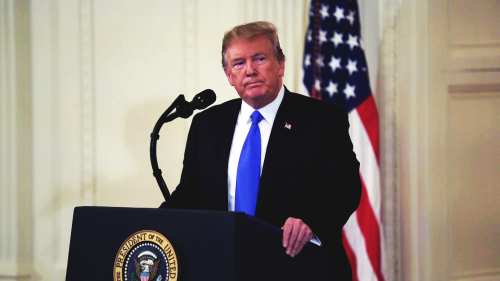
At a NATO press conference, President Trump said he is “number one on Iran’s kill list,” underscoring a direct threat from a hostile regime.
Story Snapshot
- Trump publicly claimed Iran ranks him its top assassination target during a NATO presser.
- A separate Justice Department case alleged an Iranian murder-for-hire plot against Trump, heightening concern.
- No independent proof of a formal “kill list” has surfaced; key claims remain unverified.
- The White House faces pressure to deter Iran while guarding free speech and national morale.
Trump’s On-Camera Claim At NATO Raises The Stakes
President Donald Trump told reporters he is “number one on Iran’s kill list” while taking questions at a NATO event. The statement drew instant attention because it points to a direct, personal threat from a foreign adversary. Trump has repeated similar lines in other interviews and press exchanges. One clip from an international broadcaster captured the claim without hedging, putting the remark squarely on the record and forcing security planners to respond in real time.
Trump and his team have long argued that Iran seeks revenge for past U.S. actions, including the takedown of senior figures. Supporters say this is the cost of standing up to a terror-sponsoring regime. Detractors question the details and ask for proof. The claim’s tone was firm and plain. The moment challenged allies and critics alike to decide what deterrence looks like when a sitting American president says he is the top target of a hostile state.
What We Know Versus What We Can Prove
Trump’s remark is clear. But the existence of a formal Iranian “kill list,” and his place at the top, has not been independently confirmed. Major outlets have reported on disputes around related claims about Iran’s leadership status, which adds friction to the debate. That said, a federal case described a murder-for-hire plot tied to Iranian actors that allegedly targeted Trump, suggesting the threat environment is not hypothetical and demands steady, transparent vigilance by U.S. authorities.
This mix of confirmed plots and unverified rankings creates a policy bind. The United States must protect the president, deter Iran, and avoid giving propaganda wins to a regime that tries to intimidate Americans. Conservatives see a familiar pattern: foreign enemies test our will, legacy media nitpick the messenger, and bureaucrats go silent. The correct path is to harden security, show strength, and insist on facts released to the public when possible.
National Security, Deterrence, And American Resolve
Federal investigators and military planners now face a simple mission: stop any attack and make the cost to Iran unmistakable. Congress can demand classified briefings and push for declassified summaries that do not risk sources and methods. The goal is to inform the public without handing Iran an intelligence gift. Clear deterrence, backed by force and sanctions, saves lives and upholds America’s credibility with allies who rely on U.S. leadership in dangerous times.
"I like being number one on TikTok better"
US President Donald Trump has claimed that Iran may target him personally, saying he is “number one” on Tehran’s alleged kill list.
Speaking about the threat, Trump said he was not concerned because he was “doing his job” and argued… pic.twitter.com/Ft6S5rVeqL
— Global South World (@g_s_world) July 8, 2026
For families watching rising prices and border chaos at home, this is another reminder: weak policy invites danger. A regime that chants “Death to America” is not shy about threats. The Trump administration must continue to harden sites, protect speech, and defend constitutional order while keeping energy affordable and our border secure. Strength abroad and law at home go together. That is how we keep faith with our troops, our police, and every parent raising kids under the flag.
What Accountability Should Look Like Now
Lawmakers should press the Central Intelligence Agency (CIA), the Department of Defense, and the Department of Justice (DOJ) for updates on Iranian plots, including any documents naming U.S. targets. A focused review can separate rumor from threat and guide resources to front-line protection. If more evidence confirms Iranian plans, the administration can rally allies for tighter pressure. If parts remain unverified, officials can still surge protection and warn Iran that any attempt will be met with swift consequences.
Bottom Line For Readers
Trump said he is Iran’s top target. A federal case shows Iran-linked actors allegedly tried to arrange his killing. A formal “kill list” has not been publicly proven. That does not change the duty to protect the president and deter Iran. America must project strength, demand facts, and never let a terror state chill our speech or our votes. That is how a free people answer threats—calm, ready, and united around the Constitution and the truth.