
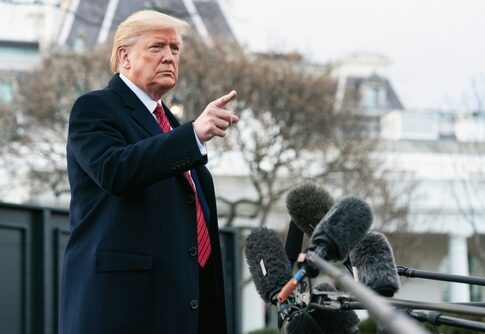
Fresh Israeli intelligence warning of a new Iranian plot to kill Donald Trump has reignited fears that shadowy power games, not public accountability, are steering America’s security decisions.
Story Snapshot
- Israel reportedly shared new intelligence with Washington claiming Iran is plotting another attempt on Trump’s life.
- U.S. officials say security around Trump, including aircraft choices and travel, has been shaped by repeated Iran-linked threat reports.
- Iran’s leaders flatly deny any plan to assassinate Trump, calling U.S. and Israeli claims baseless and political.
- Past Justice Department cases show real Iranian-backed murder-for-hire plots, but details of this latest warning remain secret.
What Israel Told Washington About a New Plot
Israeli intelligence services recently informed the United States that Iran had devised a fresh, specific plot to assassinate President Donald Trump, according to reports citing unnamed U.S. officials. These officials said the warning described a plan tied to Iran’s drive for revenge over Trump’s 2020 order to kill General Qassem Soleimani, a top commander in Iran’s Revolutionary Guard. The intelligence reportedly pointed to an organized effort, not just angry rhetoric, and was serious enough to be shared quickly with American security agencies.
Reporters say Israeli information also mentioned an alleged “Mukhtar” unit inside Iran that works with criminal networks abroad, including cartels and members of the Iranian diaspora, to carry out killings. At the funeral of Iran’s former Supreme Leader, video analyzed by Western outlets showed banners with threats against Trump, including one saying “We will kill Trump,” which added to alarm among U.S. officials. So far, no government has released the actual intelligence file, leaving the public to depend on secondhand descriptions from media and unnamed sources.
How U.S. Security Around Trump Has Been Shaped by Threat Intelligence
U.S. Secret Service teams have already changed how they protect Trump because of earlier reports of Iranian plots. In 2024, U.S. intelligence from a human source warned of a scheme by Iran to assassinate Trump, leading the Secret Service to ramp up security before his campaign rally in Butler, Pennsylvania, even though the later shooting there was found to be unrelated. The Office of the Director of National Intelligence also briefed Trump and his campaign about Iranian assassination plans that were meant, in part, to destabilize American politics before an election.
During one foreign trip, Trump’s team swapped him onto an older but more battle-tested aircraft after four U.S. officials raised worries about the newer plane’s defensive features and survivability. Those officials told reporters that Israeli intelligence about Iranian plots helped drive that decision, highlighting how foreign and domestic agencies can shape even the smallest details of a president’s travel. On Air Force One, Trump himself has said, “I’m number one on the kill list for Iran,” showing how deeply these warnings have affected his view of personal danger and foreign policy.
Iran’s Flat Denials and the Evidence Gap
Iran’s leaders strongly reject all claims that they are plotting to assassinate Trump today. In an exclusive interview, Iranian President Masoud Pezeshkian told NBC News there was “none whatsoever” in terms of any effort to kill Trump and said, “We have never endeavored to do this in the first place, and we never will.” Iran’s Foreign Ministry spokesperson and its ambassador to the United Nations have likewise called the accusations baseless and politically driven, pointing instead to their legal complaints over Soleimani’s killing.
Iran has not, however, answered point by point the specific claims about the “Mukhtar” unit, alleged coordination with cartels, or the aircraft swap driven by Israeli intelligence. The dispute leaves Americans stuck between secret intelligence they cannot see and blanket denials they cannot test. That information gap feeds a broader belief, shared by many conservatives and liberals, that powerful insiders in Washington and foreign capitals play by their own rules while citizens are told to simply trust unnamed sources.
Past Murder-for-Hire Cases and Why This Feels Different
The Justice Department has already charged and, in some cases, convicted people in Iran-linked murder-for-hire plots involving U.S. political figures, including Trump. One federal case described a Pakistani man tied to Iran who tried to hire hit men to kill American politicians on U.S. soil, including Trump, and a jury found him guilty. Another case ended with the conviction of an Iranian intelligence agent for murder-for-hire and terrorism in a foiled plot, showing that Iran’s security services have used foreign assets for lethal missions before.
✅ Fact Check: Israel warns of new Iranian assassination plot against Trump + $20 million bounty claim**
The core of this post is partially verified:
– Israel has indeed shared specific intelligence with the U.S. indicating that Iran has developed a **new, active plan** to…
— 𝐌𝐈𝐂𝐇𝐀𝐄𝐋 𝐎𝐋𝐈𝐏𝐇𝐀𝐍𝐓 (@MichaelOliphant) July 10, 2026
Those past cases prove that some alleged plots are real, not just media drama, and they help explain why threat reports about Iran get taken seriously by U.S. agencies. Yet this newest Israeli warning stands out because key facts remain hidden. There is no public evidence of a specific plan to target Air Force One, no court filings naming hit team members, and no released documents explaining how the plot would work. That mix of real past crimes and secret present claims makes it hard for citizens to know when they are hearing solid intelligence and when they are watching geopolitical theater.
What This Means for Americans Who Feel Shut Out
For many Americans, especially those over 40 on both the right and the left, this story taps into a deeper frustration with government and elites. Conservatives see a pattern where global tensions and foreign plots are used to justify endless security spending while basic border control and domestic needs go unmet. Liberals see high-risk foreign games played while social programs shrink and economic inequality grows. Both sides suspect that the “deep state” and foreign partners trade in fear while regular people bear the costs.
The clash between secret Israeli intelligence, U.S. security moves, and Iran’s blanket denials raises a basic question: who gets to decide when a threat is real enough to change a president’s plane, trigger a war plan, or limit public debate, and on what proof? Until more of the underlying evidence is made public, the case will likely feed the belief that life-and-death decisions are being made in back rooms by people who rarely have to answer to voters.
Sources:
nypost.com, nytimes.com, youtube.com, facebook.com, telegraph.co.uk, x.com, cnn.com, apnews.com, france24.com, abcnews.com, pbs.org, justice.gov