
President Trump’s new banking order turns the financial system into a frontline tool against illegal immigration, tightening access to loans and accounts for people in the country unlawfully.
Story Snapshot
- Trump signed an order telling regulators to treat immigration status as a financial risk factor in banking.
- Federal agencies are drafting guidance that will push banks to scrutinize loans, credit cards, and accounts for undocumented customers.
- The move aims to discourage illegal immigration by making it harder for those here unlawfully to live and work comfortably using U.S. banks.
- Critics say millions of immigrants could lose access to basic financial services, while supporters see a tough but lawful enforcement tool.
Trump Order Puts Immigration Status Into Banking Risk Rules
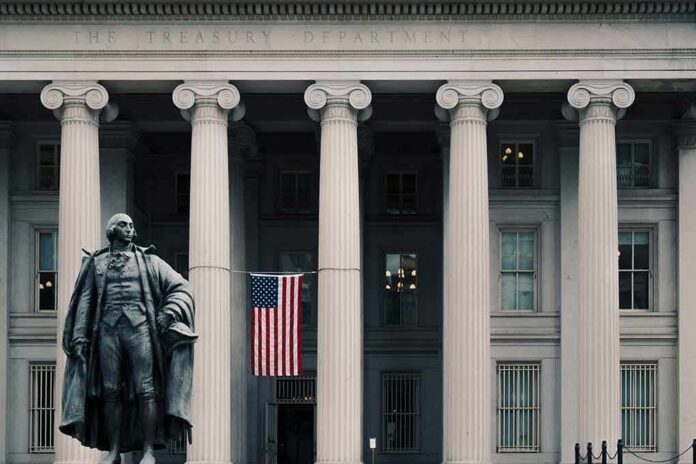
On May 19–20, 2026, President Trump signed an executive order called “Restoring Integrity to America’s Financial System.” It tells the Treasury Department and federal financial regulators to treat immigration and work authorization status as part of how banks judge financial risk. The order fits his larger promise to clamp down on illegal immigration by using every legal tool available, including the banking system, instead of relying only on border arrests and workplace raids.
The order does not create a simple nationwide rule that every customer must prove citizenship right now. Instead, it directs regulators to update rules and guidance under the Bank Secrecy Act and other laws so that banks can ask more questions and demand more documents when they see warning signs tied to immigration status, work authorization, or suspect money flows. For everyday customers with clean records, changes may be slow and less visible, but those without legal status will face more scrutiny.
New Guidance Pushes Banks To Scrutinize Undocumented Customers
The order tells three major bank regulators—the Office of the Comptroller of the Currency, the Federal Deposit Insurance Corporation, and the National Credit Union Administration—to issue joint guidance on lending to people who are not legally allowed to work in the United States. That guidance warns that loans and credit to unauthorized workers carry “elevated credit risk,” since deportation or job loss could make repayment unlikely. As a result, banks are being steered to limit mortgages, auto loans, and credit cards for undocumented borrowers.
Within about 60 days of the order, the Treasury Secretary must send banks an advisory listing “red flags” tied to non‑work‑authorized populations. These warning signs include heavy use of Individual Taxpayer Identification Numbers to open accounts or get credit when lawful status is not verified, unusual payroll‑linked cash movements, foreign consular IDs used instead of U.S. documents, and money patterns that point to labor trafficking or off‑the‑books work. For many institutions, this will mean closer review of existing immigrant customers and more frequent reporting of suspicious activity to the government.
Supporters See Lawful Pressure For Self‑Deportation, Critics Warn Of ‘Debanking’
Supporters of the Trump order argue that cutting off easy access to bank accounts and credit will make it harder for illegal aliens to settle in and profit from breaking immigration laws. They say taxpayers should not have to watch banks help people without legal status buy homes, finance cars, or move money freely while citizens and legal immigrants follow the rules. In their view, treating immigration status as part of risk is simple common sense: someone who can be deported at any time is a shaky bet for long‑term loans.
Consumer advocates and immigration groups warn that the order will “weaponize” the financial system and could push millions of immigrants out of mainstream banking, even some who have temporary or pending legal status. They fear families will be forced into cash‑only lives, making them easier prey for loan sharks and criminal fraud and harder for regulators to monitor. Analysts also point to a long history of attempts to tighten immigrant banking access that run into legal challenges and resistance from banks, which prefer clear rules and broad customer bases.
Long‑Running Fight Over Using Banks As Immigration Enforcers
This move continues a pattern going back decades, where Washington tries to use the financial system as an indirect immigration enforcement tool. Past laws and proposals have aimed to restrict bank access for people who crossed the border illegally, but many stalled or were watered down once banks raised concerns about cost, complexity, and liability. At the same time, many institutions opened doors to immigrants using Individual Taxpayer Identification Numbers and foreign IDs, seeing a chance to grow their customer base while staying inside existing rules.
Trump’s order shifts that balance back toward enforcement by telling regulators to rewrite rules around customer identification, data sharing, and risk scoring so immigration status matters more in everyday banking decisions. It still stops short of forcing immediate mass account closures, but it clearly invites banks to flag, limit, or exit relationships when immigration questions arise. For conservatives who are tired of open‑border chaos, it marks a major step: Washington is finally treating illegal presence as a real financial risk, not just a political talking point.
Sources:
thegatewaypundit.com, cnbc.com, bloomberg.com, wsj.com, english.elpais.com, blog.demineimmigration.com, spectrumlocalnews.com, theindianalawyer.com, nclc.org, facebook.com, youtube.com, charityandsecurity.org, instagram.com, brookings.edu, core.ac.uk