

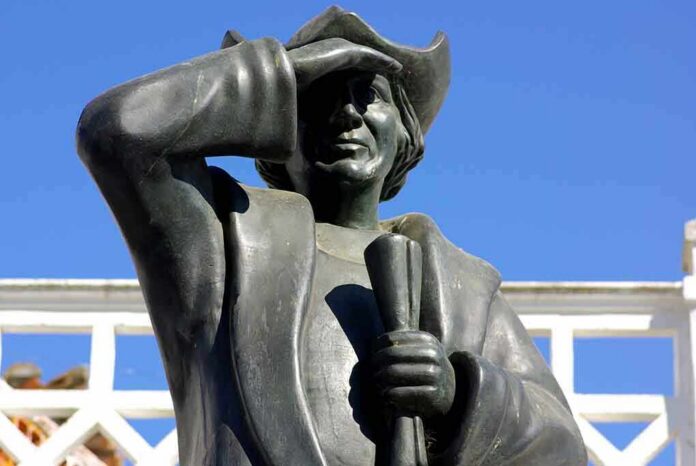
President Trump used a White House Columbus Day celebration to reaffirm a federal observance that Congress set decades ago, casting Christopher Columbus as a national hero while inviting the country to mark the day.
Story Highlights
- Trump marked Columbus Day with a White House celebration and formal proclamations in 2025 and 2026.
- The proclamations praised Columbus and called for national observance with ceremonies and activities.
- Federal law has long requested the president to proclaim the second Monday in October as Columbus Day.
- The event revived debate over how the nation frames the holiday’s meaning and history.
Trump Proclaims Columbus Day And Hosts White House Celebration
President Trump hosted a Columbus Day celebration at the White House and tied it to his formal proclamations honoring Christopher Columbus. The 2025 proclamation called Columbus “the original American hero” and urged Americans to observe the day with ceremonies and activities. Trump highlighted the holiday again in 2026, citing the long-standing congressional request for yearly proclamations of Columbus Day. A Cabinet meeting on October 9, 2025, featured the signing and applause as he previewed the observance.
White House coverage and national outlets reported that Trump framed the moment as a return to traditional observance. He praised Columbus as a symbol of exploration and of Italian American heritage, echoing themes found in the proclamation text. Reports noted the celebratory tone among senior officials and guests when Trump signed and promoted the observance during the 2025 Cabinet session, underscoring his push to elevate the holiday’s profile.
What Federal Law Says About Columbus Day
United States law has, for decades, requested the president to issue a yearly proclamation designating the second Monday in October as Columbus Day. The statute also invites Americans to observe the day and asks government officials to display the flag on federal buildings. Congress moved the holiday to Monday in 1968 under the Uniform Monday Holiday Act, which standardized federal observances across the calendar. Both the 2025 and 2026 proclamations pointed back to this legal framework.
Policy analysts note that the 1968 change built on earlier observances that were already common in most states. Congress viewed the day as a way to honor immigrant courage and national confidence in the future. Federal employees continue to treat the date as a holiday, with agencies and schools often adjusting operations around the observance. Trump’s actions therefore continued, rather than created, a national practice that carries both historic and legal roots.
The Ongoing Debate Over National Story And Identity
Many communities now approach the second Monday in October through different lenses. Some center on Italian American heritage and Columbus’s role in Western exploration. Others mark Indigenous Peoples Day and focus on the harms that followed European settlement. That split reflects a deeper debate over national identity and which stories public holidays should lift up for future generations. The White House celebration placed the emphasis on Columbus and immigrant heritage.
Trump’s proclamations argued for “reclaiming” Columbus’s legacy and encouraged public ceremonies that honor exploration and achievement. Supporters see this as defending tradition and rejecting what they view as erasing history. Critics in many cities and schools have shifted programming toward Indigenous voices and historical reckoning. Federal law remains clear about the Columbus Day proclamation, but local choices show how cultural meaning can diverge from national text.
Why This Moment Resonates Beyond One Holiday
Public battles over symbols often stand in for larger fights about who gets heard and who benefits from federal power. Many Americans on the right and the left worry that elites steer these calls while everyday voices get sidelined. A White House Columbus Day celebration may feel simple, but it sits inside disputes over schools, statues, and which histories get classroom time. Those fights shape trust in government and in the stories leaders tell about the country’s past.
🇺🇸‼️ | President Donald Trump is hosting a Columbus Day celebration at the White House. The event honors Christopher Columbus and Italian-American heritage ahead of the official holiday on October 12. Trump recently issued a proclamation designating the day and previously… pic.twitter.com/cuWlqnJpIc
— UHN Plus — Breaking News (@UHN_Breaking) October 9, 2026
The legal piece is settled: the president is asked to proclaim Columbus Day every year, and the flag should fly on federal buildings. The cultural piece continues to evolve as communities choose how to observe. Trump’s event signals a clear choice to honor Columbus and Italian American heritage within the long-standing federal framework. For citizens who feel unheard, understanding both the law and the symbolism helps explain why this yearly date still sparks strong reactions.
Sources:
youtube.com, whitehouse.gov, govinfo.gov, nypost.com, federaltimes.com, congress.gov, yesmagazine.org, gse.harvard.edu