
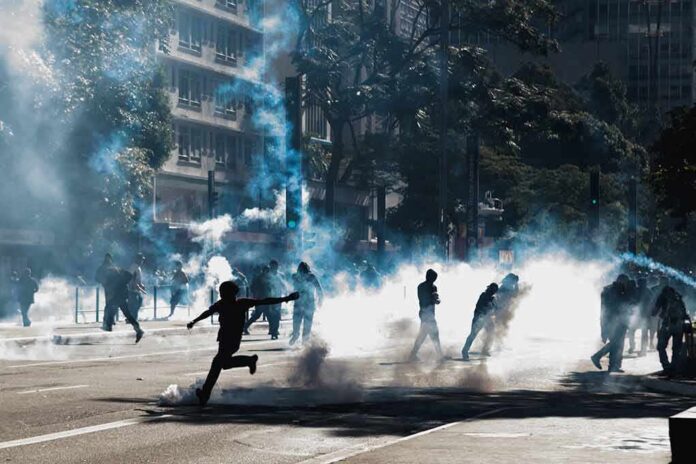
Riot police in Paris fired tear gas at student protesters as a nationwide movement over school funding swelled into the tens of thousands.
Story Snapshot
- Police used tear gas in Paris as student protests over school funding intensified.
- Government figures counted more than 250,000 demonstrators nationwide at recent peaks.
- Rights groups criticized force used against minors during school blockades.
- Officials paused stun grenade use after a serious injury deepened concerns.
What Happened On The Streets Of Paris
Paris saw tense scenes as students marched for more money for schools and safer buildings. Riot police confronted crowds outside several high schools. Officers fired tear gas to clear blockades and disperse groups near burning barricades. Video from Associated Press showed gas drifting across a barricaded campus area where masked youths stood by a large fire. Police also used water cannons in parts of the city on earlier days, reflecting standard French crowd-control tactics reported in this wave.
Authorities framed the deployments as responses to violent fringes on the edge of larger, mostly peaceful marches. The Interior Ministry reported that hundreds of schools faced blockades or disruptions in recent days. National headcounts from prior peak days placed turnout above a quarter million, underscoring the scale and pressure on public order planning. Officials said tools like tear gas and water cannon target small groups that set fires or throw objects, a pattern seen in past French protests.
Why Students Are Protesting Now
Students cited overcrowded classes, staff shortages, and aging buildings. Many said they feel left behind and want fair chances to learn and advance. Parents and unions joined marches to support demands for more teachers, smaller classes, and repairs. Reporting described blockades at school gates and marches from central squares across several cities, including Paris and Marseille. Even when marches were peaceful, isolated fires and standoffs sometimes drew forceful police responses with tear gas.
These protests fit a long French pattern where youth movements meet a public-order focus from the state. News outlets and wire services reported tear gas used in several cities during the same week. That approach is not unusual in France, where police often use gas and batons to manage large crowds. Rights groups argued the tactics are too harsh for minors. They warned that heavy-handed responses can deepen anger and risk more injuries among teenagers.
Escalation, Injuries, And A Policy Shift
The government ordered a pause on stun grenade use after a fifteen-year-old lost a hand during a clash with riot police. The Interior Minister announced the suspension as officials reviewed rules for these devices. The change did not affect tear gas use, which continued during recent Paris operations. The injury intensified scrutiny of tactics and raised questions within France about how to keep order without causing lasting harm in school-centered protests.
Officers Move to Clear Cours de Vincennes Outside Hélène Boucher School Amid Growing Protest Tensions
Footage reportedly shows French police deploying tear gas to disperse protesters blocking Cours de Vincennes near the Hélène Boucher school in Paris. Officers moved in to reopen… pic.twitter.com/GI9RDpw5td
— EuroPost Agency (@EuroPostAgency) October 8, 2026
Ministry briefings and wire reports also noted injuries among students and school staff, along with arrests tied to vandalism and fires. Reuters reported police used tear gas and water cannons to disperse violent groups on the fringes of marches in several cities, including Paris. Lawmakers were told that the toll among teenagers and educators had become one of the worst in decades for school-related unrest, which further raised alarm about the trajectory of the crisis.
Why This Matters Beyond France
Public education sits at the heart of a nation’s promise of equal opportunity. When students say classrooms are too crowded and buildings unsafe, people on both the right and left hear a common failing: government systems that take taxes but do not deliver results. The French scenes show how fast trust breaks when families see decay and delay. The state’s answer, seen in smoke and sirens, can look like order to some and overreach to others.
Americans watching from afar may recognize the pattern. Big problems pile up while leaders argue. Budgets get tight, and basic services suffer. Then the youngest citizens end up in the street asking for the basics: teachers, safe halls, working heat. French officials now face a simple test with hard choices. Fix what is broken in schools, calm the streets, and limit harm to kids. If they fail, the cycle of anger and force will likely grow.
Sources:
apnews.com, lbc.co.uk, bbc.com, bbc.co.uk