

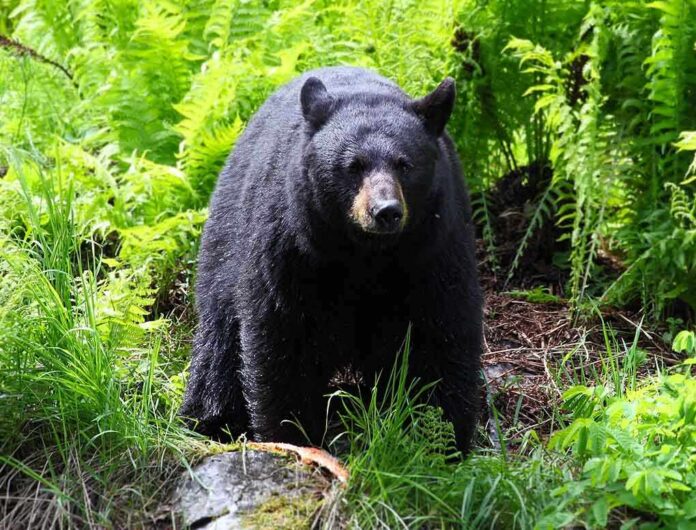
Feeding wild bears rewires their behavior in ways that are difficult to reverse; once a bear learns that people equal calories, managers are often left with an unenviable choice between human safety and the bear’s life.
The Short Version
- Montana Fish, Wildlife & Parks (FWP) captured 15 black bears at a residence north of Bozeman; 14 were euthanized and one cub was transferred for potential zoo placement.
- FWP documented the bears as “extremely food conditioned and habituated to human presence,” citing an immediate human-safety risk.
- The investigation centered on alleged supplemental feeding, which is illegal under Montana statute MCA 87-6-216 and carries criminal penalties.
- Scientific literature and agency practice align: feeding drives bear–human conflict; once food conditioning is entrenched, nonlethal tools have limited, short-lived effect.
What Happened and Why It Matters
Over two days of fieldwork in late September, Montana wardens and biologists responded to reports of supplemental feeding at a private property north of Bozeman and encountered an unusual concentration of black bears. By the agency’s account, these animals were not merely tolerant of people; they sought out human-associated food and showed little to no avoidance of humans—classic indicators of “food conditioning” and “habituation,” the paired behavioral shifts that pull wild bears into conflict cycles. FWP removed 15 bears from the site. Fourteen were euthanized; a single cub was moved to Montana WILD in Helena for evaluation and potential placement at an accredited zoo. The department grounded its actions in public-safety concerns and state law prohibiting supplemental feeding of game animals, including bears.
FWP’s description of the bears’ behavior is plain: they had shifted away from natural forage to human-provided calories and no longer behaved cautiously around people, a combination the agency characterized as an unacceptable safety risk in a residential setting. That framing connects directly to the decision to euthanize most of the captured bears rather than attempt relocation or conditioning. The practical question for managers is not whether a bear has ever taken human food—many do at least once—but whether the bear has learned to rely on those rewards and will predictably seek them out again. On that point, both agency experience and the research record are consistent: once bears are strongly food-conditioned, aversive conditioning and relocation deliver, at best, short-term fixes with high failure or return rates.
The Behavior Behind “Food-Conditioned” and “Habituated”
Food conditioning is associative learning: a bear experiences a caloric jackpot—garbage, pet food, livestock grain, fruit piles, or deliberate feed—and maps that payoff to a location, a container type, an odor, or a human-built setting. Because bears are energy maximizers, the behavior is reinforced quickly. Habituation is distinct: repeated neutral exposure to people without negative consequence reduces the bear’s innate wariness. Together, the two processes shorten the distance at which a bear will approach homes, cars, or people, and increase the probability the bear will test doors, break into sheds, or linger on porches. The public often looks for dramatic aggression as the trigger for agency action. Biologists track risk earlier, at the point a bear has learned that residential spaces produce reliable calories and shows little avoidance, which is precisely what FWP reported documenting at the Bozeman-area property.
This is not a Montana-only dynamic. Park and state agencies across North America describe the same cycle: unsecured or intentional food attractants concentrate bears near people; short-term success finding those calories teaches bears to return; conflicts escalate; lethal outcomes become more likely. Rigorous studies have found that aversive conditioning—rubber bullets, noise, dogs—can increase short-term wariness but does not reliably change bears’ use of human-dominated spaces without concurrent removal of the food source. Relocation fares no better for entrenched cases, with high return rates and poor survival documented for food-conditioned black bears moved away from conflict areas.
FWP’s Legal and Management Framework
Montana’s statutory backdrop treats feeding big game as a serious offense for exactly these reasons. MCA 87-6-216 prohibits supplemental feeding; violations can draw fines, jail time, and loss of privileges. In this case, FWP publicly tied the observed behavior to reported feeding at a residence and stated plainly that the bears’ loss of fear and shift to human food created a safety risk that justified euthanasia. Enforcement and prosecution details are separate processes; the management decision at the property addressed the immediate presence of multiple habituated, food-conditioned bears in a neighborhood setting. The agency’s numbers are specific and traceable: fifteen captured, fourteen destroyed, one cub diverted to potential permanent care.
The decision tree biologists use is not sentimental, but it is not cavalier either. It weights three variables: access to attractants, the bear’s response to people, and the bear’s prior reward history. Remove the attractant, and some bears revert to natural foraging. Yet when a bear has been repeatedly rewarded for approaching homes—and shows little flight response—relocation imports the problem elsewhere and conditioning buys only a brief reprieve unless every future attractant is locked down. Those constraints tighten further when multiple bears are congregating at a single residential food source, as reported here.
Why Nonlethal Options Narrow as Conditioning Deepens
Nonlethal tools are not myths; they are conditional. Aversive conditioning can interrupt incipient patterns when applied early—soon after the first known reward—and paired with rigorous attractant removal across the neighborhood. But the longer a bear cashes in, the stickier the association. Experimental and management studies converge: treated bears often return to urban edges within weeks, and relocated bears home back or resume conflict behaviors while suffering higher mortality in unfamiliar terrain. Sanctuaries and zoos are limited solutions; placement capacity is scarce and typically reserved for orphaned cubs. That reality aligns with FWP’s single cub transfer and the euthanasia of the remaining animals.
The public understandably searches for alternatives when outcomes are lethal. The durable alternative is prevention: stop the first reward. That means locked dumpsters, electric fencing around small livestock, bringing in bird feeders during bear-active seasons, securing pet food, and never deliberately feeding wildlife. Agencies from the National Park Service to state wildlife departments trace the arc of modern bear management back to the 1970s—a wholesale shift from open dumps and feeding spectacles to strict attractant control because the old system manufactured conflict and got bears killed.
What This Case Signals for Communities in Bear Country
For homeowners, the lesson is immediate and uncomfortable: a single property that becomes a predictable buffet can draw in multiple bears, teach them the wrong lessons, and force lethal outcomes. For local governments, the policy lever that works is boring but effective—ordinances mandating bear-resistant containers and scheduled pickup, coupled with enforcement that actually changes behavior. For hunters and recreationists, the cultural shift is the same: treat human food and game-processing waste as powerful teaching tools. Managed poorly, they teach bears to approach. Managed rigorously, they teach bears that developed areas are unproductive and not worth the risk.
FWP’s action near Bozeman tracks with both the law it enforces and the management science built over decades: when bears become highly food-conditioned and habituated, especially in numbers, the practical window for nonlethal response is often closed. Prevention remains the one lever that reliably keeps both people and bears out of harm’s way.
RIP @bearlyable2
A 15-year-old was charged by a grizzly bear after walking around the corner of his own chicken coop. And his family, in Montana, thought they were dealing with a cinnamon-phase black bear after it had already raided their chickens earlier in the day. When it… pic.twitter.com/zVL7uSxQoq— 🇺🇸 Thropic Tunder (@oldman_killins) October 2, 2026
How to Reduce the Odds This Happens Again
– Eliminate attractants: bear-resistant trash systems, secured feed, seasonal removal of bird feeders, and clean grills. – Harden the edges: electric fencing for small stock and orchards; close crawlspaces and outbuildings. – Coordinate at the neighborhood scale: one unsecured dumpster can erase everyone else’s diligence. – Call early: report bold bear behavior before rewards accumulate; early intervention is where nonlethal tools work. – Normalize compliance: align local ordinances and HOA rules with state guidance so the preventive standard is clear and enforceable. None of this is glamorous. All of it is cheaper—and kinder—than destroying a dozen habituated bears because someone turned a yard into a feeding station.
Sources:
ground.news, usatoday.com, bozemanmagazine.com, journals.plos.org, gadnrle.org