
Three women were stabbed near Paris’s Porte de Clichy in daylight, and officials say the suspect was quickly arrested at the scene.
Story Snapshot
- Police arrested a man after three women were stabbed near Porte de Clichy in Paris.
- Officials said two victims were severely wounded; details may change as hospitals report.
- An off-duty officer subdued the attacker, according to early reports from the scene.
- Authorities have not announced a motive; prior Paris cases show early details often shift.
What Officials Confirmed So Far
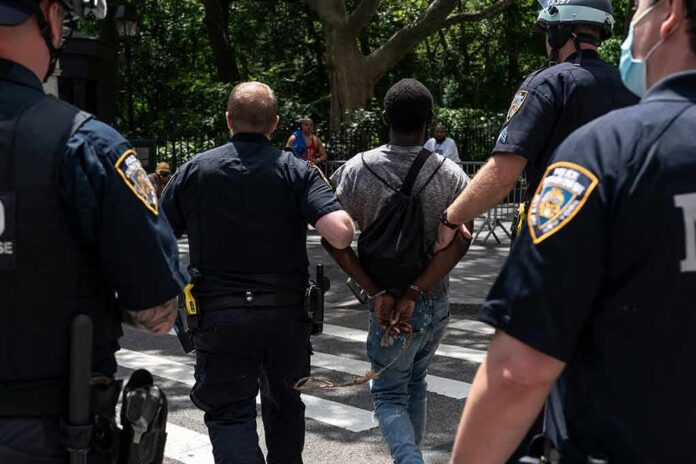
French Interior Minister Laurent Nunez said police detained a man who attacked three women with two kitchen knives near Porte de Clichy in Paris on Monday. Two of the three victims were severely wounded, he added. The arrest followed the incident within a short time window, and the suspect is in custody. These statements set the base facts as investigators work. Early casualty details can change after hospital reviews and later official updates.
A separate report from the scene said an off-duty police officer subdued the attacker and helped end the assault. That account aligns with the quick arrest described by officials. Such bystander or off-duty interventions can limit harm in fast-moving street attacks. Still, police and prosecutors will later release the full timeline, including who made the arrest and where the final detention took place near the transport hub.
Confusion Over Injury Reports Is Common Early
Newsrooms often post first drafts with limited medical data. In this case, one outlet described a victim in critical condition, while another cited severe but not yet final assessments. These gaps are typical in the first hours. Hospitals must stabilize patients, notify families, and speak through prosecutors. Until then, readers should expect ranges and updates. That pattern has shown up before in Paris incidents when severity numbers moved as facts firmed up.
Police and prosecutors in France also use careful language about custody, psychiatric evaluation, and formal charges. English summaries sometimes flatten those terms. That can cause people to mix legal stages or assume a declared motive before one exists. Waiting for the prosecutor’s first communiqué usually clears up the legal status, the likely charges, and confirmed injury levels. That official step helps align media reports to one set of facts.
Why This Resonates Across Political Lines
People on the right and left both worry that basic public safety is slipping and that leaders respond too slowly. This attack, in broad daylight near a busy area, feeds that fear. It also triggers debates about mental health, ideology, and policing. France has seen cases where suspects had prior flags or treatment needs, and the public later asks how the system missed warnings. Those questions often mirror American frustration with institutions seen as slow and opaque.
The open question here is motive. Some social posts tie street violence to larger ideological fights. But officials have not released a motive in this case. Past Paris cases show that motive claims shared online can jump ahead of facts, or borrow details from different incidents. The responsible approach is to track the prosecutor’s updates and the court record. That way, the debate about safety, prevention, and justice starts from verifiable ground.
What To Watch Next
Watch for the Paris prosecutor’s initial statement naming alleged offenses and confirming injury levels. Look for hospital bulletins through official channels to settle severity questions. Expect police to release a clearer timeline, including any role by an off-duty officer and how long the incident lasted. If a motive is identified, it should appear in charging documents or a prosecutor briefing, not only in anonymous leaks or social media commentary.
Sources:
humanevents.com, cbsnews.com, bbc.co.uk, foxnews.com, en.wikipedia.org