

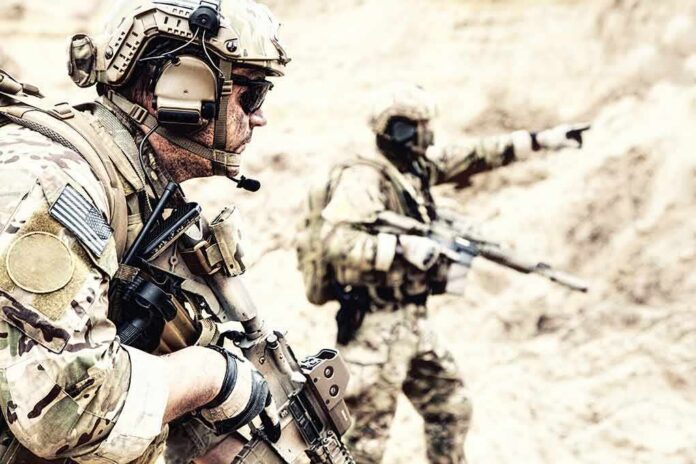
Iran’s top army commander publicly offered cash rewards for killing or capturing invading American soldiers, putting a price tag on U.S. troops amid rising tensions.
Story Snapshot
- Iran’s Major General Amir Hatami announced rewards equal to about $30,000 for Americans killed or captured during an invasion scenario.
- Several outlets reported the pledge the same day, quoting Hatami by name and citing a public event.
- Reports said contributions from the public or private donors would fund the payouts, but details remain sparse.
- The move fits Iran’s pattern of hard-edged signaling meant to raise costs for the United States in a crisis.
Iran’s Public Offer and the Terms Reported
Ahram Online and other outlets reported that Major General Amir Hatami offered a reward worth about $30,000 for anyone who killed or captured and handed over an “invading” American service member. TRT World described Hatami making the offer during a Journalists’ Day event and said the pledge applies if U.S. forces attack Iranian soil. Several reports added that rewards for women would be doubled, signaling a headline-grabbing twist that spread quickly across platforms.
Multiple outlets published similar accounts on the same day, which suggests Hatami’s comments were widely circulated in real time. WION’s segment and TRT World’s write-up both described funding through contributions, though they differed on whether donors would be public or private, and neither offered payout procedures. That lack of mechanics limits clarity on how a claim would be processed, but the statement itself, tied to an invasion scenario, was delivered as a direct, named remark.
How the Offer Fits Iran–U.S. Tensions
The announcement landed amid a heavier cycle of threats and counter-threats between Tehran and Washington. Analysts describe Iran’s approach as hybrid warfare that blends missiles, drones, naval risks, cyber tools, and allied groups to deter U.S. pressure without committing to full war. Reuters recently reported that Iran is widening pressure on trade routes and energy systems to raise the cost of any confrontation for the United States and its partners, which matches the logic of public bounty threats.
Public rewards for harming foreign troops also serve as strategic messaging. They broadcast a cost for any future move into Iran while rallying domestic audiences. The Washington Institute’s assessment of Iran’s playbook highlights persistent coercive tactics that challenge navigation, strike logistics, and test resolve in ways short of open conflict. In that light, Hatami’s remarks function as a warning: if U.S. ground forces cross into Iran, Tehran wants potential attackers to feel hunted and exposed before the first shot is fired.
Risks for U.S. Forces and Policy Choices Ahead
The offer, if taken at face value, could raise risks for American service members stationed across the region. Even a conditional pledge, framed around an invasion, may embolden actors who blur lines between defense of territory and retaliation in gray zones. U.S. planners already face drone and missile risks at bases, contested sea lanes, and information warfare that fuels copycat behavior. A cash incentive heightens fear among troops and families and complicates any brinkmanship over the Strait of Hormuz.
⚡️ BREAKING: Iran places $30,000 bounty on US soldiers amid invasion threats—reward doubled for women. pic.twitter.com/K5mZPe5qh7
— smc ict trader (@Smc_ictfx) August 16, 2026
For leaders in Washington, the episode reinforces a sobering point both conservatives and liberals share: the system often reacts after danger grows. Americans see elites posture while troops carry the burden. Clear policy is needed. That means direct communication to allies, tighter force protection, and a sharper plan to deter attacks without inviting miscalculation. The government must show it can protect its people and avoid drifting into a wider war that most citizens do not want.
Sources:
redstate.com, english.ahram.org.eg, yahoo.com, timesnownews.com, hamerintel.com, facebook.com