
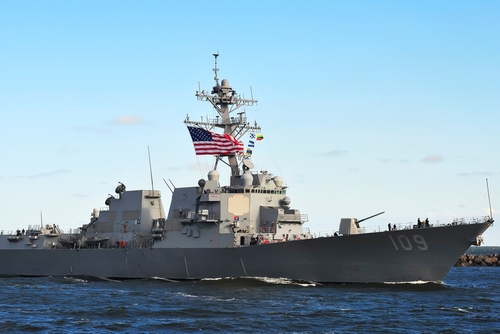
Washington’s quiet surge of ships, aircraft, and Marines around Cuba sets the table for action—but not without a clear order from President Trump first.
Story Snapshot
- Politico reports months of U.S. force positioning around Cuba, enabling rapid options if ordered—not proof of a set invasion date [5].
- Analysts and commentators highlight carrier, Marine, and strike assets in the region, fueling speculation of offensive intent [3].
- Historical experience warns against confusing pre-positioning with final decisions; readiness can deter as much as it prepares [3].
- Conservatives should demand mission clarity, constitutional authority, defined objectives, and exit criteria before any escalation.
What Politico Actually Reports About U.S. Posture Near Cuba
Politico reports that the Pentagon has spent months positioning troops and weapons to make a U.S. military attack on Cuba feasible if ordered, describing a buildup that includes naval and air forces already in the Caribbean and surrounding waters [5]. The piece underscores that these are the “building blocks” for options, not confirmation of a launch date. The report reflects standard contingency planning: move logistics, maritime power, and strike aircraft into range so the Commander in Chief can act quickly if necessary [5].
Additional commentary outlines the types of forces commonly used for rapid action—carrier strike groups, amphibious ships with embarked Marines, and land-based strike aircraft—arguing that such a package could support offensive operations if ordered [3]. This perspective emphasizes capability already in theater, which raises pressure and shortens timelines. However, capability does not equal intent. Military planners routinely assemble flexible options to support deterrence, signaling, or crisis response while national leaders weigh costs and benefits [3].
Separating Readiness From Decision: Lessons and Limits
Neutral context reminds readers that headlines often outpace facts when reporting on deployments; the core question is whether posture signals a decision or preserves options [3]. The United States frequently pre-positions assets so any subsequent decision can be executed within hours, not weeks. That same practice can be misread as a foregone conclusion. The Politico report fits this pattern: robust readiness without public confirmation of an attack order, a distinction that guards against speculation and premature conclusions [3].
Online videos and social chatter amplify invasion narratives, spotlighting persistent flights, guided-missile ships, and Marines afloat, suggesting an “encirclement” of Cuba [7]. Such amplification can blur the difference between preparation and policy. The most reliable thread in the current record remains the Politico reporting on the Pentagon’s months-long preparation for options, not a declared operation. Responsible readers should calibrate confidence accordingly, prioritizing sourced reporting over sensational framing [5][7].
Constitutional Guardrails, Strategic Clarity, and Conservative Priorities
Conservatives expect any use of force to be anchored in constitutional authority, clearly stated national interests, achievable objectives, and a defined end state. The Pentagon’s option-building does not answer these policy questions. Congress’s role and public accounting remain essential before escalation that could draw resources from border security, domestic energy expansion, or inflation relief. A focused strategy should tie any action to concrete U.S. interests—protecting Americans, countering hostile actors, and securing the hemisphere—while avoiding open-ended commitments.
The Greek Courier: Pentagon puts building blocks in place for Cuba in… https://t.co/uxMq3xTIgJ The Pentagon has spent months positioning the troops and weapons needed for the U.S. to launch a military attack on Cuba — all it needs is a final go-ahead from Donald Trump. pic.twitter.com/t0Qnh6xNyy
— Ioannis Damellos (@IDamellos) May 28, 2026
Practical oversight means insisting on specifics: what triggers would justify action, what metrics define success, and how rapidly forces would disengage once objectives are met. Policymakers must also ensure that readiness near Cuba does not dilute deterrence elsewhere or strain supply chains that affect fuel prices and household budgets. Force posture around Cuba may pressure Havana and signal resolve, but it must serve a coherent policy that respects constitutional limits, protects taxpayers, and advances American security without mission creep [5][3].
Sources:
[3] Web – Pentagon ramps up contingency plans for possible Cuba occupation
[5] YouTube – Pentagon quietly planning for possible military operation in Cuba …
[7] Web – Pentagon puts building blocks in place for Cuba invasion