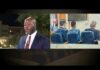


A veteran face of legacy media was fired after blasting network brass, exposing a newsroom power struggle that should alarm anyone who values open debate and accountability.
Story Snapshot
- Scott Pelley was terminated by CBS shortly after a tense staff meeting where he confronted leadership about firings and direction at 60 Minutes [1][2].
- Audio obtained by a national outlet captured Pelley accusing top editors of “murdering” the program amid a sweeping shakeup [3].
- Management framed the overhaul as adapting to a changing media market, while critics called it a purge of veteran journalists [2][3].
- CBS has not provided a detailed, on-the-record rationale for the firing, leaving key questions unanswered [1][2].
What Happened Inside the CBS Meeting
On June 2, 2026, CBS terminated 60 Minutes correspondent Scott Pelley following his direct challenge to network leadership during a staff meeting, where he criticized recent firings and the show’s new direction [1]. Reporting based on audio obtained by a national outlet describes a fiery exchange in which Pelley accused Editor in Chief Bari Weiss of “murdering” the program and questioned leadership’s decisions after surprise personnel changes [3]. Witness accounts and recordings indicate his remarks were unusually blunt for a veteran correspondent [3].
Coverage ties the clash to a broader shakeup that began after David Ellison took control of Paramount and CBS News in 2025, followed by the appointment of Nick Bilton as executive producer and abrupt dismissals of senior staff [2]. Reports note that leaders defended the restructuring as necessary adaptation, even using language about broadcast being a melting ice cube, while rank-and-file journalists saw trusted colleagues removed with little explanation [3]. The confrontation occurred against this backdrop of accelerated change and uncertainty [2][3].
Firings, Editorial Direction, and Staff Backlash
Reports state that key departures included executive producer Tanya Simon and correspondents Cecilia Vega and Sharon Alfonsi, with their exits intensifying internal dissent before the staff meeting [2]. The Los Angeles Times coverage and the recorded audio indicate tensions rose as editorial calls were questioned, including disputes over decisions to delay or alter segments, which some staff viewed as politically tinged while leadership cited quality control and readiness [2]. The resulting environment sharpened concerns over editorial independence and institutional identity [2][3].
NBC-linked audio excerpts and contemporaneous accounts characterize the meeting as unusually raw, with Pelley interrupting and challenging leaders as colleagues looked on [3]. Management emphasized the need to reposition the broadcast for a shifting market and digital competition, a rationale often invoked during major media reorganizations [3]. The immediacy of Pelley’s termination following his remarks fuels debate about whether the move enforced discipline or punished internal criticism tied to newsroom governance [1][2][3].
What We Know—and What We Do Not
The timeline is clear: a sweeping leadership overhaul, an explosive internal meeting with recorded confrontation, and Pelley’s termination reported the next day [1][2][3]. The evidentiary strength rests on audio obtained by a national outlet and detailed secondary reporting, which substantiate the substance and tone of Pelley’s criticism and management’s restructuring case [3]. However, the public record lacks an official CBS termination letter or a precise, on-the-record explanation connecting policy or contractual violations to the firing [1][2].
Scott Pelley blasts CBS after '60 Minutes' firing: 'Inject falsehoods and bias' https://t.co/GwOXNiqe4O
— Rob Bell-Irving (@Irving1Bell) June 3, 2026
For viewers who expect fearless journalism over corporate choreography, the gaps matter. Without a documented rationale, audiences are left to parse clips and headlines rather than clear standards. A flagship program built on tough questions should not turn opaque when those questions target its own leadership. Transparency—release of the full meeting audio, a direct statement of cause, and governing workplace rules—would help determine whether CBS enforced professionalism or chilled dissent in a pivotal newsroom moment [1][2][3].
Sources:
[1] Web – Scott, You’re Fired: Longtime CBS News Reporter and 60 Minutes Host …
[2] Web – Scott Pelley – Wikipedia
[3] Web – Scott Pelley of ’60 Minutes’ says CBS News bosses ‘murdering …