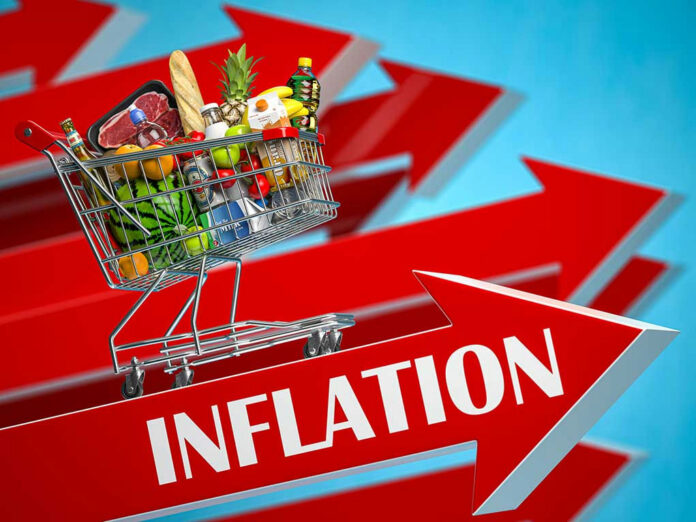
Inflation just hit its highest level in three years, and everyday Americans are still paying the price for years of reckless government spending.
Story Snapshot
- The Consumer Price Index (CPI) rose 4.2% year-over-year in May 2026 — the highest reading in more than three years.
- Inflation has climbed steadily in 2026: 2.4% in January, 3.3% in March, 3.8% in April, and now 4.2% in May.
- Energy prices led the surge, jumping 3.81% in a single month from March to April, with higher energy costs continuing to push the May number higher.
- Core inflation — which strips out food and energy — came in around 2.9% in May, still well above the Federal Reserve’s 2% target.
Inflation Hits a Three-Year High in May
The Consumer Price Index rose 4.2% in May compared to a year ago, matching what economists polled by FactSet had expected. [1] That is the fastest pace of price increases since early 2023. Just months ago, in January 2026, inflation sat at 2.4%. [8] It has climbed every month since. Americans who thought inflation was finally cooling down are now watching it heat back up.
The jump from April’s 3.8% to May’s 4.2% was sharp and fast. [4] Royal Bank of Canada Economics forecast the move, pointing to higher energy prices as the main driver. [3] The Peterson Institute for International Economics warned earlier this year that inflation could exceed 4% by the end of 2026. [6] That threshold has now been crossed ahead of schedule.
Energy and Food Costs Hit Wallets Hard
Energy prices drove much of the recent spike. From March to April 2026 alone, energy prices jumped 3.81% in a single month, according to the U.S. Congress Joint Economic Committee. [7] Food prices also rose 0.50% in that same period. [7] These are the costs that hit working families the hardest — at the gas pump, the grocery store, and on the utility bill. There is nothing abstract about a 4.2% inflation rate when you are filling up your tank.
Core inflation — which removes food and energy from the calculation — rose to 2.8% in April and was forecast at 2.9% for May. [2] [1] That matters because core inflation is slower to move. When it rises, it signals that price pressure is spreading beyond just gas and groceries. The Federal Reserve targets 2% inflation. At 2.9% core, the Fed is still well above its goal.
What This Means for Your Wallet Going Forward
Consumer inflation expectations dipped slightly to 3.5% in May, down from 3.6% in April. [10] But expectations for food costs, rent, and home prices stayed high. Americans are not feeling relief — they are bracing for more pain. When people expect prices to keep rising, they often do. That cycle is hard to break without serious policy changes.
🇺🇸 The First Order Consequence:
– Primary action observed: @AP reports “Asian shares fall” following “a tech sell-off on Wall Street,” suggesting risk assets in Asia repriced downward shortly after the U. S. move
– Primary consequence (directional): equity index level declines… https://t.co/QoLUG5rIlN— U.S.A.I. 🇺🇸 (@researchUSAI) June 10, 2026
The broader inflation trend in 2026 is hard to ignore. Inflation was 2.4% in both January and February, rose to 3.3% in March, jumped to 3.8% in April, and has now hit 4.2% in May. [8] That is a clear upward trend, not a blip. Years of overspending and loose monetary policy left the economy vulnerable. Higher energy costs — partly tied to global conflict — are now making a bad situation worse. The fight against inflation is far from over.
Sources:
[1] Web – BREAKING: Inflation rises 4.2% annually in May, highest in three years …
[2] Web – Inflation in May likely topped 4% for the first time in 3 years …
[3] Web – United States Core Inflation Rate – Trading Economics
[4] Web – Inflation likely to hit a three-year high in May – RBC Economics
[6] Web – [PDF] Consumer Price Index – April 2026 – Bureau of Labor Statistics
[7] Web – The risk of higher US inflation in 2026 | PIIE
[8] Web – Inflation Update – U.S. Congress Joint Economic Committee
[10] YouTube – Inflation Rate – 5/26/2026