
California’s vote count is slow for a reason, and that reason is written into the rules rather than hidden in the shadows.
Story Snapshot
- California allows mailed ballots postmarked by Election Day to arrive and still be counted up to seven days later.
- The official canvass stretches well beyond Election Day, which makes final results lag public expectations.
- Supporters of the system argue that delay is not the same thing as fraud, and that the process is publicly documented and legally authorized.
- The real fight is not only about speed; it is about whether voters trust what they do not see happen in real time.
Why California’s Vote Count Becomes a Political Battlefield
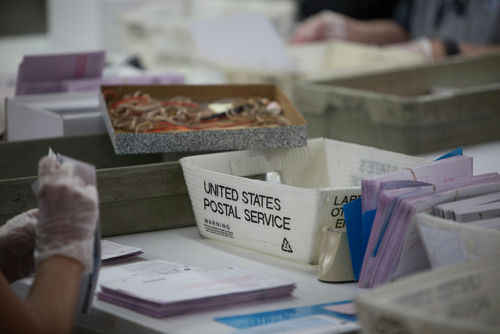
California’s election drama starts with a simple fact: the state does not stop counting when the polls close. It accepts vote-by-mail ballots postmarked by Election Day and received within seven days after it, and county officials continue processing ballots during a long official canvass.[3][1] That structure guarantees a delay, and in a close race delay is exactly where suspicion grows roots.
Critics argue that the slow drip of results creates room for manipulation, or at least for public doubt. The strongest version of that complaint is not that every late ballot is illegitimate, but that the system makes it hard for ordinary people to know how many ballots remain, what stage they are in, and whether the tally is truly settled. California’s own canvass timetable stretches to 30 days for county completion and 38 days for state certification, which leaves a long window for uncertainty.[1]
What the Rules Actually Say
The governing rules are not mysterious. California Secretary of State guidance says any registered voter may vote by mail, and a ballot counts if it is postmarked on or before Election Day and received within seven days after it.[3] The state also requires a structured count and reporting process during the canvass period.[1] In plain English, the state has chosen access and completeness over instant finality, and that choice explains most of the delay people complain about.[3][1]
That matters because a delay is not proof of wrongdoing. It is evidence of a system designed to keep lawful ballots in the count even when they arrive after election night. The National Conference of State Legislatures notes that many states use absentee or mail-ballot deadlines tied to Election Day, while California’s postmark-based rule gives valid ballots more time to arrive.[5] The public may find that annoying, but annoyance is not the same thing as evidence.
Why the Suspicion Keeps Coming Back
Election skepticism thrives in the gap between what citizens expect and what administrators actually do. Voters are trained by television to expect a winner by midnight, but California’s procedure is built for verification, not spectacle. Fox News reported that election expert Hans von Spakovsky described four major causes of delay: mass mail voting, a seven-day receipt window, a cure period for signature problems, and large numbers of provisional ballots that require review.[1] Those are not secret mechanisms; they are the mechanics of the count.
The deeper problem is political psychology. When a race stays unsettled for days or weeks, partisans fill the silence with their own story. Supporters of tighter election rules see a system that invites abuse. Defenders see a system that protects lawful ballots and expands participation. Public policy research from the Public Policy Institute of California has also found that mailing every registered voter a ballot increases turnout, which helps explain why the state continues to defend the model.[2] That is the tradeoff at the center of the fight.
What Would Actually Change the Debate
If Republicans want to make a serious case, they need more than outrage. They need specific reforms, specific evidence, and a willingness to separate delay from fraud. That means pressing for clearer ballot tracking, tighter public reporting, and faster transparency in each stage of verification. It also means acknowledging that California’s current system is not improvised; it is lawfully built, publicly administered, and widely used.[1][3] A broad accusation without proof may energize activists, but it does not persuade skeptical voters.
The common-sense position is simpler than the rhetoric around it. If a state chooses slower but more inclusive counting rules, then officials should explain those rules clearly and report results in a way that ordinary voters can follow. If there are real vulnerabilities, they should be documented, not hinted at. If there are only delays, those delays should be defended honestly as the price of counting lawful ballots. California’s election system may be frustrating, but frustration alone does not invalidate it.[1][3][5]
Sources:
[1] Web – It’s Time for the GOP to “Nut Up or Shut Up” About California’s Voting …
[2] Web – Official Canvass – Vote Counting Process
[3] Web – Voting FAQ | California Voter Foundation
[5] Web – Commentary: Late-Arriving Mail-In Ballots Don’t Cause California’s …