

A 40‑something security guard lay crushed under a Venezuelan mall for eight days—and lived to tell it.
Story Snapshot
- Hernán Alberto Gil Flores survived nearly eight days trapped under a collapsed mall basement
- Rescuers from at least seven nations kept him alive with water through a hose and constant contact
- The dramatic rescue exposed failures in Venezuela’s disaster readiness and building safety
- Global teams earned praise while locals questioned why foreign help was needed to save one man
The man who refused to die under seven stories of concrete
Rescue teams in Venezuela found Hernán Alberto Gil Flores alive under the ruins of the Galerías Playa Grande mall after nearly eight days, buried under what responders described as seven levels of collapsed structure. Reports identify him as a middle‑aged former mall security guard, a father of two, trapped in a basement when twin earthquakes shattered the building. International coverage later confirmed he spent “more than a week” pinned in the rubble before extraction.
Once rescuers reached his position, they saw only his hand and heard his voice. Teams fed water to him through a hose and kept talking to him, hour after hour, to fight panic and shock. El Salvador’s President Nayib Bukele announced that his country’s rescue force had managed to reach Hernán and “established contact,” putting a head of state’s seal on the claim that he was alive and reachable beneath the mall. That kind of public statement is not made lightly; it carried weight far beyond social media.
An international rescue that outshone the host government
Rescuers from more than thirty countries converged on the ruined mall, including Costa Rica, Mexico, Chile, the United States, Portugal, El Salvador, and Venezuela itself. A Publimetro report highlighted the Mexican Red Cross working with the Venezuelan, Colombian, and Costa Rican Red Cross branches to reach the trapped guard. A later clip thanked teams from seven countries for bringing him out alive. On paper, it was a model of international solidarity; in practice, it was also a mirror showing Venezuela’s deep preparedness problems.
According to UnoTV, rescuers attempted more than thirteen different approach maneuvers to reach Hernán because the structure kept shifting and threatening new collapse. A Salvadoran team post described a twenty‑eight‑hour non‑stop push focused solely on freeing him, saying he stayed responsive and hydrated through that marathon effort. That kind of sustained operation demands training, gear, and logistics that many struggling governments simply do not have ready. From a conservative common‑sense view, it raises the blunt question: why did so much of the capacity have to come from abroad?
The miracle narrative and the missing accountability
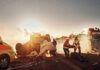
Global media quickly framed the story as a “miracle rescue,” a man “pulled alive from rubble” after eight days. Video segments showed dramatic images of crews tunneling through debris and lifting him out, and one outlet called his survival a symbol of hope for a mourning nation. Hope matters, especially after mass death. But when every headline leans on “miracle,” it can distract from the fact that buildings are not supposed to pancake onto shoppers and workers in the first place.
Basic questions still hang in the air. There is no widely published official Venezuelan health ministry document confirming his hospital admission and medical condition after rescue. Age reports waver between 42, 43, and 44 across outlets, including major international ones. The mall’s location shifts between La Guaira, Vargas municipality, and wider state labels, with no clear, public technical report on how or why the structure failed. For a citizen who values responsibility and clear records, those gaps look less like mystery and more like bureaucracy dodging hard answers.
A father, a hose, and a test of national character
Social and local reports describe Hernán as a father of two who previously worked mall security. That detail matters. This was not a faceless victim; this was a working‑class dad crushed while doing a normal job in a country already strained by economic crisis. Rescuers reportedly kept him alive with water through a simple tube, not some high‑tech gadget. Survival came from basic tools, human focus, and a refusal to give up. That is the upside: individual courage and international cooperation still count, even when systems fail.
On the downside, locals in La Guaira and nearby areas took to the streets, some looting stores as food and supplies ran short after the quakes. Videos showed families holding vigil at rubble piles, clinging to any sign of life. People begged for more equipment, more teams, more help. When citizens see foreign uniforms rushing to save their neighbors while their own government appears slow or silent, it feeds a narrative of national weakness. Some Venezuelans will understandably see the foreign rescue presence not just as help, but as proof their leaders were not ready.
What this rescue tells us about modern disasters
From a broader lens, Hernán’s survival follows a pattern in Latin American disasters: foreign forces and non‑government groups give the strongest evidence of what happened, while official local records come late or stay vague. That gap encourages social‑media speculation about ages, timelines, and locations, which can chip away at trust even when the core miracle—one man saved after eight days—is undisputed. For a reader who values both compassion and accountability, the lesson is sharp: cheer the rescue, but demand honest answers about why ordinary workers end up buried under malls at all.
Sources:
youtube.com, unotv.com, teletica.com, instagram.com, facebook.com, 10news.com, cnn.com, wsls.com, upi.com, publimetro.com.mx