

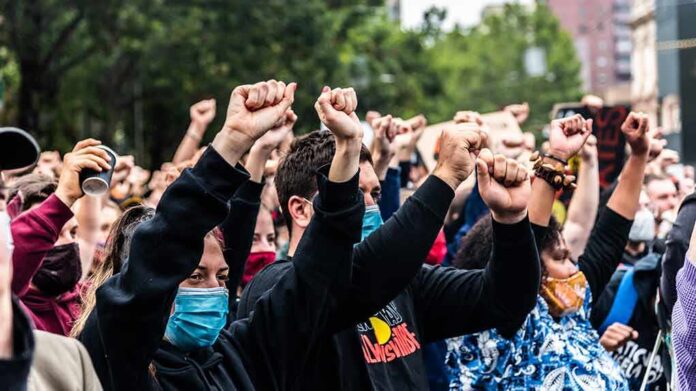
About 30 masked students marched across Middle Tennessee State University chanting “fascists off our campus” while demanding the school ban a conservative speaker and shut down a Turning Point USA chapter.
Quick Take
- Roughly 30 MTSU students marched on November 12, 2026, backing a petition with more than 550 signatures.
- The petition demands MTSU disband its Turning Point USA chapter and ban podcaster Joshua Haymes from campus.
- Students say an October event featured “white nationalist rhetoric” and attacks on LGBTQ+ people, but no transcript or recording has surfaced publicly.
- The chapter refuses to apologize, citing the First Amendment, and says unhappy students can simply leave its events.
- MTSU President Sidney McPhee had not publicly responded to the demands as of the protest.
Students Demand Chapter’s Removal
Protesters marched through campus chanting slogans against what they called fascism, pushing a petition that has drawn over 550 signatures. The petition calls for MTSU to disband its Turning Point USA chapter and bar Joshua Haymes, a former pastor and podcast host, from ever appearing on campus again.
Students told WSMV the group’s October event crossed a line, describing it as containing “white nationalist rhetoric,” racist attacks, and hostility toward LGBTQ+ students. Those are serious accusations. But the public record so far does not include a recording, transcript, or event handout proving what Haymes actually said on that stage.
Who Is Joshua Haymes?
Haymes hosts the Reformation Redpill podcast and is listed as a Turning Point USA speaker. Other outlets have reported he once said Hitler was “misunderstood,” a quote tied to his broader public commentary rather than his MTSU remarks specifically. He has also appeared at events on other campuses, including Illinois State University and the University of Idaho, which has widened attention on him beyond Tennessee.
Separate campus reporting describes the October MTSU event differently than the protesters do. According to MTSU’s student newspaper, Haymes debated students and passersby who picked up a microphone to discuss religion and politics, and the event reportedly drew hundreds of students from varied political backgrounds, not a closed ideological rally.
Chapter Stands Firm, Citing Free Speech
The MTSU Turning Point USA chapter has refused every demand. In a public statement, the chapter said: “It is our chapter’s official policy to uphold the First Amendment… and promote free speech… on our campus”. The chapter added it would not apologize, conform, or regret hosting Haymes or any other speaker, and encouraged the university to simply follow existing law and policy rather than cave to the petition.
The chapter also told unhappy students they are free to walk away rather than try to shut the event down. That response reframes the fight: instead of debating what was said, the chapter is asking whether removing a recognized student group over a speaker’s views amounts to punishing political speech the university doesn’t like.
A Pattern Playing Out Nationwide
This clash fits a growing pattern on American campuses, where controversial speakers are increasingly treated as both a safety issue by critics and a free-speech test by supporters. Research tracking speaker disinvitations found the average number of attempts to cancel campus speakers nearly doubled over the past decade compared to the 2000s, climbing from about 16 a year to nearly 28.
That rise shows campus speech fights are becoming more common, not that most of them succeed or that any one event broke the law. Surveys also show a troubling trend on both sides: large shares of students now say shouting down a speaker, or even using some force, can be justified to stop one they oppose.
What Happens Next
MTSU President Sidney McPhee had not issued a public response to the petition by the time of the protest, leaving the matter unresolved. No university finding, disciplinary action, or official complaint record has been made public tying the October event to a specific policy violation.
@MarshaBlackburn @timburchett @RepTimBurchett
Protest to remove Turning Point USA chapter at MTSU https://t.co/qsWzCOKCdV via @YouTube
— Tokaise (@Tokaise) November 16, 2026
Until MTSU releases records, a recording, or a formal ruling, the standoff remains a clash of claims: students describing harm they say they witnessed, and a student organization insisting it did nothing but exercise a constitutional right. Both sides agree on one thing — they want the university to finally take a clear position.
Sources:
thegatewaypundit.com, wsmv.com, talkingpointsmemo.com, videtteonline.com