

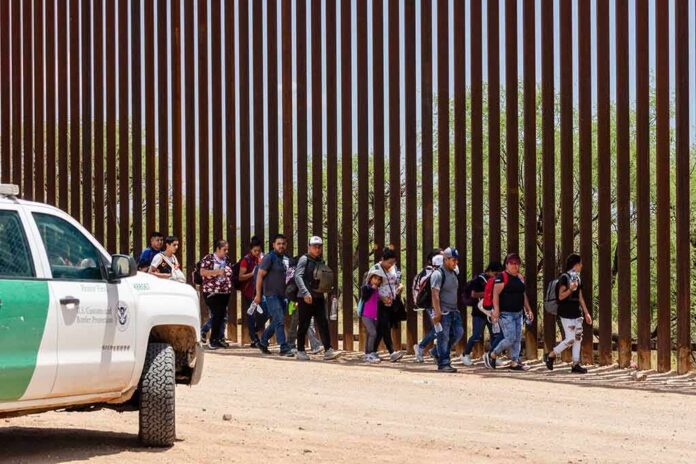
President Trump warned Mexico to stop a new migrant caravan now or face doubled tariffs on key goods.
Story Highlights
- Trump tied Mexico’s response to an immediate tariff increase, saying there would be no leniency.
- Reports said more than 1,000 migrants left Tapachula, Mexico, moving north on November 10.
- Existing tariffs already hit Mexican autos at 25% and steel and aluminum at 50%.
- Mexico’s president said caravans have not reached the U.S. border under Trump and pushed back on tariffs.
Trump’s Directive And The Leverage He Chose
President Trump said Mexico must stop the caravan and warned that tariffs would be immediately doubled if it fails. His message, posted November 12, stated there would be “no leniency,” and that Mexican leaders, Texas officials, Border Patrol, and Immigration and Customs Enforcement had been told of his stance. The statement linked border security to trade pressure. That approach uses the size of the U.S. market as leverage to demand stronger migration control by Mexico.
Existing duties make the threat concrete, even if details remain pending. Reporting identified United States tariffs of 25 percent on Mexican-made cars and 50 percent on Mexican steel and aluminum at the time of the warning. Trump did not name which rates or products would be doubled or give a timeline. Still, the link was clear: halt the caravan or pay more at the border. That clarity matters to voters who want action, not process.
What Is Happening On The Ground In Mexico
Texas Public Radio reported that more than 1,000 migrants left Tapachula, near Mexico’s border with Guatemala, on November 10, heading toward Mexico City. The group’s size and speed create pressure on both countries. The movement raises the stakes for U.S. border agents and state authorities, who must plan for illegal crossings and strain on resources. The caravan also tests Mexico’s claim that its new approach can prevent large groups from ever reaching the northern border.
Mexico’s president, Claudia Sheinbaum, pushed back on the tariff threat and said caravans have not reached the northern border since Trump returned to office in 2025. She described Mexico’s method as information, accompaniment, and humanitarian aid, not force. She said one caravan dropped from about 600 people to fewer than 100 after officials explained that entry into the United States would not happen. Those statements present a different path, but they do not change the current caravan’s march.
The Policy Gap: Power, Process, And Proof
Trump’s warning used a tool that Washington has used before: trade pressure to drive security results. In 2019, a tariff threat preceded a deal where Mexico expanded enforcement and accepted more asylum seekers waiting in Mexico, and the tariffs were suspended. Today’s threat echoes that template, but the open question is operational detail. Reports said Trump did not specify product lists, exemptions, or the legal trigger for doubling rates, which leaves room for business and legal challenges.
Skeptics also asked whether steeper tariffs would cut illegal crossings. Available coverage documented the warning and the caravan’s movement but did not offer data showing that tariff hikes alone reduce unlawful entry. Supporters counter that pressure moved Mexico before, so it can work again. The near-term test is simple: does Mexico stop this caravan’s advance quickly, or do U.S. agencies face another surge that strains local communities and budgets?
What It Means For American Families And Border Security
Border communities carry the first impact when large groups arrive. Local police, hospitals, and shelters feel the strain, while cartels exploit chaos. Americans want laws enforced, secure borders, and a system that favors legal entry, not mass movements. Trump’s move signals that this White House will use every lawful lever to deter illegal migration. If Mexico acts, caravans lose momentum. If not, tariffs raise the cost of ignoring U.S. security concerns.
Donald Trump is now threatening to double tariffs on Mexico because 1,500 migrants started walking north.
Meanwhile, his Treasury Secretary is telling everyone he’s optimistic about a new trade deal.
What an absolute fucking clown show.
Think about what Trump is actually…
— No Filter (@the_jimmy_says) November 13, 2026
Consumers and businesses could feel higher costs if tariffs expand, especially in autos, steel, and food chains tied to Mexico. That is the trade-off. The administration is betting that short-term pressure will force faster action in Mexico and deter future caravans. Mexico’s leaders say their softer approach already works. The next days will show which plan holds. For now, the order is clear: stop the caravan, uphold the law, and protect the border.
Sources:
youtube.com, tpr.org, abcnews4.com, supplychaindive.com, congress.gov