

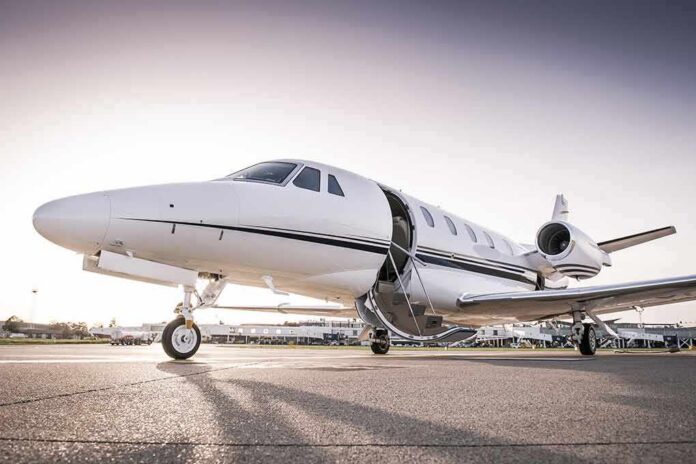
While leaders urged the world to cut fossil fuels in Antalya, the conference’s own rules quietly put attendees’ long-haul flights outside the sustainability ledger.
At a Glance
- COP31 focused on accelerating the Paris Agreement and limiting warming in Antalya on 9–20 November 2026.
- Private aviation emits far more per passenger than commercial flights, making any jet influx a lightning rod.
- Organizers measured many on-site emissions but excluded participants’ international travel from their direct control.
- A World Leaders’ Summit raised scrutiny of how senior officials traveled to Antalya.
What COP31 Set Out To Do, And Why Travel Became The Side Story
United Nations Climate Change Conference COP31 gathered governments, business, and civil society in Antalya to speed up the Paris Agreement and push real-world cuts in warming pollution. The official programme framed the meeting as a platform to advance goals and drive action, not just talk. A two-day World Leaders’ Summit put heads of state at center stage, which always draws cameras and questions about how they arrived and departed. That spotlight made aircraft choice part of the public test.
Antalya’s participant guidance covered the nuts and bolts. It pointed travelers to Antalya Airport, noted private transfers and rental cars, and promised dedicated shuttles for conference venues. That detail matters because logistics are emissions in motion. When tens of thousands move through a single city, the mode they pick multiplies. The meeting’s stated aim to accelerate climate action gave critics a clear yardstick: if the message is “cut emissions,” the messenger’s vehicle choice invites judgment.
Private Jets: Why The Debate Hits A Nerve
Private aviation’s emissions per passenger tower over those of commercial flights. A recent analysis using air-traffic data estimated at least 15.6 million tonnes of direct carbon dioxide from private aviation in 2023, underscoring its growing climate footprint. This is why verified jets linked to a climate summit become a symbol. Even a modest fleet can outweigh the optics of any speech on clean energy. The charge is not math alone; it is also about fairness and credibility in who sacrifices what.
Numbers thrown around online about COP31 jet arrivals drew clicks, but the core point does not hinge on a headline count. The policy question is simpler: did decision-makers choose higher-emission travel when lower options existed without harming security or diplomacy? When actions and asks do not match, public trust drops. That loss makes future policy harder, including the very transport reforms the summit tried to advance.
What Organizers Counted, And What They Did Not
COP31’s sustainability policy created clear boundaries. It pledged to measure emissions linked to conference operations, reduce them at the source, and report results. It also stated that international travel by participants sits outside the host’s direct operational control. That line is common in mega-events. It is also a communications trap. People do not split hairs between “operational control” and “attendance.” They look at planes on a tarmac and decide whether leaders practice what they preach.
Yet over 90 private jets landed to attend COP31. If climate change is such an emergency, perhaps you should have flown economy!
— James Schultz (@jamisc1968) November 13, 2026
On site, organizers emphasized energy efficiency, lower-emission local transport, and resource-smart logistics. They framed carbon removal or offsets as a last resort for residuals after real cuts. Those steps align with conservative common sense: measure what you manage, cut waste first, and publish results. Still, the rulebook cannot erase what viewers see overhead. If heads of government fly private, the policy boundary feels like a loophole, even if it is technically accurate and operationally standard.
The Leaders’ Summit And The Security Defense
Heads of state gathered on 11–12 November for the World Leaders’ Climate Action Summit. Security, timing, and diplomatic flexibility are often cited to justify dedicated aircraft. Sometimes that is valid. But the bar should rise with the message. A defensible standard would be narrow: use state aircraft when security demands it; otherwise, choose high-occupancy or commercial options and disclose why. Explain tradeoffs, publish emissions, and set a plan to shrink them next time.
That approach would shift the narrative from “do as I say” to “watch what I do.” It would also answer the inevitable visuals with facts, not spin. If a minister can fly commercial without risk, say so and do it. If not, document the need, consolidate itineraries, and offset only after cuts. Voters reward leaders who show discipline with public money and public carbon. They punish double standards faster than any press release can repair.
From Optics To Outcomes: The Test That Matters
COP31’s mandate was to turn climate goals into action. Transport was a prime field, with partners urging electrification, shifts to public and active travel, and a plan to cut energy demand while scaling clean power. That is where lives, jobs, and bills are on the line. The credibility gap from elite travel can sap momentum, but it does not erase the need for real policies that lower costs, boost reliability, and keep lights on without spikes.
A simple close-the-loop playbook can help. First, publish a post-summit travel and emissions report that covers delegations’ air travel in aggregate, with methods and margins disclosed. Second, adopt a “commercial-by-default” pledge for non-head-of-state travel, with limited, explained exceptions. Third, set a multi-year glide path to cut travel emissions per delegate. When leaders match words with measured steps, critics lose their best line. When they do not, the tarmac tells the story for them.
Sources:
twitchy.com, ec.europa.eu, cop31.tr, unfccc.int, news.un.org, slocat.net, climatecompatiblegrowth.com, itdp.org, link.springer.com