
Federal agents say one man mailed more than 700 white-powder letters to public officials during two election cycles, and the timing was no accident.
Story Snapshot
- Federal prosecutors charged an Oklahoma man tied to over 700 white-powder mailings.
- Targets included election offices, members of Congress, media, pollsters, and law enforcement.
- Letters spanned 2024 and 2026, with messages like “DECLARATION OF WAR” and treason threats.
- Tested samples found yeast or flour; evacuations and hazmat responses still followed.
Charges Outline A Large, Repeated Operation
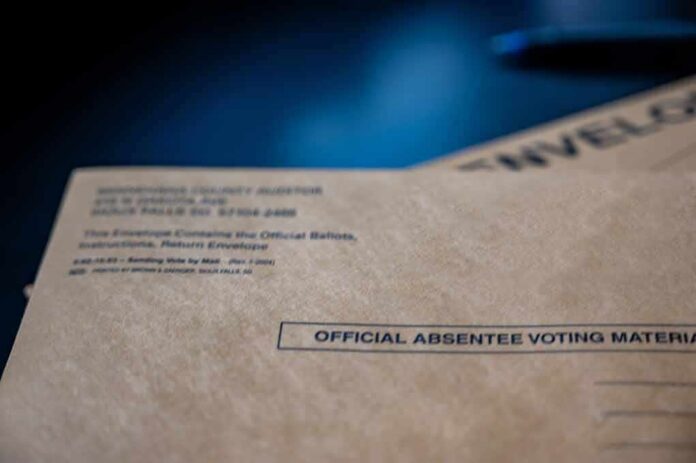
Federal prosecutors in the Western District of Oklahoma charged an Oklahoma City resident in a scheme that investigators link to more than 700 mailings nationwide. The envelopes contained white powder and letters addressed to election offices, members of Congress, media outlets, polling firms, and federal agencies. The case centers on two waves: one around the 2024 elections and a second in October 2026. Agents describe a consistent sender pattern across recipients and time frames, suggesting planning and persistence rather than a one-off stunt.
The complaint cites a striking detail: letters that carried hidden messages in ultraviolet-reactive ink. That feature points to intent and craft. Agents also documented printed screeds, including a three-page “DECLARATION OF WAR” in earlier letters and 2026 notes that warned of arrest for treason “OR WORSE!!” under a name invoking a so-called United States Traitor Elimination Army. Election offices reported evacuations after the powder was discovered, including at the Oklahoma State Election Board in mid-October 2026.
Powder Tested Harmless, But Impact Was Real
Laboratories that tested selected samples reported yeast or flour, not a toxic agent. The lack of poison did not blunt the real-world effects. Facilities shut down. Hazmat teams mobilized. Staff lost work time and focus during peak election periods. The Federal Bureau of Investigation (FBI) and the Postal Inspection Service advise treating such mail as potentially hazardous until testing clears it, which triggers rapid, disruptive responses by design. That playbook explains why the hoax still had bite even without dangerous chemicals.
Investigators say the pattern extended well beyond election centers. Members of Congress received letters, as did media groups and pollsters. That breadth complicates the motive picture but does not reduce the consequences for election workers facing the thick of ballot processing. The timing near voting windows matters most. Officials must run secure, calm operations under law. Any wave of powder scares at that moment amounts to a force multiplier for chaos, which is exactly what risk managers are required to counter.
Why This Matters For Election Security
Local officials already report a heavy climate of threats and harassment since 2020. Surveys from the Brennan Center found that about one-third of local election officials in 2026 reported threats, harassment, or abuse tied to their jobs, and over half worried about colleagues’ safety. These are self-reports, not court-validated cases, yet they underline how thin the margin is for error or distraction during ballot handling. A hoax letter can clear a building faster than any rumor on social media.
🚨 OKLAHOMA MAN CHARGED IN NATIONWIDE WHITE-POWDER MAIL SCARE TARGETING GOVERNMENT AND ELECTION OFFICIALS
Federal authorities have charged an Oklahoma man accused of sending hundreds of suspicious letters containing white powder to government officials ahead of the 2024 and 2026…
— MDBayNews (@MDBayNews) November 3, 2026
Americans expect three basic things in elections: order, access, and accuracy. Powder hoaxes attack all three. They force shutdowns that hamper access. They stress staff who must stay error-free while working under alarms and in protective gear. They also shake public trust by seeding drama that dominates the news. Common sense and conservative values align here: protect the process, punish those who aim to scare civil servants, and keep the focus on counting every legal vote quickly and cleanly.
How Prosecutors Will Try To Prove The Case
Prosecutors often build these cases with postal records, mail barcodes, printer and paper forensics, and any purchase trails for ink, envelopes, and flour. They may add handwriting or authorship analysis, and any digital traces on devices that link to drafts of the letters. The affidavit in this case cites the nationwide scope and recurring language as core evidence of a single source. A court will test that evidence step by step. For now, the charge stands, and the public record matches a clear, disruptive mailing spree.
Bottom Line For Voters And Officials
Voters should know this: officials have plans for scares like this. Buildings get cleared fast, mail gets isolated, and counts resume as soon as safety teams give the all-clear. That is why even a big hoax does not stop an election. Election staff deserve calm, steady backing while they do hard, detail-heavy work. The smart response pairs strong prosecution where laws were broken with better mail screening, simple safety drills, and clear public updates that keep rumor out and confidence in.
Sources:
washingtontimes.com, usatoday.com, cbsnews.com, news9.com, rollcall.com, rmb.reuters.com