
After 90 minutes of talks, deputies fatally shot an armed Army veteran during a Florida standoff, renewing hard questions about police crisis training.
Story Snapshot
- Sheriff says deputies negotiated with an armed, suicidal man for more than 90 minutes before firing.
- Four agencies opened reviews; involved deputies were placed on administrative leave.
- Officials say the man took an “aggressive” stance with a gun pointed toward deputies.
- Florida and county programs teach crisis response, but training outcomes remain debated.
What Happened During the Boca Raton Plaza Standoff
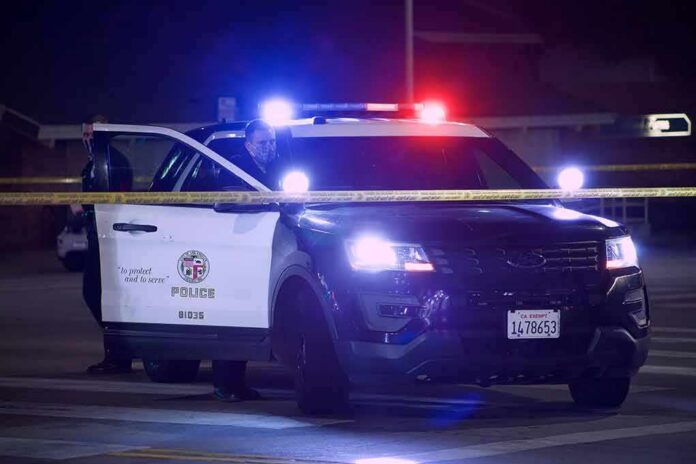
Palm Beach County Sheriff’s Office leaders said deputies responded to Sandalfoot Square in West Boca Raton on October 28 for an armed, suicidal man. The sheriff’s office reported negotiators engaged the man for more than 90 minutes, from about 9:55 p.m. to 11:29 p.m. Officials said the man, identified as an Army veteran, held a gun and later took an “aggressive” stance toward deputies, who then fired. The sheriff’s office stated the firearm was pointed toward deputies during the encounter.
Sheriff Ric Bradshaw said deputies believed they were in danger when the man advanced while armed. He also said the man did not fire at deputies, while investigators worked to learn who fired rounds that appeared to hit a sheriff’s vehicle. That detail remains part of the active reviews. The sheriff’s office placed the involved deputies on administrative leave, which is standard after shootings that trigger outside review and internal inquiry.
Who Is Investigating and What Comes Next
The Florida Department of Law Enforcement opened a review, joined by the Palm Beach County State Attorney’s Office, the sheriff’s Violent Crimes Division, and the agency’s internal process. These parallel tracks examine use of force, scene evidence, and law compliance. Officials have not released body-camera video or dispatch audio in the reporting reviewed so far. Final findings will come after the state-level inquiry and the prosecutor’s review conclude.
Officials have not identified the deputies who fired, and public reports have not detailed their individual training records. Those records, plus ballistics and scene diagrams, can clarify timelines and movements. They can also resolve who fired rounds that hit the vehicle and when. Those files usually publish after the state completes its case review. Until then, agencies cite active investigations as the reason to withhold certain materials under state law.
How Crisis Training Is Supposed to Work
The Palm Beach County Sheriff’s Office highlights a behavioral-health unit that pairs detectives with clinicians and trains deputies, dispatchers, jail staff, and corrections officers. A program official said the goal is to teach verbal de‑escalation and signs of mental illness to prevent violence. Florida’s basic recruit curriculum includes instruction on mental health and crisis response, while a separate Crisis Intervention Team course runs about forty hours in many programs.
Research on crisis training shows mixed results. Some studies link Crisis Intervention Team training with more verbal negotiation and less force in certain settings. Other reviews find no clear overall effect on use of force across studies, suggesting outcomes vary by department and local systems. Training can shape officer awareness, but real-world calls change quickly when a gun is present. Policy, supervision, and access to clinical help also affect outcomes.
Why This Case Hits a National Nerve
Police often are the first to reach people in mental health or suicidal crisis. Calls can swing from calm to deadly in seconds, especially when firearms are involved. Officers must protect bystanders, weigh their safety, and try to aid the person in crisis. Communities want trained responses that lower risk without giving up safety. That is why this Florida case, which mixed negotiation and a fatal shot, is drawing attention far beyond one county.
Families, veterans, and taxpayers share a core concern: the system should not fail people in crisis or the public it serves. This case will test whether local policies, state reviews, and training programs produce answers and improvement. The completed state investigation, prosecutor’s memo, and any released video will be key. They can confirm the timeline, explain the deputies’ final decision, and show where crisis training helped—or where gaps remain.
Sources:
military.com, palmbeachpost.com, wptv.com, cbs12.com, tapinto.net, wpbf.com, sun-sentinel.com, delraybeachnews.org, tandfonline.com, college.police.uk, jaapl.org, pmc.ncbi.nlm.nih.gov