

A 24-year-old first-time New York City Marathon runner collapsed near mile 24 and later died after rapid on-course aid and hospital care, organizers and police said.
Story Snapshot
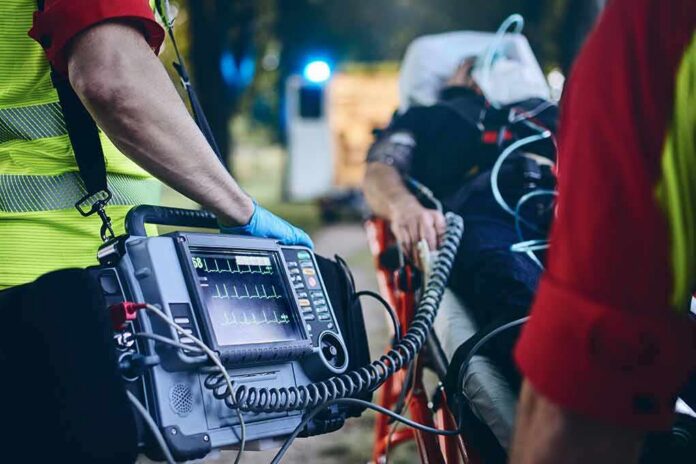
- Race officials said bystanders and medical teams gave CPR and used a defibrillator before hospital transport.
- Police placed the collapse near the 24-mile mark in Central Park early Sunday afternoon.
- The runner’s father told reporters she died from rhabdomyolysis, a rare muscle breakdown condition.
- Texts to her father showed she was in pain around mile 19 before she collapsed later in the race.
What Officials And Family Reported Happened
New York Road Runners said a bystander started cardiopulmonary resuscitation, then event medical staff took over and used a defibrillator. An ambulance took the runner to a Mount Sinai hospital, where she died later that evening. The New York Police Department placed the collapse near the 24-mile point inside Central Park, roughly two miles from the finish. Organizers issued condolences and confirmed the emergency steps taken on the course.
Family identified the runner as Rachel Apa, a 24-year-old from Pennsylvania running her first New York City Marathon. Her father, Steve Apa, told reporters she died from rhabdomyolysis. Reports described the condition as a breakdown of muscle that can release harmful substances into the bloodstream. Family said Rachel had been raising money for a Parkinson’s research team while training for the race, and that she had played field hockey before taking up distance running.
The Timeline From Pain To Collapse
Reports said Rachel texted her father “Ow ow” around mile 19, showing she was in pain while still moving. She later collapsed near mile 24 in Central Park early Sunday afternoon. Accounts placed the initial incident around 1:30 to 1:33 p.m., with medical teams arriving within minutes and transport soon after. She was pronounced dead later that evening at the hospital, according to those reports.
Coverage of the scene described bystanders stepping in first, then trained race medics using their gear on site. That sequence aligns with how large races stage medical support near late-race miles, where fatigue peaks. The event’s message focused on rapid response and sympathy for her family. Police and organizers did not release detailed clinical findings tied to her collapse.
What We Know About Rhabdomyolysis And Race Risk
Doctors describe rhabdomyolysis as muscle breakdown that can follow intense exercise or injury. It can lead to kidney damage and dangerous electrolyte changes. Standard evaluation includes blood tests for creatine kinase and kidney function, plus an electrocardiogram to check heart rhythm problems. Medical sources say severe cases can be life-threatening, though most are rare. Family members reported this diagnosis, and media provided general background on the condition from medical references.
Rachel Apa, 24, Lost After Collapse in First NYC Marathon
Rachel Apa, 24, a Pennsylvania runner raising money for Parkinson’s research, collapsed near mile 24 of the NYC Marathon and later passed away.https://t.co/khKkQ8ykmP pic.twitter.com/1eDHepS06I— QNC News (@qnc_news) November 3, 2026
Sudden, life-threatening events during long-distance races are rare but known. Large studies of marathons and similar races have found cardiac arrest rates around one-half per 100,000 participants. That places a single fatal event within known, though uncommon, risk levels for very large fields. One line of research from long-distance race registries has shown a small number of severe events among more than one million runners, reinforcing the base-rate rarity.
Why This Hits A Nerve For Many Runners And Families
Endurance races promise a hard but safe test, yet this case shows how fast a crisis can develop late in a marathon. The on-course response worked as designed: early cardiopulmonary resuscitation by a bystander, rapid handoff to trained medics, and a quick ambulance ride. Even with that, the outcome was tragic. Families, runners, and race staff will look hard at prep, pacing, hydration, and early pain signals as they try to reduce rare but deadly events.
Sources:
people.com, espn.com, cbsnews.com, jacc.org, nejm.org