

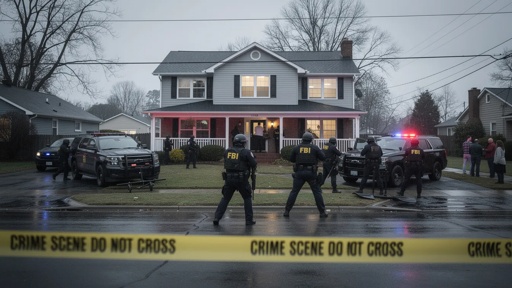
Seven lives lost in Muscatine, Iowa, demand answers—and a serious look at how we confront domestic violence, mental collapse, and community safety without surrendering constitutional rights.
Story Highlights
- Police say a 52-year-old suspect killed six relatives in Muscatine before taking his own life [9].
- Investigators describe the case as a domestic dispute with victims believed to be family members [1].
- Authorities say the killings occurred across multiple locations, including two homes and a business [9].
- Officials are still gathering records, and public details on motive remain preliminary [1].
Police Identify Suspect And Preliminary Motive
Muscatine police said their preliminary investigation points to a domestic dispute as the catalyst for a series of killings that left six family members dead, with the suspected shooter, 52-year-old Ryan Willis McFarland, dying by suicide [1]. Authorities indicated that all of the victims were believed to be relatives of the deceased suspect, underscoring a tragic pattern of familial mass violence that rarely yields a clear public motive in early reporting [1]. Officials emphasized that findings remain preliminary while the case develops and records are compiled [1].
Local reports and briefings indicated the violence spanned multiple locations in Muscatine, including two residences and a business, compounding the difficulty of securing scenes and notifying families amid a fast-moving investigation [9]. Police described the aftermath as a “series of homicides,” signaling a complex timeline that investigators are still working to confirm with forensic evidence and witness interviews [9]. Early accounts are consistent across outlets while acknowledging that full documentation, such as autopsy results, has not yet been publicly released [9].
What We Know About The Sequence Of Events
Authorities publicly identified McFarland as the suspect believed to have killed six relatives before taking his own life, with officers confronting the case after multiple emergency calls and location checks [3]. Coverage citing police indicates the victims were discovered at different sites as investigators tracked connections among addresses and family members [3]. Officials stressed the early domestic-dispute framework while noting that details could be refined as the investigative timeline, ballistics, and medical examinations are finalized and released [3].
Additional local and regional reporting reinforced the domestic context, describing the killings as part of a dispute that escalated into a fatal spree before the suspect died by suicide [5]. These accounts, drawing on police statements, align on the central facts but avoid definitive motive claims until formal records are available [5]. That caution reflects a common law-enforcement approach when the suspect is deceased and potential evidence—such as communications, prior calls for service, or family-court records—has not been fully analyzed for public release [5].
Accountability, Community Safety, And Constitutional Balance
Law enforcement’s early framing fits a broader pattern in which domestic or relational conflict drives many homicides, and the public record fills in slowly as investigators validate timelines and family histories [9]. For communities, the urgent work is twofold: support victims’ families and insist on transparent release of records—911 audio, warrants, and autopsy findings—so facts, not speculation, guide policy debates [9]. Clear disclosure helps citizens separate real warning signs from political spin, protecting both safety and constitutional rights from reactionary overreach.
Muscatine Police Department Incident Report / Press Release
Date: 01 June 2026
Incident Type: Multiple Homicide / Murder-Suicide (Domestic Dispute)
Location: Multiple scenes – Park Avenue residence, Mill Street, Grandview Avenue, and Riverfront Trail, Muscatine, Iowa
At…— Go Kick Rocks ( ಠ ͜ʖಠ) (@KickRocks2026) June 2, 2026
Conservatives can lead with common sense: strengthen penalties for domestic abusers, enhance interstate data sharing on active restraining orders, expand voluntary community-based counseling and church-led family support, and prioritize swift due process for any petition that could affect liberty. These steps target violent actors without criminalizing millions of law-abiding gun owners. As Muscatine grieves, facts from police and public records—carefully vetted and promptly shared—should drive solutions that defend life, family, and the Constitution in equal measure [1].
Sources:
[1] Web – Police investigate Iowa man suspected of killing six of his relatives …
[3] Web – In the US, a gunman killed six family members and himself | УНН
[5] YouTube – Six Family Members Killed In Iowa, Gunman Then Takes Own Life
[9] Web – 6 killed in Iowa shooting spree in domestic dispute, police say