

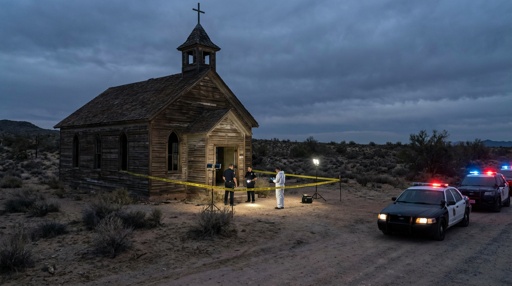
Mexican drug cartels have long been linked to occult practices — from curses cast by witches to shrines dedicated to the “Saint of Death” — but separating documented fact from sensational myth turns out to be far harder than most coverage lets on.
Quick Take
- Drug traffickers reportedly consult “brujas” (witches) to place curses on enemies, including law enforcement officers.
- Santa Muerte (Holy Death) worship is widely observed in cartel culture, and some analysts link beheadings to ancient sacrificial traditions.
- A 2017 Texas case involved an alleged shrine-related murder, but underlying police records confirming the occult motive were not publicly verified.
- Official explanations for cartel violence consistently point to territorial rivalry and criminal profit — not ritual — as the primary drivers.
Witchcraft as a Cartel Tool
Drug traffickers in Mexico reportedly turn to spiritual practitioners as part of their criminal operations. According to a law enforcement-focused publication, traffickers “routinely seek spiritual help from ‘brujas’ (witches) in the form of curses against their enemies, including law enforcement.” [2] This practice draws from a blend of folk Catholicism, indigenous tradition, and syncretic belief systems that have deep roots in Mexican and border culture. The behavior is documented, but its operational significance within cartel hierarchies remains poorly understood from the outside.
Santa Muerte — translated as “Holy Death” or “Saint Death” — stands at the center of narco-religious culture. One missionary source describes her worship as “widespread, especially among the drug cartels,” and draws a direct line between cartel beheadings and ancient Aztec human-sacrifice rituals. [1] While that framing reflects a faith-based interpretation, the cultural phenomenon itself is real: Santa Muerte shrines appear at cartel safe houses, along smuggling corridors, and in prison cells across Mexico. Whether devotion to the figure actually motivates violence, or simply accompanies it, is a distinction that available evidence cannot yet cleanly resolve.
What do the Ventura County Freemasons & Eastern Stars sex-cult coven have in common with the Mexican cartels? They both practice black magic and profit off of human trafficking. pic.twitter.com/DlTr5oo593
— Michael Casillas (@ioSendero) May 20, 2026
Where the Evidence Gets Murky
A 2017 report cited by law enforcement trainers described a Texas case in which police discovered the body of a 15-year-old girl allegedly murdered because she insulted her captor’s satanic shrine. [2] That claim has circulated widely, but no publicly available police report, charging document, or trial record was produced in the research reviewed here to confirm the stated motive. Similarly, a Mexican prison massacre was reported by the newspaper Reforma as possibly connected to a Santa Muerte ritual, while state security officials attributed the killings to a “constant dispute between rival groups inside the prison.” [6] Both explanations may contain elements of truth, but neither has been fully verified through primary records.
Mexican police have not been passive observers of these spiritual dynamics. Separate reporting describes law enforcement officers and priests conducting their own secret rituals — drawing on elements of Haitian Voodoo, Cuban Santeria, and Mexican witchcraft — in an effort to combat drug gangs. [5] A published academic paper from Southwestern Law School also examines how witchcraft is used as a mechanism of control and intimidation in criminal contexts. [4] These sources confirm that occult frameworks operate on multiple sides of the cartel conflict, not only within the criminal organizations themselves.
A Pattern With Documented Roots
The most historically grounded case linking cartels to ritual killing dates to 1989 in Matamoros, Mexico. A drug smuggling cult led by Adolfo Constanzo was connected to a series of murders bearing a consistent pattern of mutilation. [7] Prosecutors pursued homicide charges, bodies were recovered, and the killings were documented in contemporaneous law enforcement records — making the Matamoros case one of the few instances where occult-adjacent cartel violence crossed from allegation into the public legal record. That case also spawned a book, “The Witch of Matamoros,” examining the role of cult leader Sara María Aldrete. [9]
The broader challenge with this subject is that real religious syncretism, criminal intimidation tactics, and unreliable sourcing all overlap in ways that make clean conclusions difficult. Cartels are documented users of symbols, imagery, and performance to project power and fear — and religious iconography fits that function regardless of whether any given leader holds genuine supernatural beliefs. Until prosecutors, forensic investigators, or cooperating witnesses provide case-specific, sworn documentation linking occult practice to specific acts of violence, the full picture will remain incomplete. What is clear is that the spiritual dimension of cartel culture is not fiction — but how much it drives violence versus decorates it is a question the available evidence cannot yet answer.
Sources:
[1] Web – Mexico Drug Cartels in Regions Steeped in Witchcraft, Demonic …
[2] Web – Black Magic & Narco Saints – Calibre Press
[4] Web – [PDF] FEARING THE DARK: THE USE OF WITCHCRAFT TO CONTROL …
[5] Web – Mexican police use voodoo, animal sacrifice to combat drug gangs
[6] Web – Mexican prison massacre may have ‘Saint Death’ ties – Angelus News
[7] Web – Mexico Massacre : Potent Mix of Ritual and Charisma – LA Times
[9] Web – The Chilling Account of the Ritualistic Murders of Sara María Aldrete …