

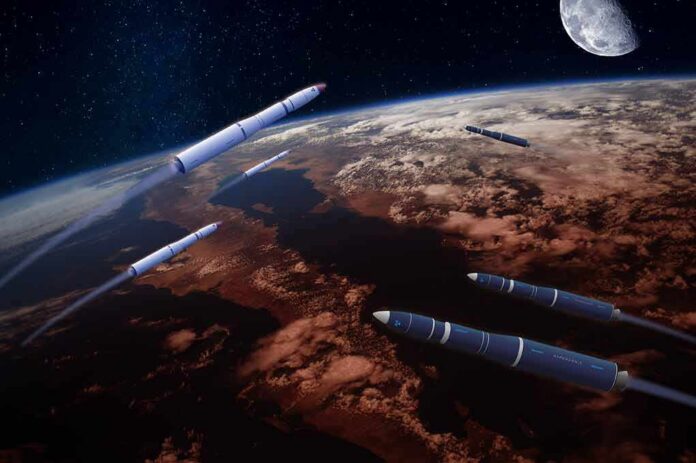
SpaceX launched a Falcon 9 rocket from Vandenberg Space Force Base in California carrying 24 Starlink satellites, adding another routine but closely watched mission to the company’s fast-moving launch cadence.
Quick Take
- SpaceX’s mission details identified the flight as a Falcon 9 Starlink launch from Space Launch Complex 4 East at Vandenberg.
- The rocket was targeting 24 Starlink satellites to low-Earth orbit.
- Live launch coverage was part of the package, with the webcast planned shortly before liftoff.
- The mission fits a larger pattern of frequent Vandenberg Starlink launches that can blur together in fast reporting.
What SpaceX Put on the Pad
SpaceX listed the mission as a Starlink launch from Space Launch Complex 4 East at Vandenberg Space Force Base in Santa Barbara County, California. The company said the Falcon 9 was targeting 24 Starlink satellites for low-Earth orbit and that the webcast would begin about 10 minutes before liftoff. The launch archive also shows a dense cluster of completed Vandenberg Starlink missions around the same period, underscoring how routine these flights have become.
That routine matters because public attention often spikes only when a mission is live, while the underlying pace stays easy to miss. SpaceX’s launch page describes Vandenberg as a site that supports high-inclination and polar orbits, which makes it a key west coast base for Starlink work. The flight profile also went south over the Pacific, a standard path for missions from that location.
Why This Flight Draws Attention
Starlink launches now arrive so often that even careful viewers can mix up mission numbers, dates, and boosters. The surrounding reporting shows nearby Vandenberg Starlink flights with similar details, which creates a real risk of confusion when coverage moves fast. That is not a mystery or a conspiracy. It is a simple sign of how industrial-scale space launch has become, with repeat launches replacing the old one-off spectacle.
The bigger story is not just one rocket. It is the way a private company now runs a launch schedule that looks more like a shipping line than a rare government event. For readers frustrated by institutions that seem slow, opaque, or detached, the appeal is obvious. SpaceX is delivering visible results on a pace that public agencies often struggle to match, even as the broader debate over who benefits from that system keeps growing.
What the Mission Says About the Market
The Vandenberg launch also shows how much of the space economy now depends on repeatable Falcon 9 flights. Each mission adds more satellites to a network built for scale, not ceremony. That scale supports global internet service, but it also concentrates power in a few hands and keeps scrutiny on the pace of launches, the use of public ranges, and the long-term crowding of low-Earth orbit.
BREAKING: SpaceX completed two Starlink missions in under 17 hours.
• Starship Flight 13 launched from Starbase, Texas, deploying 20 V3 satellites for the first time.
• Falcon 9 launched another 24 Starlink satellites from California.
No other company launches at this pace. pic.twitter.com/85OShPv5bc
— DogeDesigner (@cb_doge) July 25, 2026
For now, the cleanest reading of this flight is straightforward. SpaceX used a Falcon 9 to send 24 Starlink satellites from California into orbit, and it did so from a launch site built for frequent missions over open ocean. In a political climate where many Americans distrust big institutions, the image is hard to miss: a private company moving quickly while the public sector watches, comments, and tries to keep up.
Sources:
facebook.com, spacex.com, spaceflightnow.com, youtube.com, aiaa.org, rocketlaunch.org, space.com, ksby.com, spacelaunchschedule.com, spacelaunchnow.me