

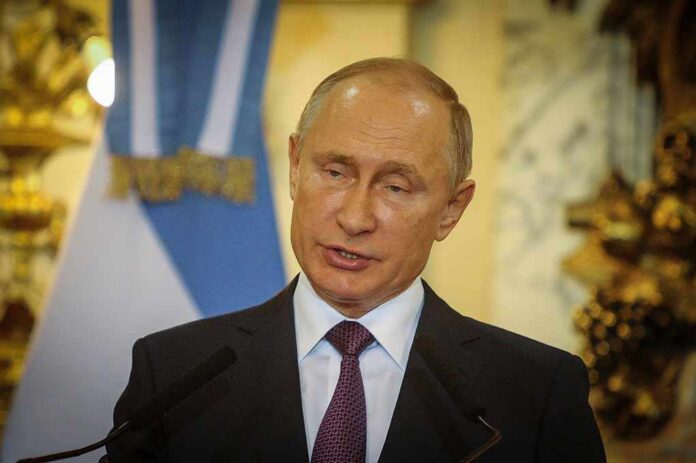
Russia freed 74-year-old American Stephen Hubbard as U.S. envoy Steve Witkoff sat down with Vladimir Putin, and the timing tells its own story.
Story Highlights
- U.S. envoy Steve Witkoff confirmed Russia released American citizen Stephen Hubbard during a meeting with Vladimir Putin.
- Putin said Hubbard was taken to Pulkovo Airport in St. Petersburg after the release.
- Hubbard, a retired Michigan teacher, had been detained since 2022 and later convicted in a closed Russian trial.
- The U.S. State Department had designated Hubbard as wrongfully detained, elevating his case for senior-level diplomacy.
What happened, who confirmed it, and where Hubbard went
Steve Witkoff, serving as a special envoy, met Vladimir Putin in St. Petersburg and said Russia had freed Stephen Hubbard. The Associated Press and two CBS News reports documented Witkoff’s on-the-record confirmation of the release during the meeting. Soon after, Putin said Hubbard was taken to Pulkovo Airport in St. Petersburg. British Broadcasting Corporation coverage summarized that account, linking the public claim to the airport location where Hubbard’s transfer began. These details provided a clear sequence: meeting, confirmation, and movement toward departure.
Hubbard’s identity remained consistent across outlets. Reports described him as a 74-year-old retired teacher from Michigan. He had been detained in eastern Ukraine in April 2022, then moved through the Russian security and court system, and ultimately held for more than four years before this release. That span overlaps the war period, which shaped both Russia’s charges and U.S. efforts to classify the case. The State Department determined in 2025 that Hubbard was wrongfully detained, which put his file under higher-level attention and specialized negotiation channels.
Why this case became a top-tier diplomatic priority
Wrongful detention status matters because it triggers a different U.S. playbook. Once designated, a case moves from routine consular work into senior diplomatic management, including the Office of the Special Presidential Envoy for Hostage Affairs. That change reflects a judgment that the detention serves political leverage rather than a normal criminal process. Media reports tied Hubbard’s release to Witkoff’s targeted visit and to President Trump’s earlier outreach to Putin about Hubbard’s case, creating a visible chain of pressure and opportunity.
Russian authorities accused Hubbard of fighting for Ukraine. Reuters reported a 2024 conviction and a sentence of six years and ten months after a closed trial. Western outlets noted the lack of public evidence and the tight wartime context. Family members and U.S. officials pushed back on the charges. Those clashing views never met in an open courtroom where the public could see the full record. Still, the designation as wrongfully detained set the U.S. government’s stance, and the end result is clear: Hubbard is free.
The geopolitics behind a single human handoff
Moscow knows the value of a high-profile release. Tying a humanitarian gesture to a public meeting gives Russia diplomatic theater and narrative control at home. Washington knows the value of a win you can hold. Bringing home a senior American in frail health speaks to core duties: protect citizens, keep faith with families, and use leverage wisely. That mix explains why these cases get attention at the top, where leaders can align timing, optics, and substance to break a stalemate.
⚡️🇷🇺🇺🇸 — According to Peskov, Moscow released American Stephen Hubbard on humanitarian grounds as a goodwill gesture, noting that Washington had sought Hubbard’s release for some time. Trump stated that the U.S. transferred no one to Russia in exchange, and Witkoff is planned to…
— MaxOsint Intel (@maxosintintel) October 21, 2026
Conservative common sense favors clear goals and hard-nosed execution. Get Americans home, avoid lopsided trades, and stop rewarding bad behavior. The reporting does not identify any swap or concession tied to this release. If that holds, the outcome checks those boxes: an American comes home without a visible price that encourages more seizures. That is how deterrence and compassion can coexist—by pairing quiet pressure with public resolve when it counts.
How Hubbard’s case fits a broader pattern
Hubbard’s case tracks with a wider pattern of state detentions that blur crime and politics. U.S. policy now labels some cases “wrongful” and pushes them to senior envoys to speed outcomes and harden deterrence. This approach recognizes reality: when trials are closed, records are hidden, and charges track propaganda needs, normal consular playbooks come up short. Direct leader-to-leader engagement, backed by targeted incentives and pressure, has become the lever that moves immovable objects.
What to watch next
Two questions hang over the next phase. First, when will the United States secure full consular debriefs and medical checks to document Hubbard’s condition and travel home. Second, will this release open a lane for further cases, or was it a single, well-timed gesture. Either way, the through-line is firm: focused diplomacy, backed by presidential attention, delivered freedom for a 74-year-old American who spent years behind bars in a foreign system built for leverage, not transparency.
Sources:
cbsnews.com, apnews.com, bostonglobe.com, cnn.com, bbc.com, foxnews.com, reuters.com