

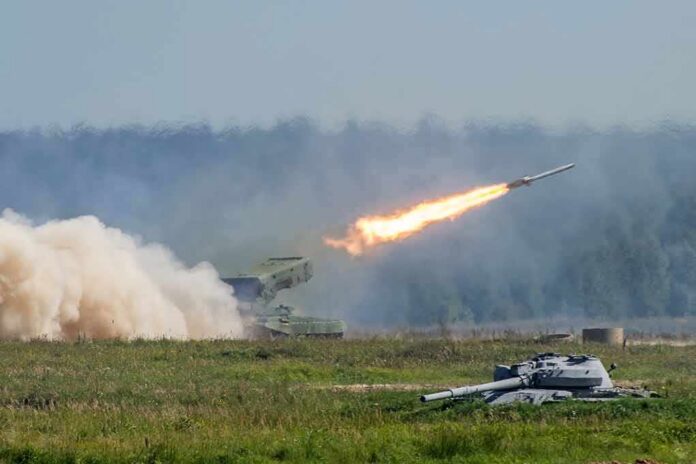
The Marine Corps just turned a cannon battalion into a ship-killer unit built around missiles that hunt at sea.
Story Snapshot
- The Marine Corps redesignated 1st Battalion, 10th Marines as its first medium-range missile battalion at Camp Lejeune on October 9, 2026.
- The battalion will field the Navy-Marine Expeditionary Ship Interdiction System, known as NMESIS.
- NMESIS launches two Naval Strike Missiles from a remote truck-like platform for anti-ship and long-range land attack roles.
- The move advances Force Design 2030, which shifts Marines toward sea control and precision fires by the next decade.
What Changed At Camp Lejeune And Why It Matters
The Marine Corps redesignated 1st Battalion, 10th Marine Regiment as its first medium-range missile battalion during a ceremony at Camp Lejeune, North Carolina, on October 9, 2026. Leaders tied the change to the Corps’ plan to support naval campaigns with longer-range strikes and tighter Navy integration. The shift gives Marines a unit built for sea denial. It adds a mobile, ground-based punch that can threaten hostile ships from shore, closing straits, guarding islands, and complicating any fleet’s plans.
Lt. Col. Joseph Mozzi, the battalion commander, said the unit “employs the NMESIS,” which the Corps frames as both an anti-ship and long-range precision fires platform. That gives Marines a way to strike surface ships from hidden positions on land and to reach key targets ashore when needed. The system fits the current Pacific problem set. It supports allied navies, pressures enemy logistics, and forces rival fleets to sail wider, slower, and under constant risk.
Inside NMESIS: A Truck That Shoots Ship-Killers
NMESIS pairs a remote-operated launch vehicle with two Naval Strike Missiles. Crews can position the launcher, step back to safety, and fire from cover. The Naval Strike Missile flies low, can curve around terrain, and seeks ships with a smart sensor. The launcher rides on a platform based on the Joint Light Tactical Vehicle, giving it road speed, off-road reach, and a small footprint that helps it hide among other trucks and terrain features. That makes it hard to find and harder to hit.
The Marine Corps already placed early NMESIS launchers with the 3rd Marine Littoral Regiment in 2023. Plans aim at 18 launchers per medium-range missile battery by fiscal year 2033. That figure signals mass and staying power once the program scales. It also shows where Force Design 2030 is heading: more distributed units, more sensors and shooters, and more ways to hold enemy ships at risk without sailing a ship into harm’s way to do it.
Artillery Roots, New Reach, And A Clear Message
Redesignating a cannon battalion sends a clear message to allies and rivals. The Corps is moving firepower from tubes to missiles where it counts for sea control. Marines say NMESIS adds to, not replaces, artillery. The regiment retains cannon artillery in another battalion. That balance matters. Cannon still supports close fights ashore. Missiles stretch the map and change the enemy’s math at sea. Together, they give commanders more tools across ranges and missions.
U.S. Marine Corps Stands Up First NMESIS Anti-ship Missile Battalion — USNI Newshttps://t.co/wfSSwuVxlB pic.twitter.com/HYJX0Q9UD9
— USNI News (@USNINews) October 19, 2026
Force Design 2030 drives this change across the force. The Marine Corps aims to be lighter, more mobile, and more lethal in the maritime fight. Leadership highlights NMESIS as a priority in that shift. The new battalion fits a pattern that echoes World War II coastal defense units but with modern sensors, networks, and missiles. The point is simple: deny a foe easy sea lanes, protect allies, and back the fleet with land-based teeth that can move, hide, and strike fast.
What This Means For Deterrence And Combat
Adversaries now must plan for missiles that can appear on a coastline overnight. A launcher can roll off a cargo plane, drive to a hide site, and hold ships at risk within hours. That raises the cost of aggression and buys time for the fleet. For American conservatives who value peace through strength, this is common sense. Put capable firepower where it deters best, waste fewer lives, and force the other side to think twice before they surge toward allied waters.
Sources:
news.usni.org, defensewarroom.com, einpresswire.com, armyrecognition.com