

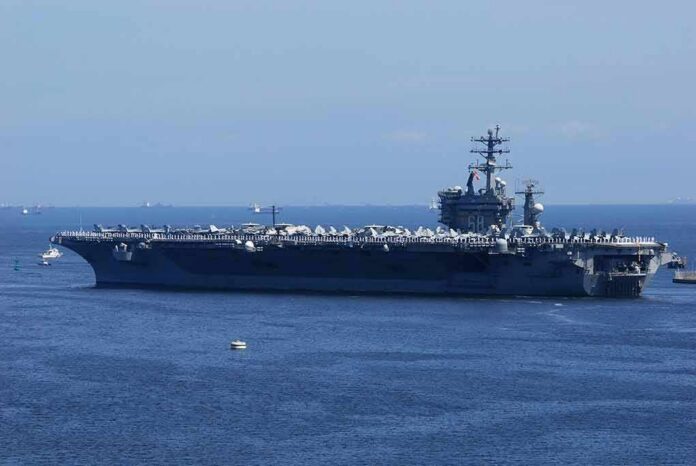
Long deployments at sea are forcing the Navy to confront a problem it cannot hide with slogans: sailors can break down far from home, and the stress is showing up in the research and the headlines.
Quick Take
- Families and sailors aboard the USS Abraham Lincoln have raised alarms about exhaustion and mental strain during an extended deployment.
- Shipboard research has found high rates of depressive screening and rising symptoms as missions go on.
- The Navy has tried to respond with counselors, screenings, and resilience programs, which shows it sees the risk.
- The current public record supports strong concern about stress, but it does not fully measure harm across the whole crew.
What the research says about shipboard stress
Peer-reviewed Navy and maritime studies show that long time at sea can wear sailors down. One shipboard study found more than half of the sample screened positive for depression risk at every point in the deployment cycle, and another found that minor psychiatric symptoms rose midway and near the end of a mission. A separate evidence map said shipboard sailors face behavioral health issues at levels similar to those seen in ground combat settings.
Those findings matter because they line up with the daily realities of life on a carrier. Navy research points to loud noise, not enough rest, limited access to quality medical care, and too few people to finish the mission as major stressors. Another Navy study said the most common deployment problems included inability to rest, poor access to care, and trouble staying in touch with family. The same study found that family support helped ease symptoms.
Why the Abraham Lincoln story hit a nerve
The current controversy grew after reporting that sailors aboard the USS Abraham Lincoln tried to jump overboard during an extended deployment. Family members told reporters the crew faced exhaustion, low morale, and worsening mental strain during months at sea. Those accounts have stirred outrage because they fit a broader public fear: that the military expects more and more from crews while giving them less recovery time, less privacy, and less support.
The most important fact in the record is not just that people complained. It is that the Navy itself has acknowledged mental health as an operational issue. Navy-affiliated writing has linked record deployments and maintenance gaps to force-health problems, and Navy messaging has pushed sailors to use counselors, chaplains, and other support tools. The service has also placed licensed counselors aboard some ships early in deployment, which is a clear sign that stress at sea is not treated as a rare event.
What is known, and what is still missing
The evidence strongly supports the idea that long deployments can increase stress, sleep loss, and symptoms of anxiety or depression. It also shows that family support and shipboard resources can soften that harm. But the public record still does not give a full crew-wide count of mental-health cases on the Abraham Lincoln during this deployment. That means the exact scale of the problem remains unclear, even if the warning signs are hard to miss.
😁Mental health crisis on USS Abraham Lincoln
5,000 sailors and Marines remain on a record 9-month deployment off Iran with no port calls — the longest for any modern carrier.
Families and lawmakers are raising alarms. Navy Times and Stars and Stripes report several attempts by… pic.twitter.com/KBIdIteiJn
— Ignorance, the root and stem of all evil (@ivan_8848) August 12, 2026
That gap matters because both sides of the debate can point to something real. Supporters of the Navy can say the service has added counseling, screenings, and resilience training. Critics can point to studies and reports showing that shipboard life can produce serious psychological strain. The larger lesson is uncomfortable but plain: when sailors spend too long at sea under heavy pressure, the cost can show up in mental health before it shows up anywhere else.
Sources:
19fortyfive.com, usni.org, theguardian.com, academic.oup.com, dvidshub.net, reddit.com, medcoe.army.mil