

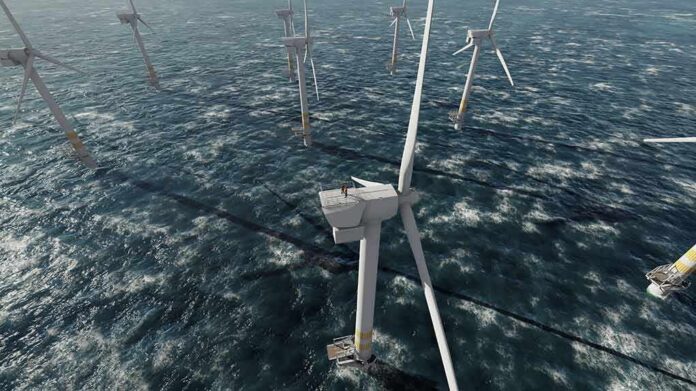
President Trump’s administration has agreed to pay RWE $1.22 billion to cancel offshore wind leases, extending a fast-growing policy shift that is steering money away from wind and toward conventional energy.
Quick Take
- The Trump administration said RWE will give up three federal offshore wind leases in exchange for $1.22 billion.
- The deal is the fifth offshore wind cancellation agreement announced this year.
- Officials say the policy protects taxpayers from costly wind projects and redirects capital to more reliable energy.
- Critics say the use of public money and the legal basis for the payouts remain disputed.
RWE Deal Extends Trump’s Offshore Wind Crackdown
The Trump administration said Thursday it will pay RWE $1.22 billion to abandon plans for offshore wind farms off New York, California, and Louisiana. The company said it will surrender three federal leases under the agreement. Reuters reported that the reimbursement is roughly what RWE paid for the leases under the Biden administration, a structure the White House can frame as undoing a prior deal rather than handing out a bonus.
This marks the fifth offshore wind buyout agreement this year, following earlier deals with TotalEnergies, Golden State Wind, Bluepoint Wind, and Invenergy. Reporting also shows the administration has halted federal permitting for offshore wind, making it far harder for these projects to move forward under current rules. That backdrop matters because it turns the agreements into exits from projects that federal policy has already put in limbo.
Officials Say the Money Protects Taxpayers and Energy Security
Interior Department officials have described offshore wind as costly, inefficient, and unreliable, and they say the agreements protect taxpayers from wasting money on weak projects. The administration has also argued that the funds are being redirected into natural gas and other conventional energy investments, which it views as more dependable for the grid. For readers frustrated by wasteful spending, the message is simple: stop backing expensive projects that the government itself has made nearly impossible to finish.
Developers, for their part, have accepted the deals and publicly described how the money will be redeployed. Reuters reported that Invenergy plans to use its reimbursement for natural gas power plants and geothermal projects, while AP said TotalEnergies would channel its refund into a liquefied natural gas plant in Texas and other oil and gas work. That shift gives the administration a practical talking point, because the money is not just disappearing into a black hole.
Legal Questions Still Follow the Payouts
Even with the policy victory, the legal fight is not settled. Seven states have sued over the TotalEnergies cancellation, saying the government used a legal-settlement fund for a deal tied to a voluntary lease surrender. The Interior Department says the agreement followed the proper process. That dispute gives opponents a way to attack the administration’s authority, especially because the public record does not include the full settlement texts.
🚨 US PAYS $1.2B TO HALT WIND PROJECTS! 🇺🇸💨
The Trump admin just agreed to pay German firm RWE $1.2 billion to cancel ongoing U.S. offshore wind projects.
This massive payout continues a major policy shift away from wind power! 🛑⚡️ pic.twitter.com/WTY2PbaBkh
— Global Insight (@GlobalInsight20) August 7, 2026
The broader pattern is now impossible to ignore. Bloomberg Law reported that the administration has agreed to roughly $4 billion in offshore wind settlements this year, and Reuters said the latest RWE deal is part of a wider effort to stop the sector from expanding. Supporters will call that common sense. Critics will call it a taxpayer-funded retreat. Either way, the administration has made offshore wind one of its clearest energy battlegrounds.
Sources:
bloomberg.com, fortune.com, npr.org