

As Iranian missiles streak toward U.S. bases and Dr. Anthony Fauci faces new questions in Washington, many Americans are asking the same thing: who is really keeping us safe—and who is just protecting their own power?
Story Snapshot
- Iran launched ballistic missiles at U.S. forces; U.S. defenses and allies say they shot them down.
- President Trump’s team frames repeated strikes as self-defense and protection of global shipping.
- The fighting is widening across the Middle East and is putting fragile ceasefire and peace talks at risk.
- Claims about Fauci’s testimony on COVID origins are flying, but hard documents are still missing.
Missiles, Bases, and a Growing Middle East Firestorm
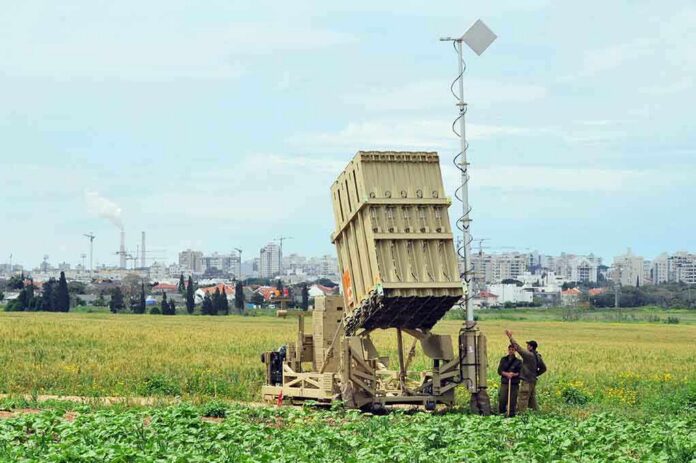
The United States Central Command said Islamic Revolutionary Guard Corps forces in Iran launched multiple ballistic missiles in an attempted surprise attack on U.S. forces based in the Middle East. U.S. commanders reported that all Iranian missiles were successfully intercepted by American defenses, with Jordan’s military also saying its air defenses destroyed several missiles fired from Iran. These attacks came after nearly two weeks of strikes and counterstrikes tied to control of the Strait of Hormuz, a key route for global oil and trade.
Iran has not limited its fire to U.S. positions alone. Reports show missiles and drones aimed at Bahrain, Kuwait, Jordan, Iraq, and even commercial ships moving through the Strait. Kuwait and Bahrain each said their air defenses had to shoot down incoming fire, and falling debris in some places has wounded civilians. This widening map of strikes means everyday people across the region now live under air raid sirens while major powers argue over what counts as “self-defense.”
How Washington Explains the Strikes—and Why Many Voters Do Not Buy It
President Trump and his national security team say the U.S. strikes on Iran are meant to stop attacks on Americans and protect shipping lanes, not start a wider war. U.S. Central Command has stated that recent operations hit Iranian command centers, air defenses, missile sites, and naval assets “to further degrade Iran’s ability to threaten innocent mariners” in the Strait of Hormuz. The State Department’s top lawyer has argued that these strikes are acts of collective self-defense for the United States and Israel, pointing to years of Iranian aggression.
Legal and security experts outside government are far less convinced. More than one hundred international law specialists have publicly said the campaign against Iran breaches the United Nations Charter and goes beyond true self-defense. The Arms Control Association has also questioned claims that Iran’s nuclear and missile programs posed an imminent threat to the United States, saying the evidence does not support that standard. For many Americans on both the right and left, this split looks familiar: officials insist their operations are necessary, while independent voices warn that another open-ended conflict is being sold as protection.
Ceasefires, Escalation, and the Cost of “Permanent Crisis”
News outlets across the spectrum describe this back-and-forth fire as a major threat to already fragile ceasefire efforts in the Middle East. NPR reported that new U.S. airstrikes and Iranian retaliation have “threatened an interim deal” meant to help end the war, as missiles are fired at multiple U.S.-allied countries. CNBC and other sources say the ceasefire is fraying and peace talks are stalling, with repeated nights of strikes creating a sense that the region is sliding back toward all-out war rather than lasting calm.
For Americans watching from home, these patterns hit familiar nerves. Conservatives who already worry about endless wars, rising energy costs, and the strain on the military see another foreign fight that may not clearly serve U.S. workers or families. Liberals angry about global inequality and civilian deaths see yet another example of powerful states trading blows while ordinary people pay the price. Both sides can look at the same maps of strikes and ask whether leaders are more focused on managing headlines than on solving the conflicts they helped ignite.
Fauci, COVID Origins, and the Trust Gap in Public Health
At the same time, claims are spreading that Dr. Anthony Fauci has testified about COVID-19 origins, invoked his right to remain silent, or misled the public. Yet, the research available here does not include any actual Senate hearing transcript, sworn deposition, or video record of Fauci’s recent testimony. There is no committee document, court filing, or official exhibit set in this material that directly shows what Fauci said under oath or how lawmakers questioned him.
Ongoing missile exchanges between the U. S. and Iran highlight the deteriorating situation. Monitoring continues on Ukraine's conflict dynamics and Iran's internal crises. Public reporting indicates heightened military activity in both regions. pic.twitter.com/Ze3cY1T7r5
— ORACLE World Risk Intelligence (@Oracle_Intel) July 30, 2026
This evidence gap matters for citizens on every side of the COVID debate. Many conservatives believe public health officials hid links to risky research and then used their power to shut down dissent. Many liberals believe attacks on Fauci are mostly partisan and fear that science itself is being undermined. Without the hearing transcript, deposition files, or internal emails, Americans are left once again to choose between competing stories based on which camp they already trust, not on a shared set of hard facts.
What Happens Next—and What Citizens Should Watch For
For the Iran conflict, the next steps likely hinge on whether the current pause in some attacks can turn into a real ceasefire. People should watch for clear, public terms on any deal: which targets are off-limits, how shipping lanes will be protected, and what role Congress will play in overseeing continued U.S. operations. In a system many already view as controlled by entrenched elites, transparent limits on war powers are one concrete way to show that leaders still answer to voters, not just to defense planners and lobbyists.
On the Fauci front, the key test will be whether lawmakers release full and unedited records of his testimony and any related documents. That means posting the official transcript, exhibits, and staff reports so citizens can see the questions and answers for themselves, instead of relying on clips shared by partisan accounts. In both national security and public health, the pattern is the same: when crucial information stays hidden or half-revealed, frustration on the right and left grows, and confidence that the federal government serves the people—rather than itself—continues to erode.
Sources:
youtube.com, apnews.com, npr.org, latimes.com, cnn.com, understandingwar.org, reuters.com