
A new State Department report says a Cuba-linked activist network is now planning protests at U.S. military bases, immigration facilities, and federal buildings, raising fresh alarms about foreign influence on American soil.
Story Snapshot
- The State Department says a Cuba-tied network is organizing protests at U.S. bases, Immigration and Customs Enforcement (ICE) sites, and federal buildings.
- A publicly posted “National Rapid Response Plan” from the National Network on Cuba lays out rapid mobilization against U.S. actions toward Cuba.
- The report links this network to a sanctioned Cuban government arm, the Institute of Friendship with the Peoples (ICAP), described as a hub for anti-American influence.
- Trump’s State Department, backed by a new national emergency order on Cuba, is moving to expose and disrupt foreign-backed activist operations inside the United States.
State Department Warns of Cuba-Linked Plan Targeting US Bases and ICE
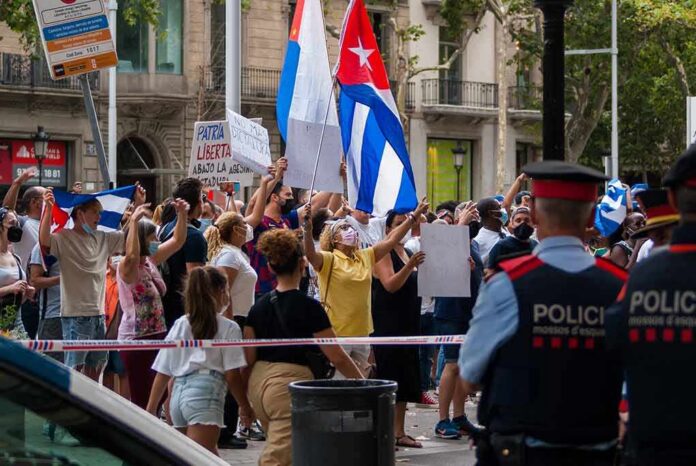
The State Department report explains that a June document called the “National Rapid Response Plan” lays out how activists would quickly organize protests at U.S. military bases, Immigration and Customs Enforcement facilities, and federal buildings if Washington escalates pressure on the Cuban regime. The plan, posted openly online, was distributed by the National Network on Cuba, a coalition of more than 60 organizations based in the United States. Organizers say their goal is to make any U.S. war on Cuba “politically and materially costly,” framing the campaign as anti-war activism.
The report stops short of claiming that every protest is directly ordered by Havana, but it stresses that this is not just random activism. Officials argue that the Cuban government has spent years cultivating U.S.-based groups that can be mobilized quickly to pressure American policy, especially on immigration enforcement and national defense. That should concern every American who remembers how hostile regimes like Russia and Iran have tried to exploit our internal divisions to weaken the country from within.
ICAP, Sanctions, and a Foreign Influence Hub Reaching Into US Activism
To explain why this plan matters, the report points to the Cuban Institute of Friendship with the Peoples, known as ICAP, which it identifies as a Cuban government entity at the center of a global influence network. According to the State Department’s own sanctions fact sheet, ICAP coordinates more than 2,000 “solidarity” organizations across more than 150 countries, pushing the regime’s interests and supporting subversive anti-American activities. The Trump administration sanctioned ICAP in June 2026 under a new executive order targeting Cuban actors responsible for “subversive anti-American activities.”
ICAP’s leader, Fernando González Llort, is not some harmless cultural official. He is a former member of Cuba’s “Wasp” spy network, which infiltrated exile groups and gathered information about U.S. military sites in South Florida during the 1990s. He served 15 years in an American prison for his role before returning to Cuba, where he now heads an organization the State Department calls a hub of Cuba’s international influence operations. When an outfit run by a convicted Cuban spy is tied to American activist networks planning protests at U.S. bases and immigration offices, it raises serious national security and sovereignty questions.
National Network on Cuba and US Groups Named in the Report
The National Network on Cuba is described in the report as a U.S.-based coalition that “works closely” with ICAP and represents more than 60 organizations pushing closer ties with the Cuban regime. The State Department and independent reporting note that ICAP treats this network as a key partner, and that some U.S. organizations even refer to themselves as ICAP “partners.” The report highlights six specific groups with overlapping relationships to Cuban outreach and far-left activism, including the People’s Forum, Code Pink, and the National Lawyers Guild.
Code Pink, a long-running anti-war group that often opposes U.S. policy, is singled out for its funding sources. Since 2017, about one-quarter of its funding is said to have come from organizations linked to Neville Roy Singham, a figure already tied by Congress to foreign influence networks supporting Beijing and other anti-American governments. The People’s Forum is led by Manolo de los Santos, who the report says has traveled to Cuba since at least 2009 and appears often in Cuban state media. The National Lawyers Guild adopted a 2026 resolution pledging to work with the National Network on Cuba and the broader Cuba “solidarity” movement, binding a U.S. legal advocacy group to a network connected to a sanctioned foreign government arm.
Trump Declares National Emergency Over Cuba’s Threat and Investigations Expand
Backing this report is a broader policy shift under President Donald Trump, who in January 2026 issued an executive order declaring that the situation with Cuba poses “an unusual and extraordinary threat” to U.S. national security and foreign policy. That order, effective January 30, 2026, formally declared a national emergency tied to Cuban activities, clearing the way for tougher sanctions and expanded tools against Cuban actors and their networks. It shows the administration sees Cuba not as a Cold War leftover, but as an active player trying to undermine the United States today.
State Department Report: Cuba-Linked Activists Now Planning Protests at US Bases, ICE Siteshttps://t.co/nHk22kKKib
— RedState (@RedState) July 20, 2026
Alongside the State Department report, news outlets report that the Department of Justice and Department of the Treasury are investigating roughly 145 nonprofits and activist groups for allegedly coordinating messaging, lobbying, fundraising, and delegations with Cuban government officials. These investigations have not yet produced public charges, and the report itself admits it cannot fully map every group’s role in the rapid-response plan. But taken together with ICAP’s sanctioning and the rapid-response blueprint aimed at U.S. bases and immigration enforcement, the picture is troubling for anyone who wants American policy made by Americans, not by foreign regimes working through activist fronts.
Sources:
redstate.com, foxnews.com, en.cibercuba.com, state.gov, washingtonpost.com, prokerala.com, reuters.com, adncuba.com