

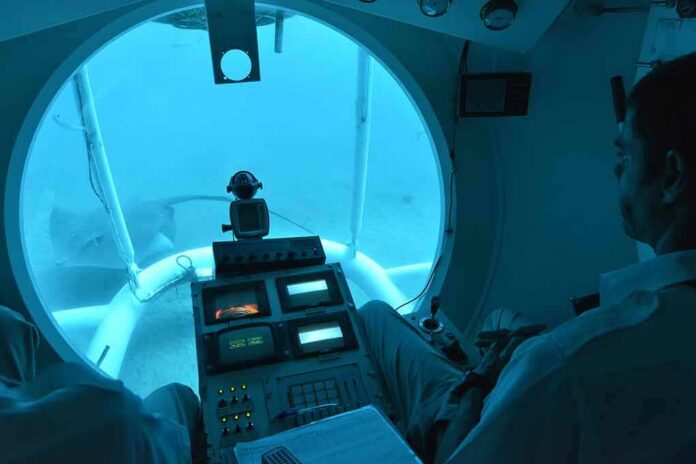
A longtime friend says OceanGate founder Stockton Rush wanted to die inside the Titanic wreck and become part of its legend, and a federal investigation backs up most of the recklessness behind that claim.
Quick Take
- Submersible expert Karl Stanley claims Rush’s ego drove him to accept fatal risk to become part of “Titanic mythology.”
- A 335-page Coast Guard report calls the 2023 Titan implosion “preventable” and blames Rush directly.
- Rush publicly argued safety becomes “pure waste” at some point and called his sub “pretty much invulnerable.”
- Former employees warned OceanGate about skipped testing and design flaws for years before the disaster.
A Friend’s Accusation Lands After Years Of Warnings
Karl Stanley knew Stockton Rush personally and even rode in the Titan during a test dive. In a new book called Submersed, Stanley says Rush’s “ego was so big” that he was “willing to die and kill to be the pivotal character of this story.” Stanley claims Rush wanted to die at the Titanic wreck itself, cementing his place in the ship’s legend.
That is a serious charge. It suggests Rush did not just underestimate the danger. It suggests he understood the risk and chose it anyway, maybe even craved it. Five people died with him on June 18, 2023, when the Titan imploded during a dive to the Titanic wreck. They did not get a vote on his alleged death wish.
What The Coast Guard Actually Found
The U.S. Coast Guard spent two years investigating and released its findings in August 2025. The Marine Board concluded the disaster was entirely preventable and placed primary blame on Rush, saying he ignored inspections, skipped data analysis, and avoided preventive maintenance that could have caught the Titan’s fatal flaws.
Investigators also described a company culture built on intimidation. The report says OceanGate used “critically flawed” safety practices and created what amounted to a toxic workplace, where employees who raised concerns risked their jobs rather than getting answers.
Insiders Tried To Sound The Alarm
David Lochridge, OceanGate’s former director of marine operations, says he was fired after refusing to approve the Titan without critical testing. He was not alone. The Marine Technology Society wrote Rush a formal letter in 2018, five years before the implosion, warning that the sub’s design and testing approach could endanger passengers. Rush pressed forward anyway, year after year.
Rush’s Own Words Tell A Different Story Too
Rush did not hide his philosophy. He told reporters that safety eventually becomes “pure waste” and that at some point you simply have to take risk to get anything done. He called his approach to deviating from established certification rules a matter of “sensible design, extensive testing, and informed consent,” not recklessness for its own sake.
Passengers signed waivers acknowledging Titan was experimental and uncertified, and Rush publicly described the vessel as “pretty much invulnerable”. David Pogue, a journalist who rode in the Titan before the fatal dive, later said it never occurred to him that Rush would deliberately risk a passenger’s life on something untested. Those statements cut against the idea that Rush wanted anyone, including himself, to die.
Weighing Intent Against Documented Recklessness
Here is the honest tension. Stanley’s accusation about ego and death-seeking is vivid, but it rests on his personal read of a friend, not a document or recording. The Coast Guard report, by contrast, is built on sworn testimony, internal records, and physical evidence, and it still lands on Rush as the central cause of five preventable deaths.
Researchers who study organizational disasters call this pattern “normalization of deviance,” where skipped safety steps become routine once early shortcuts don’t cause immediate catastrophe. That framework fits OceanGate closely. It does not prove Rush wanted to die. It does show he spent years training his own company to ignore the warnings that eventually killed him and four paying passengers.
Common sense says both things can be true at once. A man can believe his own hype about invulnerability while also chasing fame badly enough to gamble other people’s lives on it. Whether Rush wanted to die in that wreck or simply refused to believe he could, the outcome for his four passengers is the same tragedy, and the paper trail shows he had every chance to stop it.
Sources:
washingtontimes.com, npr.org, bbc.com, kcra.com, cnn.com, mirror.co.uk, the-express.com, pure.psu.edu