

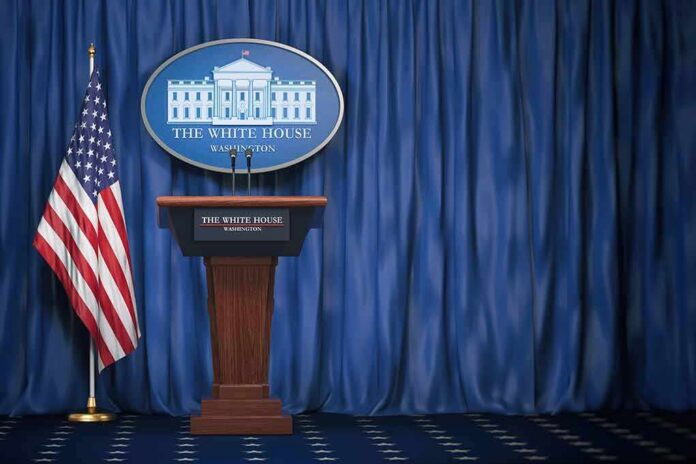
Five days, one 14-minute briefing, and a blunt nudge from President Trump ended Katie Zacharia’s run as White House press secretary.
Story Snapshot
- Zacharia was removed after less than a week on the job.
- Her first and only briefing lasted 14 minutes and deflected key questions.
- Trump urged her to rethink the role as departure news broke.
- Her five-day stint ranks as the shortest in the office’s modern history.
A five-day tenure that snapped under the lights
The White House moved Katie Zacharia out of the press secretary job after her first week, according to officials who described the shift on Friday. The timing landed right after a rocky debut at the podium. Her lone briefing lasted 14 minutes and ended with her urging reporters to take tough questions to President Trump himself. On the way out of the building that day, Trump said he had encouraged her to consider whether the role fit.
The White House named Zacharia to succeed Karoline Leavitt days earlier, pitching her as a loyal messenger who knew the president’s media style well. That bet often matters more than long résumés in this role. The press secretary must carry the president’s message, keep reporters engaged, and manage a firehose of policy and crisis details. When any of those three slips, the podium turns into a trap door. This week, it did.
Why this job is brutal even for pros
The press secretary stands at a daily crossroads: public spokesperson, internal traffic cop, and the president’s voice, all at once. The office is about 85 years old and has cycled through dozens of holders, even in calmer times. Modern presidents change press secretaries more than once per term as politics, crises, and chemistry shift. The triangle of duties is unforgiving. If message discipline falls, the press corps pounces. If access thins, trust erodes. If loyalty wobbles, the boss moves on.
Recent history shows fast turnover is normal, but five days is still a shock. By Friday, Zacharia’s tenure ranked as the shortest for a White House press secretary in modern lists, edging a record many assumed would stand longer. Several presidents have cycled three or four secretaries over two terms without drama. That context helps explain the speed here. When the podium and the principal get out of sync, the fix is often a quick personnel change, not a long salvage plan.
The briefing that told the whole story
Zacharia’s first briefing flagged the core problem in plain view. Reporters pressed on policy and legal topics. She cut it short and suggested they ask President Trump directly. That move undercut the office’s basic aim: speak clearly for the president so he does not need to take every question himself. The exchange also set a new frame for the press shop. If the podium cannot carry the message, the West Wing will not let it wobble for long.
President Trump defended Katie Zacharia on Friday before she was removed from her role as White House press secretary.
Speaking to reporters outside the White House, Trump said Zacharia had been treated unfairly by the media and revealed that he had encouraged her to reconsider… pic.twitter.com/2Nd3dis3cb
— CBS News (@CBSNews) October 16, 2026
Trump’s public cue sealed it. He told reporters she should reconsider the job, which echoed what aides soon made official later that day. That approach tracks with a leadership style focused on results and personal fit. When the messenger struggles, change the messenger. Some will call that harsh. But voters who value clear lines of accountability may see it as common sense. The country expects answers. The person at the podium must deliver them fast and clean.
What this signals about the road ahead
The next press secretary will need three things on day one. First, crisp command of facts across policy, law, and process. Second, the trust of President Trump to speak in his voice without hedging. Third, stamina to brief, correct, and course-correct under glare. The office exists to focus the White House message, not to filter it into mush. The successful pick will own the podium, channel the president, and keep the press pack engaged without letting them steer the car.
Sources:
cbsnews.com, cnbc.com, nytimes.com