

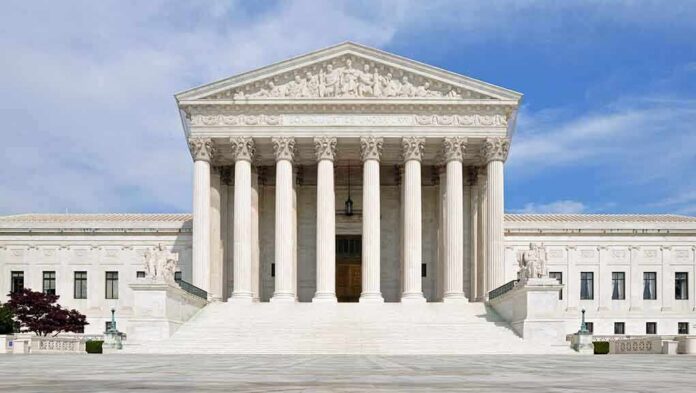
Justice Samuel Alito says there is a “concerted effort” to intimidate the Supreme Court, and he is not stepping down now because he believes he still has work to do.
Story Highlights
- Alito said he considered retirement but chose to stay, saying he can still contribute.
- CBS recorded an unusually extensive, in-person interview in New Jersey and at the Court.
- Alito said Senate control did not shape his retirement decision.
- Alito warned about a “concerted effort” to pressure the Court.
Justice Confirms He Considered Retirement, Decides to Stay
CBS News reported that Justice Samuel Alito considered retiring earlier in 2026 but chose to remain on the Supreme Court. He said a justice his age must think about retirement every term, yet he believes he can still make a contribution. CBS added that some conservatives urged him to step down while Republicans hold the Senate, but Alito said that was not a factor in his decision. His comments set clear lines: service first, not political timing.
Alito’s decision matters for the country and for President Trump’s second-term agenda. The Court will hear cases on speech, life, elections, borders, and executive power. Keeping a proven originalist voice signals stability for readers who want the Constitution, not activists, to lead outcomes. Alito’s choice underscores a core conservative belief: judges apply the law as written, not shift with polls or street pressure. That standard holds the line for rights that bureaucrats and ideologues often try to erode.
Rare, In-Depth Interviews Give Unusual Access
CBS described its discussions with Alito as “remarkably candid” and said they spanned several hours in his New Jersey hometown and at the Supreme Court. The network tied the timing to his new book, “So Ordered: An Originalist’s View of the Constitution, the Court and Our Country,” due for release this week. Separate Fox News programming featured Alito addressing the Court’s future and topics like abortion and the pandemic, with producers highlighting the depth and range of questions. These were not routine media hits.
The in-person settings and length matter for trust. Viewers could see the justice speak at length, on camera, about why he serves and how he views the Constitution. That format reduces spin and gives voters insight into his approach. It also shows the Court engaging the public without caving to fads. While full, unedited transcripts for every clip were not made available in the research set, the aired remarks and network summaries align on the central points reported here.
Alito Warns of Pressure Campaigns Targeting the Court
Alito said there is a “concerted effort” to intimidate the Supreme Court. He warned that such pressure threatens the high court’s future and must not shape rulings. Agence France-Presse likewise reported that Alito spoke about intense rhetoric and pressure around decisions, and that justices strive to ignore it. His message is simple and firm: judges answer to the Constitution and their oath, not to mobs, media campaigns, or political threats. That defense of independence protects every citizen.
“Some Democrats don’t expect to fill a Supreme Court vacancy under Trump; Democrats need a net gain of four seats to capture the Senate; If so, they’d control what happens in a vacancy, as Justice Samuel Alito admits he’s thought about retirement”: Sahil https://t.co/TKlytsm0CX
— Howard Bashman (@howappealing) October 5, 2026
For conservatives, his warning lands close to home. Americans watched protests move from courthouse steps to private homes. They saw activists threaten judges and try to pack the Court when rulings went against them. That is not free debate. That is coercion. Alito’s stance tells citizens that the Court must stand apart from that noise. The path back to order is clear: follow text, history, and structure of the Constitution, and let elected branches write laws within limits.
Why His Decision Matters for Constitutional Governance
Staying on the bench preserves a steady originalist vote as major cases loom. CBS reported that Alito’s choice was not about who runs the Senate but about service and contribution. That signals a duty mindset conservatives respect. It also buys time for President Trump’s legal agenda to be argued before a Court that prizes clear text and limits on federal power. When judges hold that line, energy stays affordable, rights stay protected, and agencies cannot rewrite laws.
Book Context Explains the Timing, Not the Message
CBS said the interview came ahead of Alito’s first book release this week. That context explains why he spoke now. It does not change the substance. His themes match long-held views: original meaning, judicial independence, and respect for the oath. Fox programming highlighted similar ground, including his focus on the Court’s most difficult cases and the weight of those decisions on the country. For readers, the takeaway is steady: guard the Constitution so it can guard you.
Sources:
townhall.com, cbsnews.com, foxnews.com, afp.com