

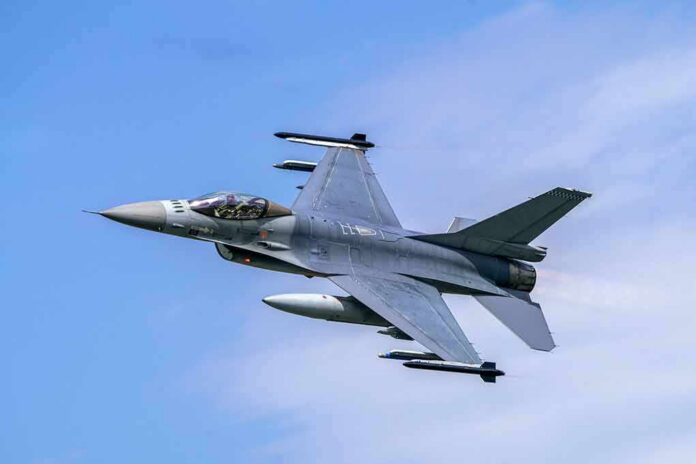
Locked out of the sixth‑gen jet, Lockheed is now pitching a souped‑up F‑16 to plug an Air Force fighter gap the service says could reach 1,558 jets by 2035.
Story Snapshot
- Lockheed Martin proposed a new “F-16G” to replace aging F-16s as a faster backfill than more F-35s.
- The Air Force projects growing its fighter fleet from 1,098 to 1,558 by 2035 to lower risk.
- The service remains below the 1,145-fighter floor set by Congress, adding urgency to near-term options.
- The Air Force says requirements are not yet defined and no F-16 buy is approved.
What Lockheed Is Offering And Why It Matters
Lockheed Martin is pitching a modern F-16G to the U.S. Air Force to replace older F-16s that are aging out before newer jets arrive in enough numbers. Reports say the company argues the service needs more airframes sooner than the F-35 line can deliver. The F-16G concept layers in features like extra fuel and an infrared search-and-track sensor to boost range and awareness, framing it as a practical bridge for units that cannot wait.
The sales push comes after Boeing won the Air Force’s next-generation fighter program. That loss leaves Lockheed stressing speed, capacity, and cost control with a legacy design it can build more quickly. For citizens who see Washington miss deadlines and overrun budgets, this looks familiar. Industry offers a faster fix while the Pentagon tries to stick to its plan. The question is whether a non-stealth jet meets the threat and the timeline at an acceptable risk and price.
The Air Force’s Target: More Fighters, Fast
Air Force planning calls for growing the fighter inventory from about 1,098 in fiscal 2026 to 1,558 by 2035 to lower operational risk. That target rests on higher annual buys of the F-35 and adding more F-15EX, with modernized F-16s held steady. Hitting that end state would close today’s shortfall and build capacity for a major conflict. The plan is clear on the goal but less clear on the exact mix if budgets tighten or production slips.
Right now, the fighter force is below a congressional floor of 1,145 aircraft, underscoring the gap between plans and reality. That shortfall fuels proposals like the F-16G, which promise more tails on the ramp sooner, even if they are not top-tier stealth jets. Backers argue quantity has a quality of its own when training, homeland defense, and partner missions all demand sorties the current fleet struggles to cover.
Promises, Limits, And The Procurement Catch
Lockheed’s F-16G pitch highlights added fuel, sensors, and targeting pods to boost an old airframe’s punch. Supporters say that could help Air National Guard and reserve units keep flying credible missions while F-35 and F-15EX deliveries ramp. But the Air Force says it has not defined precise mission needs or the full set of options. The service also says it has not committed to any new F-16 buys, keeping the idea squarely in “proposal” territory for now.
Public planning points to meeting the 2035 goal by maxing F-35 output and increasing F-15EX purchases, while holding the F-16 fleet level. That framing does not require a new-build F-16 line, which weakens the case that F-16G is necessary. Former top leaders also warned that a 1970s airframe struggles to keep pace with rapid software updates and modern threats. Those views shape skepticism toward buying more non-stealth jets today.
Why This Debate Resonates Beyond The Flight Line
Taxpayers have watched big programs slip while costs climb. People on the right and the left see a system that protects contractors and careers more than outcomes. This fight over capacity versus capability fits that concern. The Air Force needs numbers now, but it also needs jets that survive in high-end combat later. A fast bridge that saves money helps only if it does not lock in a force that is outmatched by new defenses in a crisis.
Lockheed Martin is pitching an upgraded variant of the F-16, called the F-16G, to the U.S. Air Force to fill Fighting Falcon units that will age out of their existing fighters.https://t.co/39jdlkRnz2@LockheedMartin @usairforce @AFA_Air_Space #AFANational #USAF #F16
— Aviation Week (@AviationWeek) September 17, 2026
Congress will press for answers on schedule, cost per jet, sustainment, and mission fit. The Air Force will have to show how any mix hits 1,558 fighters on time and within budget authority. Lockheed will need to prove it can deliver quickly without hidden costs. Until requirements are set and data are public, the fairest read is simple: there is a real fighter gap, F-16G is one option to close it faster, and the service has not chosen that path yet.
Sources:
19fortyfive.com, aviationweek.com, airandspaceforces.com, militarywatchmagazine.com, stripes.com, flightglobal.com, militarnyi.com, theaviationist.com