

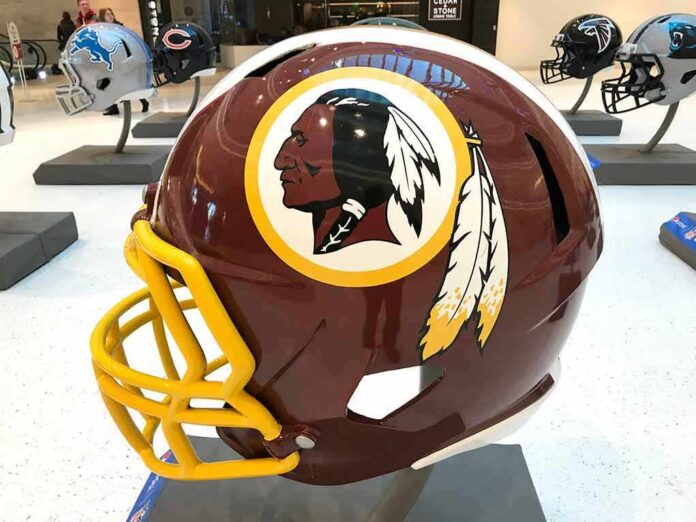
Washington’s NFL team is selling limited “Redskins” merchandise again, saying trademark rules require it while insisting the name is not coming back.
Story Snapshot
- The Commanders put former “Redskins” name and logo on select apparel tied to team alumni.
- The team says limited sales help preserve old trademarks and keep control of the marks.
- Leaders maintain there is no plan to change the Commanders name.
- Trademark law rewards continued use in commerce to avoid weakening rights.
Team Moves to Sell Retired Branding While Denying a Name Reversal
The Washington Commanders began selling select merchandise that features the franchise’s retired “Redskins” name and logo. The items honor former players and appear in a limited alumni-themed collection. Team officials said the move aims to preserve trademark rights and keep control of the legacy marks. They also said there is no plan to revert to the old name, which the club retired in 2020. Local and national outlets reported the statement and described the products as limited.
Team communications framed the sale as a legal step, not a rebrand. Reporters quoted a spokesperson who said they must keep the marks in commercial use so the franchise maintains control. Coverage also repeated that leadership stands by the Commanders identity today. The approach mirrors other sports brands that offer vintage lines to tap history while signaling a distinct current name and look. That dual track can please some fans and anger others.
How Trademark Rules Drive “Use It or Lose It” Decisions
United States trademark rules emphasize real use in commerce. Owners submit filings that show active use at set times to keep registrations alive. If a mark is not used and the owner lacks intent to resume, it can be deemed abandoned, and protection can weaken or lapse. Limited, bona fide sales can help show continuing use. That is why companies sometimes sell small runs with old logos or names they no longer promote widely.
Washington’s history shows why legal posture matters. In 2014, a tribunal within the United States Patent and Trademark Office moved to cancel several “Redskins” registrations on disparagement grounds. That action affected federal registrations but did not by itself bar use of the name in commerce during litigation and appeals. The legal fight highlighted how registration status, marketplace use, and public reaction can diverge in practice.
Balancing Nostalgia, Market Demand, and Public Standards
The Commanders have leaned into heritage through new uniforms that nod to Super Bowl years while keeping the current brand. Alternate looks include a black “Hail Raiser” set with a spear threaded through the W logo on the helmet. Those choices target fans who value team history without restoring the old nickname. The limited alumni gear with retired branding fits the same lane: a controlled salute to the past, not a wholesale identity change.
The Washington Commanders are selling Redskins merchandise again, and the reason they gave is that they have no choice. "We are required to maintain the marks in commercial usage so that marks remain under franchise control," a team spokesperson said. That's true enough as… https://t.co/jINNyR03fl pic.twitter.com/6Pli0jHr7z
— George Jarjour (@GeorgeOnTap) August 26, 2026
Fans on both sides will likely see mixed motives. Some will welcome the chance to buy legacy items that honor stars like Art Monk, Darrell Green, or Sean Taylor. Others will see a cash grab that reopens old wounds over a name many found offensive. For the front office, the narrow legal case is clear: show controlled sales to keep rights intact. The broader social case is harder: respect history, meet the law, and avoid drift from today’s stated values.
Why This Matters Beyond One Team
This move reflects a larger trend across sports and consumer brands. Companies retire markings that clash with current standards, yet still face fights over counterfeits and third-party sellers. Keeping a narrow, provable trail of use can deter copycats and shield “residual goodwill” tied to historic imagery. Courts and regulators look at both use and intent. Small but real sales can make a legal difference, even when a brand does not plan a comeback for a retired name.
For a public tired of mixed signals from big institutions, the story lands in a familiar place. The team insists it must do this because the rules say so. Many people hear that and think the rules mostly protect the powerful. Both reactions can be true at once. This is a reminder to watch the fine print: policy, law, and business incentives often push outcomes that feel at odds with simple promises, especially in high-dollar sports brands.
Sources:
facebook.com, washingtontimes.com, nfl.com, usatoday.com, espn.com, dailysnark.com, ntd.com, newsbreak.com