

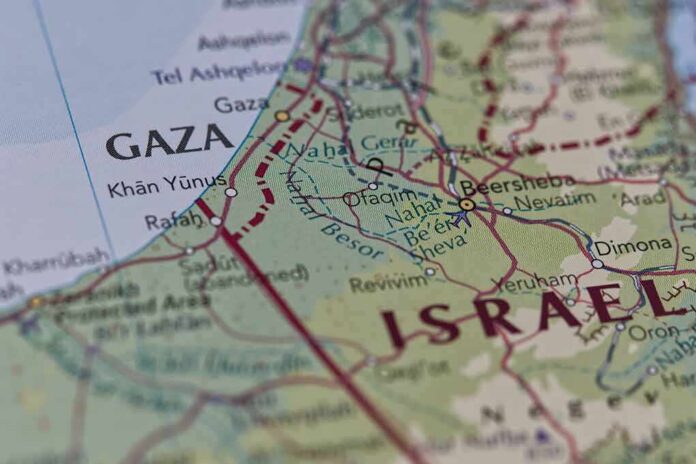
Benjamin Netanyahu’s public rejection of President Trump’s Gaza plan has turned a hoped-for breakthrough into a new test of U.S. leverage in the Middle East.
Quick Take
- Netanyahu said Israel rejects Trump’s 15-point Gaza plan and will not withdraw until Hamas fully disarms.
- The Israeli leader said the army will keep acting until he sees what he called real disarmament, not a paper promise.
- Trump’s plan was built around phased disarmament and withdrawal, but Netanyahu said the sequence still does not meet Israel’s security demands.
- Social media and broadcast coverage cast the move as a sharp break between two leaders who have often tried to present unity.
Netanyahu Draws a Hard Line on Withdrawal
Netanyahu told his cabinet that Israel rejects the 15-point document and will not pull forces out of Gaza before Hamas disarms fully. Reuters reported that he tied any withdrawal to complete disarmament, making the gap between the two sides plain: Trump’s plan depends on a phased deal, while Netanyahu wants a stricter, security-first sequence. That disagreement is now the center of the diplomatic fight.
The Israeli leader also framed the issue in domestic terms. He said Israel would keep thwarting threats against its forces and citizens, and he warned against what he described as fake disarmament. That language matters because it shows he is not merely asking for a tweak to the plan. He is rejecting its core timing, which makes withdrawal and disarmament harder to separate in practice.
Why the Plan Ran Into Resistance
Trump’s proposal was not a vague ceasefire slogan. Reporting said it called for Hamas to give up heavy weapons, military sites, weapons depots, and tunnel systems in stages, with Israeli withdrawal tied to that process. The plan also aimed to move Gaza toward a new governing structure after the fighting. That design gave it shape, but it also created the exact sequencing fight that Netanyahu has now made public.
That sequencing fight reflects a broader pattern in Gaza diplomacy. U.S. leaders often announce progress first, then the harder details surface later. Here, the hard detail is simple: Netanyahu does not trust a phased formula unless Hamas is stripped of all meaningful military power first. For many Israelis, that is a basic security issue. For critics, it shows how hard it is to turn a headline peace plan into a real agreement on the ground.
Lebanon Adds Another Front to the Story
The timing of Netanyahu’s comments also matters because the social research package says he paired the Gaza rejection with talk of an “important operation” in Lebanon. That points to a wider regional posture, not just a Gaza-only dispute. When Israel is active on more than one front, each public statement sends a message about deterrence, domestic politics, and readiness to use force if diplomacy stalls. That makes the Gaza plan harder to sell as a clean path to calm.
Oh no! A lovers quarrel!! If they break up who gets the war criminal inditement?https://t.co/bwDebzsbg2 Netanyahu rejects US-led 15-point Gaza peace plan in rare public break with Trump
— Brian Schoenwetter (@slave2daman) August 9, 2026
For readers on the left and right who already feel Washington and allied capitals are too quick to announce victories, this episode feeds a familiar frustration. Trump’s team presented a framework that had real terms attached, but Netanyahu’s rejection shows how fragile such deals remain when the trust gap is wide. The result is a familiar Washington problem: a deal can look close in public, then collide with the real demands of leaders who do not want to gamble on the other side’s promises.
Sources:
youtube.com, washingtonpost.com, nytimes.com