
President Trump has vowed that the United States will “take over” the Strait of Hormuz and charge for guarding it, turning a dangerous showdown with Iran into a fight over who controls the world’s oil lifeline.
Story Snapshot
- Trump says the U.S. will be the “guardian” of the Strait of Hormuz and should be paid by wealthy nations that rely on its oil flows.
- The president warns Iran that if it tries to close the strait or block ships, it could “lose its country,” underscoring U.S. military resolve.
- The Trump administration has ordered a naval blockade focused on Iranian ports to stop Tehran from profiting off tolls and threats.
- Iranian leaders keep claiming control or closure of the strait, while U.S. Central Command insists it remains open to lawful international shipping.
Trump: U.S. Will Guard Strait Of Hormuz And Get Paid
During a phone interview on Fox News, President Donald Trump said the United States would likely “take over” the Strait of Hormuz and become its guardian. He called the vital passage a global responsibility but stressed that America should no longer carry the burden alone. Trump said other wealthy nations that depend on Gulf oil should reimburse the U.S. for guarding the waterway. He framed this as simple fairness, saying America “can’t be expected to do that for nothing.”
Trump’s comments came as part of a wider push to show strength against Iran’s regime while protecting American drivers from high gas prices. He argued that decades of weak leadership let Tehran threaten world energy markets and bully allies with talk of closing the strait. In his message, Trump tied control of the waterway directly to everyday costs, telling Americans that keeping oil moving safely is essential if they want relief at the pump.
Blockade And “All Or None” Strategy Against Iran
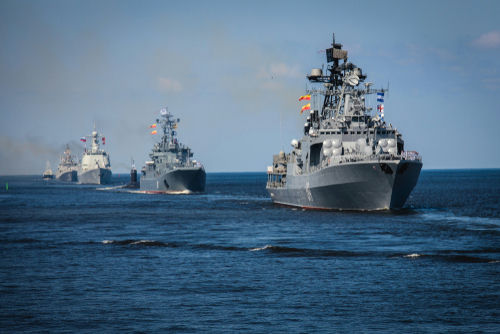
After peace talks with Iran in Pakistan broke down, Trump announced that the United States Navy would begin a blockade focused on ships going to and from Iranian ports. On his social platform, he said the U.S. would start “interdicting any and all ships” entering or leaving the Strait of Hormuz from Iran’s coastline, calling Tehran’s toll plan an “Illegal Act of EXTORTION.” U.S. Central Command later clarified that vessels bound for non-Iranian ports would not be blocked, aiming enforcement squarely at Iran’s trade.
In a Fox News interview, Trump described the blockade as “complete” and “all or none,” warning that no vessels would move freely until Iran stopped using threats and tolls to squeeze the world’s energy supply. He said the Navy would target any ship in international waters that had paid Iran for passage, insisting that the regime would not be allowed to profit from closing or choking the strait. By turning off Iran’s oil money while keeping the waterway open for others, Trump cast the policy as tough but necessary leverage.
Conflicting Claims Over Who Controls The Strait
Trump has used strong language about U.S. power at Hormuz, at times claiming “total control” and saying no ship can enter or exit without approval from the United States Navy. Yet in other public comments, he has also stressed that the strait is international waters and that “nobody’s going to control it,” promising instead that the U.S. will “watch over it” to protect free passage. This mix reflects both a legal reality and a political message: Washington cannot legally seize the strait, but it can use naval power to shape what happens there.
4 hours ago – 38°53′N 77°2′W
Trump on Iran: We had an agreement, and they broke it. We will be the guardians of the Strait of Hormuz.https://t.co/dbxl1U6m2S pic.twitter.com/PPxMe0tIGI
— Creatorskid (@Tuberoot) July 13, 2026
Iran’s leaders have answered with their own claims, sometimes declaring the Strait of Hormuz “closed,” sometimes insisting it is open but only to friendly ships. Iranian military and diplomatic statements warn that foreign tankers must follow Tehran-approved routes or face an “immediate and forceful response.” U.S. Central Command and allied media repeatedly dispute these closure claims, saying lawful international shipping continues, even as traffic drops and insurers worry about mines and attacks.
What Is At Stake For Americans And Allies
The Strait of Hormuz carries about a fifth of the world’s traded oil, so any closure or threat quickly hits gas prices and global markets. Trump has reminded Americans that fertilizer, plastics, and other daily goods depend on that flow, arguing that a strong U.S. stance keeps families from paying the price of Iran’s aggression. For many conservative voters, this fight also speaks to national pride: they see a president refusing to let a terror-sponsoring regime hold the world’s energy supply hostage.
Under international law, no single country can rightfully block peaceful transit through the strait, which supports Trump’s repeated promise to defend “freedom of navigation.” At the same time, Iran’s use of mines, missile threats, and toll schemes shows why mere words are not enough. Naval operations like mine-clearing, escorts, and focused blockades are meant to back up the president’s message with real power, so that hostile actors know the United States and its partners will not accept energy blackmail.
Sources:
mediaite.com, apnews.com, usatoday.com, youtube.com, michaelianblack.substack.com, democrats.senate.gov, bbc.com, npr.org, timesofisrael.com, jpost.com, facebook.com, aljazeera.com, reuters.com