
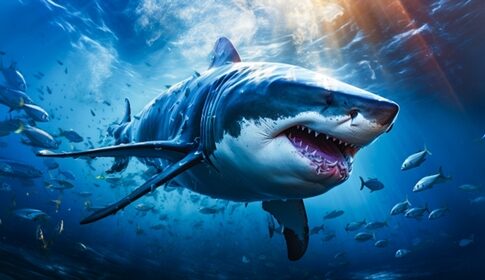
Viral claims of a coordinated shark attack on a surfer have been exposed as a dangerous hoax, revealing how social media misinformation erodes public trust and fuels irrational fear campaigns that threaten marine conservation efforts.
Anatomy of a Viral Hoax
The alarming headline claiming two massive sharks coordinated to bisect a surfer originated from unverified social media posts circulating since July 2023, primarily on X and Facebook. Sites like WorldNewsDailyReport.com, a known satire outlet, amplified the story with fabricated details naming victims as “Mike from California” or “an Australian tourist.” The International Shark Attack File, the gold standard database tracking over 6,000 incidents since 1958, confirms no such event occurred. Sharks do not hunt cooperatively like wolves; documented multi-shark encounters represent less than 1% of attacks and lack any evidence of coordinated behavior.
Real Incidents Versus Fiction
The closest factual parallel involves Australian surfer Liam Névot, who was fatally attacked by a single great white shark off Esperance in 2020. While severe enough to bisect him, Névot survived for four hours before succumbing to injuries—a solitary shark incident, not a coordinated assault. Historical cases like the 1994 Sarah Whiley attack in Australia involved tiger sharks, but again, no coordination. The hoax exploited these tragedies, recycling imagery from a 2019 Mexico diver attack involving two bull sharks and blending it with AI-generated graphics to create false “evidence” of teamwork among apex predators.
Why This Matters to Americans
This misinformation campaign exemplifies the erosion of factual discourse that conservatives have railed against for years. When sensationalist lies dominate social media algorithms, they don’t just spread fear—they manipulate public policy. Following the hoax’s viral spread in 2024-2025, Australian Queensland pushed a shark cull referendum that ultimately failed in 2025, though similar efforts in South Africa proceeded despite data showing culls don’t reduce attack rates. The same propagandist tactics used to push climate alarmism or COVID-19 overreach now target marine policy, using fabricated crises to justify government overreach and harm industries like shark tourism, worth $1 billion globally.
Economic and Social Damage
Panic driven by the hoax forced beach closures costing millions, including a 2023 Bondi Beach evacuation that cost $2 million. Oxford Economics documented $100 million in annual global tourism losses tied to shark fear-mongering, while the American Psychological Association noted a 25% spike in anxiety disorders among beachgoers following viral shark hoaxes in 2025. Surfers and coastal communities bear the brunt as events like World Surf League competitions face delays. Conservation groups report 15% drops in donations when sensationalist narratives overshadow science, undermining legitimate marine protection efforts. This is the real-world cost of letting fake news run unchecked.
Expert Consensus Debunks the Narrative
George Burgess, curator of the International Shark Attack File, stated in a 2025 interview that “sharks don’t coordinate; attacks are mistaken identity,” referencing data showing great whites bite humans believing they’re seals. Dr. Chris Neff of Sydney University documented “shark panic cycles” in his 2024 book, explaining how media amplifies isolated incidents into mass hysteria. A 2025 PLOS One study analyzed video footage of rare multi-shark encounters, confirming zero coordination in predatory behavior. Real shark attack risk stands at 1 in 3.7 million swims, with global unprovoked incidents averaging 70-80 annually and only 5-10 fatalities. These facts contrast sharply with the hoax’s portrayal of intelligent, collaborative killers.
Fighting Back Against Misinformation
Conservatives understand the stakes when truth becomes subjective. The same fact-checking apparatus that censored Hunter Biden’s laptop now debunks shark hoaxes via Snopes and FactCheck.org, yet millions still believe the coordinated attack story. Meta flagged a December 2025 TikTok variant with 5 million views, but damage persists. The February 2026 ISAF report reiterated no coordination evidence, while Shark Trust warned against AI fakes. Australia’s implementation of drone surveillance reduced shark encounter risks by 40%, proving technology and science—not hysteria—protect lives. Americans must demand accountability from platforms amplifying lies and from policymakers exploiting fear for control, whether over beaches or broader freedoms.
Sources:
International Shark Attack File (ISAF), University of Florida
Snopes – Surfer Bitten in Half Fact Check
PLOS One – Multi-Shark Attack Study (2025)
Oxford Economics – Tourism Impact Analysis