
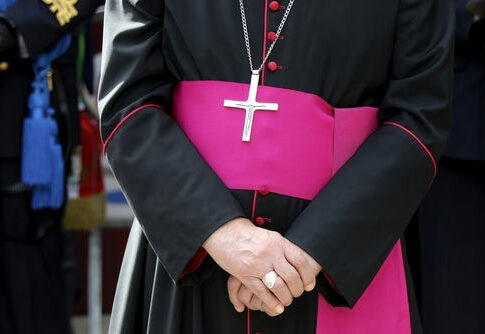
Washington State’s new push to force priests to break the seal of confession is colliding head-on with the First Amendment—and it’s a warning sign for every American who thinks government power always stops where it “should.”
Washington’s confession mandate tests the limits of state power
Washington lawmakers passed, and the governor signed, a measure requiring clergy to report suspected child abuse even when the information is obtained in confession. Catholic leaders have said the “seal” of confession is inviolable, meaning priests cannot disclose what penitents say—under any circumstances. The practical result is a direct standoff: comply with state law and violate doctrine, or follow doctrine and risk legal consequences.
Two Catholic priests were accused of abusing women they were counseling.
Their defense? Prosecuting them violates their *religious freedom*
(Yes, really.)
— Hemant Mehta (@hemantmehta) March 24, 2026
CBS News reports that federal officials are now examining the law, signaling the dispute may move beyond state politics into a broader constitutional fight. That matters because the question isn’t only about internal Catholic rules; it’s about whether government can selectively override long-recognized privileges tied to religious practice. If the state can compel disclosure inside a sacrament, critics warn it could expand into other areas where faith-based confidentiality has traditionally been protected.
What the Constitution question really is—and what’s still unclear
The core legal tension is between the state’s interest in preventing abuse and the First Amendment’s protections for religious exercise. Supporters of the law argue mandatory reporting should be universal, with no exceptions, to help protect children. Opponents argue that forcing priests to divulge confession is not a narrow policy tweak but a targeted intrusion into a sacred rite. The available reporting does not resolve how courts will balance these interests.
Catholic World Report describes the law as explicitly requiring priests to break the seal of confession, framing it as a fundamental violation rather than a mere procedural change. That framing will likely shape litigation and public debate, because it turns on whether government is treating religion neutrally or imposing a unique burden on a specific religious practice. Without court findings yet, the strongest verified point is that the law creates a real, direct conflict between civil requirement and religious obligation.
Public trust and accountability debates aren’t going away
Even among Americans who defend religious liberty, the broader context is messy: abuse scandals and institutional failures have fueled skepticism toward special exemptions. That reality is why lawmakers see political upside in “no exceptions” reporting laws. At the same time, the reporting provided here does not establish that eliminating confession confidentiality will improve outcomes, and it does not address potential unintended consequences, such as discouraging admissions or counseling that could otherwise lead to self-reporting.
Central Minnesota Priests Claim Charging Them With Sexual Abuse Violates Their Religious Freedomhttps://t.co/sJKMpzjyC2
— Complicit Clergy (@complicitclergy) March 25, 2026
Separate coverage from outside the U.S. highlights another long-running friction point: money and ethics in church administration. A South African Catholic outlet reported on a bishop warning that sacraments are “not for sale,” reflecting continued pressure on church leaders to prevent the appearance of pay-to-pray practices. While that issue is distinct from mandatory reporting, both stories point to a shared reality: institutions lose credibility when they appear to protect themselves, and governments often respond by pushing harder into previously protected spaces.
Why this dispute matters to conservatives watching government overreach
Many conservative voters are already wary of expanding state authority—especially when it comes wrapped in moral certainty and enforced through bureaucratic mandates. The Washington law is a case study in how quickly “for the children” can become a justification for overriding longstanding rights and traditions. The factual record provided here shows an escalating conflict involving state power and federal attention, but it remains too early to claim how courts will rule or how broadly other states will follow.
For readers focused on constitutional guardrails, the key is to separate two things: punishing actual crimes versus compelling speech inside a religious sacrament. The former is an essential state function; the latter is a high-stakes test of whether government can dictate terms inside the practice of faith. Until litigation clarifies the boundaries, the most prudent conclusion is that Washington’s approach will set a precedent—either reinforcing First Amendment protections or narrowing them in a way that won’t stay confined to one church.
Sources:
Sacraments not for sale, bishop warns
Washington state Catholic Church feds child abuse reporting law priests
Washington governor signs abuse bill requiring priests to break seal of confession