
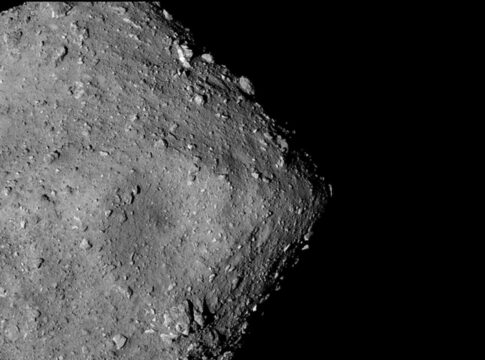
Scientists analyzing samples from the asteroid Ryugu have confirmed the presence of all five nucleobases that form the foundation of DNA and RNA, providing new evidence that asteroids may have delivered the essential ingredients for life to Earth billions of years ago.
Historic Sample Collection Mission
Japan’s Hayabusa 2 spacecraft reached Ryugu in 2018, where it fired two projectiles into the asteroid’s surface to collect debris samples. The spacecraft returned to Earth with these precious samples in 2020. Since then, researchers have conducted detailed analysis of the material, examining the chemical composition of fragments from an asteroid that periodically passes close to our planet. The mission represents one of the most ambitious sample-return operations in space exploration history.
Discovery Confirms Solar System Patterns
The detection of all five canonical nucleobases in Ryugu samples strengthens previous findings from meteorites and the asteroid Bennu. Researcher Oba noted that their detection strongly supports the widespread presence of these organic compounds throughout the solar system. The varying concentrations of different nucleobases found across samples could help scientists trace asteroids and meteorites back to their original parent bodies, offering insights into how these celestial objects evolved over billions of years.
Implications for Life’s Origins
The discovery raises compelling questions about how life began on Earth. If asteroids carrying DNA and RNA building blocks bombarded the early Earth, they could have provided the raw materials necessary for the first living organisms to develop. Oba suggests that even more complex organic molecules, including complete nucleic acids, may exist on asteroids. This possibility makes asteroids potentially crucial to understanding not just the chemical ingredients of life, but possibly the first genetic material itself that led to life on our planet.