

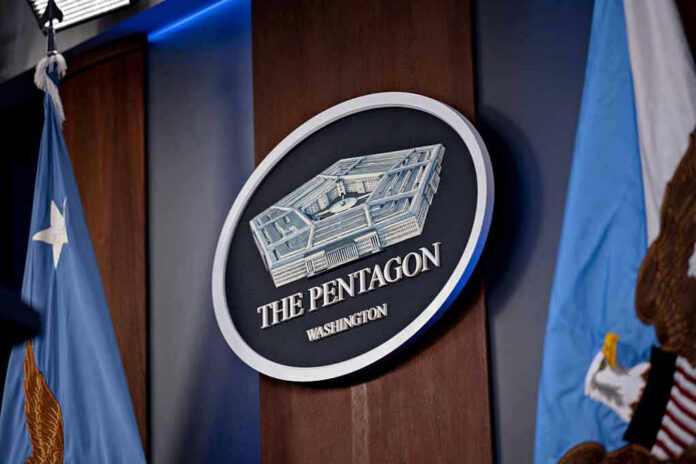
At the Pentagon, Defense Secretary Pete Hegseth blasted a Republican-led impeachment drive as a “farce” while critics accused him of waging unlawful war.
Story Snapshot
- Hegseth called the impeachment push a “farce” and “stunt” in a Pentagon press event.
- Representative Thomas Massie, a Republican, filed the articles focused on war powers and civilian harm.
- Hegseth defended U.S. operations as lawful and successful but offered limited public evidence.
- Democrats signaled support, framing the Iran fighting as an unjustified war of choice.
What Triggered The Clash
On November 10, 2026, Defense Secretary Pete Hegseth rejected impeachment articles as a “farce” and a “stunt” during a Pentagon press conference. He said the push was political theater and defended his record managing strikes linked to the Iran conflict. The articles were filed by Representative Thomas Massie, a Republican described as outgoing in news reports, placing intra-party tension in public view. The filing sets up a House vote and a test of loyalty inside the Republican majority.
Massie’s resolution centers on legal authority and limits on force. It alleges Hegseth directed hostilities against Iran without the congressional authorization that the War Powers Resolution envisions, and that operations continued past required timelines and directives to pull back. The filing also cites alleged failures to reduce civilian harm and raises separate claims about strikes on suspected drug-smuggling boats and actions in Yemen and Venezuela. These charges target process, law, and oversight rather than personal graft.
What Hegseth Says In His Defense
Hegseth said his orders were lawful, the missions were successful, and that claims of civilian targeting were false. He argued the impeachment is politics, not a constitutional case, and that critics are distorting battlefield realities. He did not, in public, release operational legal memos, rules of engagement, or after-action reports that could settle key disputes. That gap keeps the argument focused on competing claims rather than shared facts the public can review.
The secretary also framed the effort as the work of “one disgruntled” member rather than a bipartisan stand. That picture tracks the filing’s origin but does not prove motive. Massie argues the core is lawful war-making and human life, not party drama. The open record so far lacks a court ruling, a formal Department of Justice legal opinion, or a new authorization text that would resolve the core questions either way. The fight now moves to Congress to weigh those claims.
Why This Fight Resonates Beyond One Man
This showdown sits on a long-running fault line in American government: who can start and sustain hostilities, and on what terms. Congress claims power to declare war and to set limits; presidents cite commander-in-chief duties and urgent national interests. The War Powers Resolution reflects Congress’s stance that sustained hostilities need a declaration or specific law. Washington has argued over this boundary across many conflicts, not only this one.
🚨NEW: Defense Secretary PETE HEGSETH is pushing back against an impeachment effort led by REPUBLICAN Rep. Thomas Massie.
Massie has introduced EIGHT articles of impeachment, accusing Hegseth of violating congressional war powers during the Iran conflict and authorizing unlawful… pic.twitter.com/taJF4ON32Z
— Unmask The SYS (@UnmaskTheSys) November 10, 2026
Impeachment raises stakes because it can remove a cabinet leader and send a message on presidential power. Democrats, led by Representative Hakeem Jeffries, call the Iran fighting a reckless war of choice and say Hegseth abused power. Republicans control the House and Senate, but the sponsor is a Republican, so each vote will be read as either a defense of the administration or a stand for limits on force. The result could set a new political line on war powers.
What Evidence The Public Still Needs
Congress and the public lack shared access to the legal and operational files that would confirm or dispute each charge. Key items include any presidential authorization, Defense Department or Office of Legal Counsel opinions, rules of engagement, strike videos, target packets, casualty reviews, and audits of results. Releasing those records, where possible, or reviewing them in camera could reduce spin and help citizens judge claims about civilian harm, strikes on suspected drug boats, and compliance with deadlines.
Bottom Line For Readers
Lawmakers must now choose between accepting Hegseth’s public assurances or demanding documents and testimony that test them. Voters on the right and left often feel Washington shields itself while regular people carry the costs. This case will show whether Congress forces sunlight on life-and-death decisions, or whether labels like “farce” and “abuse of power” drown out facts. The country needs receipts, not slogans, to decide who followed the law and who did not.
Sources:
youtube.com, bbc.com, english.elpais.com, upi.com, cnbc.com, scholarship.law.columbia.edu