
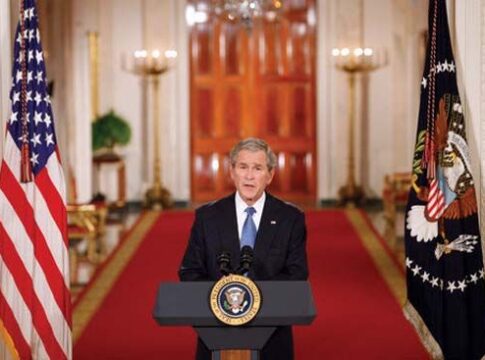
Twenty-five years after the September 11 attacks fundamentally transformed American national security, the expanded government surveillance powers and executive authority implemented by the Bush administration remain largely intact, raising critical questions about constitutional protections and the balance between security and liberty.
The Patriot Act’s Enduring Legacy
The USA PATRIOT Act, rushed through Congress just 45 days after the attacks with minimal debate, granted federal agencies unprecedented surveillance capabilities. The National Security Agency’s warrantless wiretapping program, revealed in 2005, exemplified how far the pendulum had swung from Fourth Amendment protections. Despite periodic Congressional reauthorizations and nominal reforms, core provisions enabling bulk data collection and expansive monitoring of American citizens persist. Intelligence agencies continue accessing phone records, internet activity, and financial transactions with minimal judicial oversight, creating a surveillance infrastructure the Founders would have recognized as tyrannical.
The Department of Homeland Security, created in 2002 as the largest government reorganization since World War II, consolidated 22 agencies under one bureaucratic umbrella. This massive expansion of federal power created new layers of government intrusion into daily life, from airport security theater to fusion centers tracking citizens’ activities. The administrative state grew exponentially, with DHS becoming the third-largest Cabinet department, employing over 240,000 federal workers and spending roughly $60 billion annually.
Constitutional Concerns and Presidential Power
The Bush administration’s assertion of executive authority through military commissions, enhanced interrogation techniques, and indefinite detention at Guantanamo Bay established precedents that subsequent presidents have maintained regardless of party affiliation. The Authorization for Use of Military Force, passed September 14, 2001, has been invoked to justify military actions in at least 19 countries, far beyond its original scope. This expansion of presidential war powers circumvents Congress’s constitutional authority to declare war, concentrating decision-making in the executive branch without meaningful legislative oversight or accountability.
What This Means
The post-9/11 security architecture represents a fundamental shift in the relationship between citizens and government. While preventing another catastrophic attack remains paramount, the permanent expansion of surveillance capabilities and executive authority raises questions about whether we’ve sacrificed essential liberties for temporary security. Constitutional conservatives must grapple with whether these measures align with founding principles of limited government, or whether the emergency measures have become a permanent erosion of the freedoms they were meant to protect.