

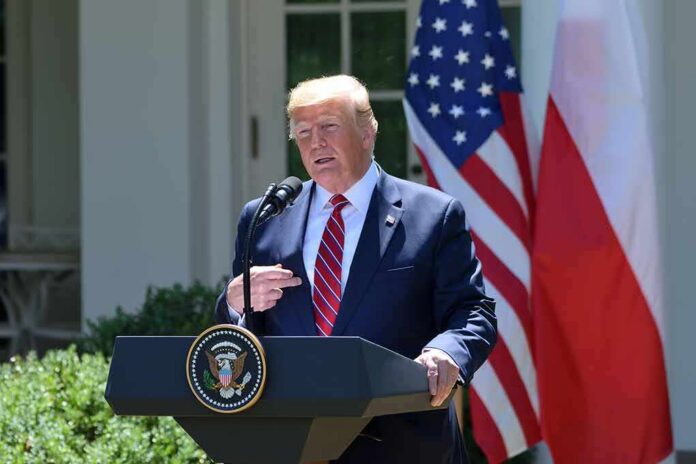
President Trump said he expects to meet North Korea’s Kim Jong Un later this year, reviving high-stakes personal diplomacy that has delivered big images but thin results before.
Story Snapshot
- Trump said he expects to meet Kim Jong Un later this year, restarting leader-to-leader talks.
- The possible meeting could occur during late-year Asia travel, though no date is set.
- Past Trump–Kim summits made headlines but produced limited concrete steps on nuclear issues.
- Analysts say leader summits can outpace detailed agreements, raising hopes and risks.
What President Trump Announced
President Trump told reporters he expects to meet North Korean leader Kim Jong Un later this year. The comment revives direct top-level talks after a long pause. Trump has said he “gets along” with Kim and wants to restart discussions on nuclear and security issues. He offered no date or venue. Reuters reported the remarks followed talks with South Korea’s president, where Trump also signaled interest in more engagement with Pyongyang before year’s end.
Regional reports suggested the meeting could align with late-year events in Asia, including a summit window that would place both leaders in the region. South Korean and international coverage described growing chatter about timing, with the Asia-Pacific calendar offering options. Still, White House officials have not announced a schedule, and North Korea has not publicly confirmed plans. The idea remains a presidential expectation, not a posted itinerary yet.
Why This Matters Now
U.S.–North Korea talks affect war and peace on the Korean Peninsula, missile risks to allies, and the safety of American forces stationed abroad. A meeting at the leader level can pause tensions and open doors for working-level talks. It also can reward North Korea with global attention and status. That trade-off has split opinion in Washington for years. Supporters see a chance to reduce danger. Critics see staging without hard concessions from Pyongyang.
Both sides seek gains beyond security. For Trump, a summit signals control of the agenda and a chance to show dealmaking. For Kim, a meeting with a U.S. president projects strength at home and legitimacy abroad. Think tanks have warned that summits can sprint ahead of detailed steps on missiles, inspections, and sanctions. That pattern raises expectations that are tough to meet once camera lights fade and hard text must be written line by line.
What Past Summits Achieved—and Did Not
Trump and Kim met in Singapore in 2018, making history as the first sit-down between leaders of the two countries. The event lowered tensions and produced a short joint statement. But it left key issues vague, including definitions, timelines, and verification for any future nuclear limits. Later efforts struggled to lock in firm steps. Analysts and historians generally judge that Kim gained stature while the nuclear program kept advancing.
Asked by a reporter at the White House if he expects to meet with Kim later this year, President Trump replied, "Yeah, I will be."
The White House has not confirmed plans for a meeting, nor has Pyongyang. https://t.co/frYasw5800
— CBS Mornings (@CBSMornings) August 19, 2026
Policy experts described a repeat risk: the meeting becomes the message. That approach can cool tempers and buy time, but it can also leave the United States with few enforceable wins if talks stall. The most useful outcome, they argue, would be a freeze on bomb fuel and long-range missiles, tied to clear inspections and measured sanctions relief. That type of deal is hard, but it is the bar many say matters more than photos or pledges.
How This Fits the Bigger Picture
Americans on the right and left share a core worry: Washington often celebrates headlines while problems persist. North Korea is a textbook case. Big summits made dramatic images, yet nuclear threats did not fade. Voters want real results, not ceremony. If this meeting happens, people will judge it by concrete steps that make families safer and reduce the chance of war, not by stagecraft or spin from any political camp.
What To Watch Next
Watch for three signals. First, whether North Korea publicly confirms a meeting and names envoys for pre-summit talks. Second, whether the United States and allies agree on goals like a verifiable freeze on bomb fuel and long-range missiles. Third, whether there is any road map for inspections and phased relief. Clear milestones would show substance. Without them, the meeting may raise hopes but again leave the hardest work undone.
Sources:
facebook.com, reuters.com, nypost.com, business-standard.com