
In cases like the Oxford vape shop raid, two truths can coexist and must be kept distinct: you can have a solid enforcement case and still have no proof a substance caused a death. Confusing those questions—possession and sale versus causation—warps public understanding and, in the long run, weakens both justice and health policy.
The Short Version
- Police seized more than 500 kratom-labeled units and other suspected narcotics from an Oxford, Mississippi vape shop; two clerks were arrested on drug charges.
- Oxford had banned kratom since 2019, giving local authorities clear grounds to enforce sales and possession violations independent of any death investigation.
- Packaged kratom was recovered at the scenes of two Ole Miss student deaths, prompting a multi-agency drug investigation, but officials repeatedly said toxicology was pending and causation unconfirmed.
- Later coverage summarizing a DEA affidavit described undercover buys, bank-record links to one shop, and seizures, yet still stopped short of tying the seized product to the specific fatal outcomes.
What the Oxford Case Shows: Enforcement Is Not the Same as Causation
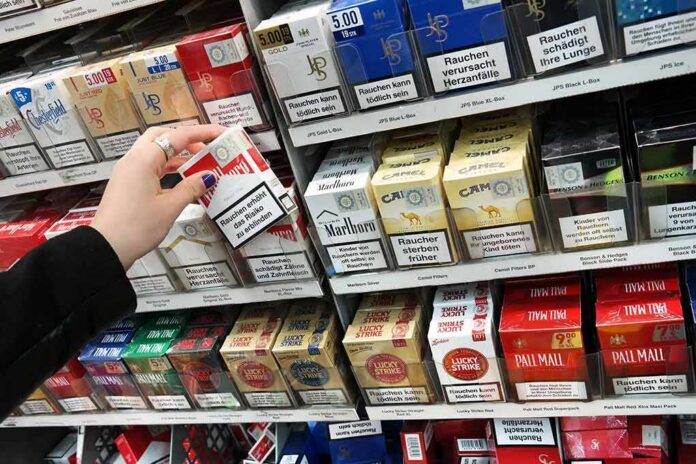
The Oxford raids unfolded on two tracks. On the enforcement track, Metro Narcotics agents executed a search at Puffs Vape, Tobacco and Beer Store, reporting the seizure of more than 500 kratom units and assorted THC items; two employees were arrested for drug offenses, including possession with intent to distribute a controlled substance. That track is straightforward: Oxford outlawed kratom in 2019, so investigators did not need to prove harm or death to justify a raid and arrests—selling or holding banned stock was enough.
The causation track is different. Investigators said packaged kratom was found at both student death scenes, and they emphasized a criminal-drug lens while toxicology was pending. Multiple outlets, citing officials, underscored the same caution: there was no confirmed evidence kratom caused either death and no announcement that the two fatalities were connected; that is a deliberate evidentiary floor, not a hedge.
How Investigators Built Their Case: From Scenes to Storefronts
The investigative logic progressed through standard steps: preserve scene evidence, map recent purchases and communications, conduct controlled buys, then obtain a warrant. Later reporting summarized a DEA affidavit stating bank records tied one decedent, Aidan Hamilton, to purchases at Puffs; investigators also described undercover buys and cataloged more than 500 seized kratom-related products. In parallel, coverage noted that transactions tied the other decedent, Robert Strang, to a different retailer, Express Mart #7, underscoring that a single-supplier theory was not supported on the public record.
This kind of mosaic—receipts, bank logs, undercover purchases, inventory seizures—can establish retail illegality and, potentially, distribution liability. It does not, by itself, establish mechanism of death. For that, prosecutors typically need toxicology, pharmacology, and, where possible, product-to-scene concordance: same lot, same alkaloid profile, same adulterant signature. In this matter, officials explicitly said they did not yet have lab confirmation of causation when the enforcement actions occurred.
Why Kratom Cases So Often Become Evidence Fights
Kratom sits in a policy gray zone: unapproved federally, variably regulated locally, and commonly retailed through gas stations and vape shops rather than pharmacies. In that ecosystem, three distinct statements routinely collapse into one headline: “found at the scene,” “sold unlawfully,” and “caused the death.” Toxicology literature complicates the narrative further. Kratom can produce stimulant effects at low doses and opioid-like effects at higher doses; reports of severe toxicity exist, but definitive kratom-only lethality is uncommon and frequently confounded by polydrug exposure.
Surveillance data have shown kratom detected in a nontrivial fraction of overdose deaths, yet the discipline continues to lack an agreed-upon lethal blood concentration and must navigate inconsistent product quality and adulteration risks—especially in convenience retail channels. The upshot is rigor: to claim causation, investigators need a lab-backed through-line from the decedent’s physiology to a specific product, and often to a specific adulterant or dose.
The Oxford Record: What Holds Up, What Doesn’t (Yet)
Several pillars are sturdy. First, the seizure and arrests are well-supported by contemporaneous reporting and by the standing municipal ban; the enforcement case does not depend on the death investigations. Second, packaged kratom at both scenes is undisputed on the public record, just as it is undisputed that officials withheld attribution pending toxicology. Third, the later affidavit summaries describing undercover buys and bank-record links are investigative staples that, if borne out in court filings, reinforce the distribution narrative without reaching causation.
Where the public record is thin is precisely where causation lives: no toxicology report released tying kratom (or a derivative) to physiological failure, no publicly documented chain-of-custody connecting the precise items at the scenes to the exact inventory seized, and no lab concordance across samples establishing a unique adulterant or lot signature. Even advocacy sources critical of kratom acknowledged that, in this episode, product culpability had not been proved and waited on lab results. That restraint is not exculpatory; it is evidentiary discipline.
How Good Cases Get Built: From Probable Cause to Proof
If prosecutors intend to move beyond local sales violations to charges that hinge on harm—up to and including drug-induced homicide statutes in some jurisdictions—they generally assemble four classes of proof. One, toxicology and pathology characterizing the physiologic mechanism of death and excluding reasonable alternatives. Two, provenance evidence: POS logs, bank and phone records, video, and witness statements establishing that a specific person sold a specific product lot to the decedent within a plausible window. Three, forensic chemistry matching scene samples to store inventory or supplier shipments—alkaloid profiles, contaminants, and unique packaging attributes. Four, expert testimony on pharmacokinetics and pharmacodynamics to reconcile dose, timing, and observed effects.
The Oxford matter, as reported, appears strongest on steps two and the preliminary contours of four, with open questions on steps one and three. That distribution of strength is typical early in such investigations: sales trails are easier to document than lab-certain causation, which takes time and specialized analysis.
Reading Past the Headlines: Practical Takeaways for Parents, Students, and Retailers
For families and students, treat convenience-store psychoactives as you would any prescription-strength agent: source, dose, and composition govern risk, and variability is the enemy. Unregulated products can contain far more than the label implies, including potent derivatives and contaminants; most serious events in the literature involve high doses, co-ingestants, or adulterants. For retailers, local ordinances are not advisory; they are the rulebook. A municipal ban insulates enforcers from causation disputes, and undercover buys plus receipts are enough to support criminal exposure independent of any tragic outcome.
What To Watch For Next
Three developments would convert a suggestive mosaic into a coherent causal narrative: full toxicology reports for each decedent, released through proper channels; docketed affidavits and exhibits, not just summaries, showing undercover purchases, receipt chains, and inventory itemization; and forensic comparisons across the scene and store samples demonstrating lot-specific or adulterant-specific concordance. Absent those, the enforcement case will likely proceed on its own footing while causation remains unproven—a posture that is both common and appropriate in gray-market drug enforcement.
There has been another development in the deaths of two Ole Miss students, Aidan Hamilton, 18, and Robert Strang, 20, who were found dead in separate locations in Oxford, Mississippi, on September 21.
On Thursday, the Lafayette County Metro Narcotics Unit searched Puffs Vape,… pic.twitter.com/fZIbp9p9vE
— USMC Lady Vet 🇺🇸 (@Arkypatriot) September 27, 2026
Sources:
americankratom.org, abcnews.com, kmbc.com, nbcnews.com, usatoday.com, tippahnews.com, thehill.com, frnt.com, nypost.com, foxnews.com, supertalk.fm